Every apartment tour on your feed hits the same wall — literally. Someone has either lined up frames on a slim floating shelf, leaning and overlapping like mail on a console table, or gone full salon-style with a dense, gridded cluster of hung frames climbing toward the ceiling. Both looks are everywhere, both photograph beautifully, and neither gets recommended to you with any acknowledgment that they solve completely different problems. One is commitment-phobic. One is a project. Pick the wrong approach for your space and your patience level, and you end up with an empty shelf collecting dust for eight months, or three nail holes and a crooked frame you never fixed.
- Top pickBayka Floating Shelves (3-Pack)~$36
- Best budgetSlipstick Furniture Risers (3in, 4-Pack)~$20
- Worth the splurgeOXO 17-Piece Tool Set~$50
Here's both, honestly: what each one costs, how renter-friendly it is, how much effort it demands, and exactly how to execute either one so it looks intentional instead of half-finished.
The core difference: leaning versus hanging
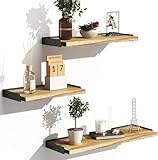
A picture ledge is a narrow, shallow shelf mounted to the wall, usually three to six inches deep, built so frames lean against the wall on top of it instead of hanging from it. Nothing is nailed except the shelf brackets themselves. Set a frame down, prop a second one slightly in front, tuck a plant or a stack of books at the end, and the arrangement can be redone in ninety seconds whenever the mood strikes. A gallery wall is the opposite instinct: every frame hangs directly on the wall, usually in a planned grid or a deliberately asymmetric cluster, each piece fixed to its own spot. It's a layout you commit to, hole by hole.
That structural difference — leaning versus hanging — drives almost every other tradeoff: cost, damage risk, setup time, and how easy it is to change your mind six months later.
Picture ledges: the pros, the cons, the real cost
A single 46-inch picture ledge, installed with two to four screws into studs, costs $15–40 depending on material, and takes maybe fifteen minutes to hang. That's the entire commitment. Everything after — which frames go up, how many, in what order — is fully reversible without touching the wall again. Swap a photo for a postcard, add a plant, pull frames down for a party, put them back the next morning. For renters, that flexibility alone can make the decision.
The tradeoff is depth and density. A ledge only holds what leans comfortably in one shallow row (plus a slightly overlapping second layer, at most), so you're capped on visual weight per shelf. Frames shift over time, too — bump a ledge hard enough and a frame up front can slide or tip, especially on hardwood. And because everything leans at the same shallow angle, a ledge reads more casual and collected than a gallery wall ever will. Want a formal, symmetrical look? A ledge fights you the whole way.
Gallery walls: the pros, the cons, the real cost
A gallery wall holds far more visual weight and variety — different frame sizes, mixed media, mirrors, even small shelves worked into the grid — because each piece is independently anchored instead of competing for lean-space. Done well, it becomes the room's focal point in a way a ledge rarely does; it reads as a finished design choice, not a display in progress.
It's also the more expensive, more permanent option. Between frames (rarely under $10–15 each once you need eight or ten), mounting hardware, and the arrangement planning itself, a full gallery wall commonly runs $150–400 before you've bought a single print. Execution risk is the bigger cost, though: a crooked hang or a layout that looked fine on paper but reads lopsided on the wall is the single most common home-decor regret people report. And unlike a ledge, walking it back means patching nail holes, not just picking frames back up.
One modern variation: a lot of gallery walls now wrap around a mounted TV instead of avoiding it, treating the screen as just another rectangle in the grid. Looks great done cleanly, messy the second a power cord is dangling down the middle of your frames.
Side-by-side: which one wins on what
| Factor | Picture ledge | Gallery wall |
|---|---|---|
| Starting cost | $15–40 per shelf | $150–400 for a full wall |
| Setup time | 10–20 minutes | 2–5 hours, planning included |
| Wall damage | 2–4 screw holes total | One hole (or more) per frame |
| Renter-friendliness | High, with the right shelf mount | Low, unless fully strip-mounted |
| Rearranging later | Instant, no tools | Slow — new holes or patch and redo |
| Best visual result | Casual, evolving, collected | Formal, finished, focal-point |
How to actually execute either one
Building a picture ledge display: mount into studs where possible (a loaded shelf is heavier than it looks), keep the ledge level before you drive a single screw, then layer intentionally — largest frame in back, smaller ones angled in front, one non-frame object (a plant, a candle, a stack of books) at one end to break up the rhythm. Leave a few inches visibly empty rather than packing edge to edge; that breathing room is what separates "styled" from "cluttered." Stacking two ledges? Space them 10–14 inches apart so lower-shelf frames don't bump the shelf above.


Planning and hanging a gallery wall: lay the whole arrangement out on the floor first, full-size, and live with it for a day before a single nail goes in — the step almost everyone skips and regrets skipping. Trace each frame onto kraft paper, tape the templates to the wall, and adjust the paper instead of guessing with a pencil on drywall. Keep spacing consistent (2–3 inches reads as intentional; wildly uneven reads as an accident), and mark a level centerline with painter's tape before the first hang. Work outward from the center, checking level as you go — one crooked frame throws off the read of the whole wall.
Renter-friendly moves, and which one to actually pick
Ledges are the naturally renter-friendly option, but gallery walls aren't off the table in a rental — you just swap hardware. Weight-rated Command strips, a level, and lighter frames can hold a full grid with zero nail holes, removing cleanly at move-out. The honest caveat: strips have weight limits, textured or painted-over drywall reduces grip, and a strip-mounted wall needs re-checking every few months, especially in summer heat.
A dim room hides both equally well, so don't skip lighting once everything's up — a warm accent lamp does more for a finished wall at night than another frame would.

Still deciding? Pick a ledge if you rent, your taste changes often, you want the display to keep evolving, or fifteen minutes of setup sounds better than a weekend project. Pick a gallery wall if you own the space (or your lease allows patch-and-paint at move-out), you want one wall to anchor the room, or your collection is too big for a single shelf. Plenty of people land on both — a ledge in the hallway for the everyday rotation, a real gallery wall behind the couch for the pieces that aren't going anywhere. That combination is usually what actually looks like a finished home.
Frequently asked questions
Is a picture ledge sturdy enough for heavier framed art?
Yes, mounted into wall studs with the included hardware rather than drywall anchors alone, and within the shelf's stated weight limit. A single 46-inch wood ledge into two studs typically holds well over 20 pounds of leaning frames. For anything unusually heavy, like a large mirror, hang it directly instead of leaning it.
Can I do a gallery wall without putting holes in the wall?
Mostly, yes. Weight-rated picture-hanging strips support most standard frames — check the label's weight limit and add strips for heavier pieces. The tradeoff is upkeep: strips lose grip on textured or freshly painted walls and in humidity, so a strip-mounted wall needs a check every few months, unlike a nail hang that isn't going anywhere.
How many frames do I actually need for a gallery wall to look full?
Most gallery walls that read as "finished" rather than "sparse" use seven to twelve pieces, mixing at least two or three sizes. Fewer tends to look unfinished unless the frames are unusually large; more needs deliberate spacing to avoid looking chaotic.
What's the actual cost difference between the two approaches?
A single picture ledge runs $15–40 installed, and you can style it with photos and frames you already own. A full gallery wall, once you're buying eight to twelve frames plus mounting hardware, typically lands between $150 and $400. The gap gets even wider if you're also buying new prints or professional framing rather than using photos and posters you already have.
Can I combine a picture ledge and a gallery wall in the same room?
Yes, and it's a genuinely good move — use the ledge for a rotation of everyday photos that changes often, and reserve a real gallery wall for the pieces you know aren't moving. You get both flexibility and a fixed focal point instead of forcing the whole room into one approach.
Do picture ledges work in a hallway or does it need to be a wider wall?
Ledges are actually one of the best options for narrow hallways specifically, because they don't require the wide, planned layout a gallery wall needs to look intentional. A single long ledge running down a hallway, or two stacked ledges, fills the space without needing the room to plan spacing around furniture or doorways.
What's the biggest mistake people make with either approach?
With ledges, it's overpacking the shelf edge-to-edge with no breathing room, which reads as cluttered rather than styled. With gallery walls, it's skipping the floor-layout step and going straight to the wall — that's how you end up patching holes from moving one frame three times.