Every renter reaches the same standoff eventually: you want the apartment to feel like yours, and the lease says no holes in the wall, and somewhere between those two facts is a stack of adhesive strips you bought in a panic and used wrong. The good news is that the renter-friendly hanging category has gotten genuinely good in the last few years — not just Command hooks, but a whole system of tension rods, floating shelves with patchable anchors, cable boxes, and furniture tricks that let you hang, mount, and organize almost everything without touching a deposit. The bad news is most people use maybe 20% of what these products can actually do, because nobody explains the weight math or the prep work. Here's the full playbook.
- Top pickBayka Floating Shelves (3-Pack)~$36
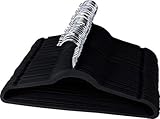
- Best budgetUtopia Home Velvet Hangers (50-Pack)~$18
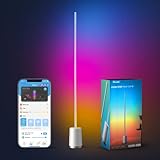
- Worth the splurgeGovee Corner Floor Lamp RGB~$40
How Command hooks actually work (and their real weight limits)
Command strips aren't glue — they're a stretch-release foam adhesive, and understanding that difference is the entire trick to using them well. The foam compresses to grip a huge surface area against your wall, which is why they hold so much more weight than a thumbtack or a dab of tape. But they only reach full strength after the adhesive has had time to bond, which means the most common failure isn't a bad strip — it's someone hanging a mirror ten minutes after sticking the strip on and wondering why it slid down the wall an hour later. Give any Command strip a full hour before you hang anything, and give large picture strips a full 24 hours before hanging anything heavy.
The weight ratings matter more than most people realize, and they're not marketing fluff — they're tested numbers. Small wire hooks hold around a pound, good for a single key or a thin scarf. Medium hooks handle two to three pounds — light frames, a small mirror, a strand of string lights. Large picture-hanging strips are rated up to 16 pounds per pair when you use two sets side by side, which covers the overwhelming majority of framed art and mirrors people actually own. Anything heavier than that — a large mirror, a TV, a heavy shelf loaded with books — needs to graduate to a different category of solution, which is the next section.
Prep matters as much as the product. Clean the wall with rubbing alcohol first (a dry paper towel just moves the dust and oil around, it doesn't remove it), and skip textured walls, wallpaper, and freshly painted surfaces entirely — Command strips are rated for smooth, cured paint, and anything else voids the whole promise. If your walls were painted within the last two to four weeks, wait it out. Fresh paint is still off-gassing and curing, and adhesive applied too early will peel the paint off with it when you remove it — which is the exact damage you were trying to avoid.
Removal is its own skill. Pull straight down and slowly on the tab, not out and away from the wall — stretching the foam is what releases the bond cleanly. Yank it sideways or rip it off fast and you're much more likely to take a strip of paint with it.
Floating shelves: the upgrade for anything heavier than a hook
Once you're past the 15–20 pound range, or you're dealing with uneven weight distribution — a shelf loaded with books, a heavy framed mirror, anything with real mass concentrated in one spot — adhesive alone stops being the right tool, and it's worth being honest about that instead of stacking six Command strips and hoping. This is where a small anchor and a floating shelf beat a wall's worth of hooks. A floating shelf uses a hidden bracket that mounts with two or three small screws, and the resulting holes are the kind of thing you fill with a dab of spackle and forget about at move-out — a completely different category of wall damage than a drilled-in curtain rod bracket or a mounted TV arm.
The reason floating shelves specifically solve the renter problem better than most other wall-mounted storage: they distribute weight across a bracket built for it, rather than relying on adhesive at all, and they instantly create display or storage space without needing a table or console underneath. Mount one at eye level in an entryway for keys and mail, one in a bathroom for a candle and folded towels, or a run of three in a living room for books and plants — same two or three small holes each, same easy patch job later.

Curtains without a single drill hole
Curtain rods are where most renters give up and just call the maintenance guy, but they don't need to. A spring-tension rod wedges inside the window frame using outward pressure alone — no brackets, no screws — and modern versions hold real curtain weight as long as you buy one rated for your window's width and don't overload it with heavy blackout drapes it wasn't built for. The trick nobody mentions: mounting inside the frame instead of on the wall above it also sits the fabric closer to the glass, which blocks more light around the edges than a wall-mounted rod would.
The curtain fabric matters here too. Heavy grommet-top blackout drapes with metal rings are genuinely too much weight and friction for a lightweight tension rod — that combination is how rods end up bowed or bent within a month. A lighter rod-pocket blackout panel, by contrast, glides easily and keeps the whole load within what a tension rod is designed to carry, which is the difference between a curtain setup that lasts your whole lease and one you're replacing every few months.
Cords, cables, and lighting without hardwiring anything
Once you start hanging shelves, string lights, or a mounted TV, you inherit a new problem: cords. The permanent fix — cutting a channel into the drywall to hide a cable run — is obviously off the table for a renter, but the alternative isn't "just let the cords hang." A floor-level cable management box gathers your power strip, chargers, and excess cord slack into one enclosed unit that sits discreetly against a baseboard, which solves 90% of the visual mess without touching the wall at all. Pair it with adhesive cord clips (the same stretch-release family as Command strips) to route the remaining cord along a baseboard instead of across open floor.
Lighting has the same renter constraint — you can't add a hardwired sconce or run new electrical, but you also don't have to live with just the one overhead fixture. A plug-in floor or corner lamp with tunable color temperature does most of what a wall sconce would, without an electrician or a single wire pulled through drywall. It's a genuinely underrated fix for the flat, uninviting light that comes standard in most rental units.
Closets, entryways, and furniture tricks that skip wall anchors entirely
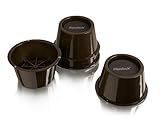
Not every space problem needs to go on the wall at all, and some of the best renter fixes are the ones that never touch it. Furniture risers are the most underused trick in this category — they lift a couch, dresser, or bookcase two or three inches, which instantly creates storage space underneath for bins, shoes, or off-season boxes, all without adding a single shelf or hook to the wall. For a small apartment, that's often more usable storage than a floating shelf would give you, and it's completely reversible in five minutes.
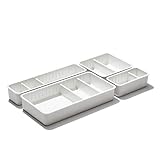
The other overlooked category is your closet itself. Swapping wire or bulky plastic hangers for thin, uniform velvet ones can free up 30–40% of your existing rod space just through profile alone — which matters enormously in a rental closet that's usually smaller than you'd like. Combine that reclaimed space with a drawer organizer on an entry table or dresser top for keys, mail, and the small stuff that otherwise piles up loose, and you've solved two real storage problems without a drill anywhere in sight.
What to skip (and where real anchors still win)
Adhesive hooks are genuinely great tools, but they get misused two ways, and both are worth naming. The first is overload — using fifteen Command hooks scattered across a small entryway or bathroom to hold everything from towels to keys to a mirror. It's technically load-bearing, but visually it reads as clutter, not organization. Pick one or two real anchor points for hooks and let everything else live in a drawer, a shelf, or a bin instead.
The second mistake is trying to stretch adhesive past what it was built for: a heavy full-length mirror, a wall-mounted TV, a curtain rod carrying floor-length blackout drapes with metal grommets, or anything where a fall could genuinely hurt someone or damage the floor. For those, the honest answer is a small drywall anchor and a real screw — the kind of hole that's trivial to patch with a dab of spackle at move-out, which almost every lease treats as normal wear and tear. That's a completely different conversation from drilling a masonry anchor into a load-bearing wall or running new electrical, which is where you actually need your landlord's sign-off. Knowing which category a project falls into before you start is what separates a renter-friendly weekend project from a security-deposit conversation.
Also skip generic off-brand adhesive strips sold at a fraction of the price. The 3M foam formula in genuine Command products is meaningfully stronger and more consistent than the knockoffs, and the whole point of this system is trusting the weight rating on the package. That's not a place to save two dollars.
Frequently asked questions
How much weight can Command hooks actually hold?
It depends on the size. Small wire hooks hold about a pound, medium hooks handle two to three pounds, and Command's large picture-hanging strips are rated up to 16 lbs per pair — enough for the vast majority of framed art and mirrors. Beyond that, move up to a floating shelf with a small anchor rather than stacking more adhesive.
Do Command strips damage paint when you remove them?
Not if you use them correctly. Pull the tab straight down slowly to stretch the foam and release the bond — that's the mechanism that lets them come off clean. Ripping them off sideways or too fast is what pulls paint with them. Also avoid using them on freshly painted walls (wait 2–4 weeks) or on textured surfaces and wallpaper, which they're not rated for.
Are floating shelves actually renter-friendly if they need screws?
Yes, in practice. A floating shelf typically needs two or three small anchor holes per bracket, which is a completely different category of damage than a drilled curtain rod bracket or a mounted TV arm. Most leases treat a few small, filled nail-sized holes as normal wear and tear at move-out.
Can a tension rod really hold blackout curtains without falling down?
Yes, as long as you match the rod to the fabric. A lightweight rod-pocket blackout panel works fine on a good tension rod rated for your window's width. Heavy grommet-top drapes with metal rings are too much added weight and friction for most tension rods and will bow or bend the rod over time — save those for a real wall-mounted bracket.
What's the best way to hide cords from a wall-mounted shelf or TV without cutting into drywall?
A floor-level cable management box that encloses your power strip and cord slack near the baseboard, combined with adhesive cord clips to route the remaining cord along the wall instead of across open floor. It solves most of the visual clutter without an in-wall cable channel, which isn't an option for renters anyway.
Is it ever worth asking a landlord for permission to drill?
Yes, for anything genuinely heavy or permanent — a wall-mounted TV, a heavy mirror, new electrical for a light fixture. Small anchor holes for a floating shelf or a picture frame are usually fine as normal wear and tear, but bigger structural changes are worth a quick email first. It's a five-minute ask that avoids a much bigger conversation at move-out.
How long should I wait before hanging something on a fresh Command strip?
At least an hour for light items, and a full 24 hours for anything near the top of the weight rating, like a large mirror on picture-hanging strips. The adhesive needs time to fully bond — hanging too early is the single most common reason a "properly rated" strip fails.