There's a very specific kind of gift math that has nothing to do with the actual number on the receipt. A $38 nylon bag can feel like a design purchase. A $45 glass coffee maker can feel like something you'd find in a museum gift shop. Meanwhile, a $150 gadget can feel like a $20 impulse buy from an airport kiosk the second you pull it out of the box. Price and perceived value are only loosely related, and the gap between them is exactly where the best gifts under $100 live.
- Top pickChemex 6-Cup Pour-Over Coffee Maker~$45
- Best budgetBaggu Nylon Crescent Bag~$38
- Worth the splurgeApple AirTag (4-Pack)~$99
This list is built around that gap. Every pick here is $100 or less — most are well under it — and every one earns its "reads expensive" reputation honestly, whether that's because of decades of brand reputation, a materials choice that photographs like a splurge, or an unboxing moment that makes the price tag feel like a rounding error. This isn't a stocking-stuffer list and it isn't a "best gifts under $20" list either — those exist elsewhere. This is the mid-tier: gifts with enough weight behind them to feel like a real gesture, without needing to spend real-gesture money.
Why some $80 gifts feel like $200 (and some $150 gifts feel like $40)
Perceived value comes down to a handful of predictable things: design that hasn't changed because it didn't need to, materials that feel solid in the hand, a brand story the recipient already half-knows, and packaging that makes opening the box feel like an event instead of a transaction. None of that requires a big budget. A lot of it is actually cheaper to manufacture than the flashier, more forgettable alternative — which is exactly why design-forward brands can sell a $45 pour-over glass carafe next to a shelf of $20 plastic ones and still sell out first.
The inverse is just as true, and it's the part people forget when they're gift shopping under a deadline: spending close to $100 doesn't guarantee the gift will feel like $100. Generic tech accessories, mall-brand leather goods, and anything trying too hard to look "premium" through gold foil and heavy fonts tend to undercut themselves. More on that trap in the skip section below — but first, the picks that actually deliver.
The coffee counter upgrade that reads like a registry splurge
Nothing quietly upgrades a kitchen counter's perceived value faster than swapping a drip machine's plastic carafe for hourglass-shaped borosilicate glass. The Chemex has looked essentially the same since 1941, which is precisely why it reads as a design object instead of a kitchen appliance — it's in MoMA's permanent collection, not because it's trying to be art, but because it already was one.
Pair it with something that protects the beans instead of just storing them, and the whole gift starts to feel like a considered set instead of one item. The Fellow Atmos does that job with a satisfying mechanical click that most cheap canisters simply can't fake.
Neither of these is trying to be espresso-machine money. Together they cost less than a single nice bottle of wine, and they sit on a counter looking like someone thought about the gift for longer than the ten minutes it actually took to order it.
The bag that reads like a design object, not a backpack
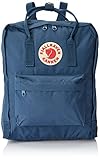
Bags are maybe the clearest example of perceived value having almost nothing to do with price. A Fjällräven Kanken is nylon, foam, and a couple of straps — genuinely inexpensive to produce — and yet it reads as a considered, slightly Scandinavian, design-literate choice specifically because it hasn't changed its silhouette in over fifty years. That kind of restraint is expensive-feeling in a way that a logo-covered gym bag never will be, no matter what it costs.
Baggu's crescent bag plays the same trick from a different angle. It's ripstop nylon that folds into a pouch smaller than a phone, but the curved silhouette and the color drops have made it a legitimate fashion-world crossover object — the kind of thing people photograph, not just carry. Giving it as a gift lands less like "here's a tote" and more like "I noticed what you'd actually reach for."
The everyday object turned into a status symbol
Some gifts feel expensive not because of what they're made of, but because of what they've come to represent culturally. The Stanley Quencher is, mechanically, an insulated tumbler — the kind of thing that's existed at every price point for decades. But it has become a genuine cultural object, recognizable across a parking lot, which means gifting one carries social currency that a technically-identical off-brand tumbler simply doesn't.
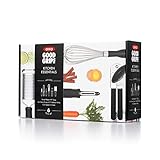
OXO's tool set works the same trick from the kitchen-drawer angle. Nobody has ever asked for "kitchen tools" on a wish list, and yet a full set with the brand's signature soft, oversized handles reads as an obvious upgrade the second someone uses it — because it solves the small daily annoyance of gadgets that slip, pinch, or feel flimsy, without anyone having to explain why that matters.
The same borrowed-status trick shows up in tech, too. Apple accessories carry perceived value that's almost entirely borrowed from the ecosystem around them, and a four-pack of AirTags is the clearest example on this list. It's a small plastic disc with a coin-cell battery, but it plugs directly into an interface the recipient already trusts, comes in that unmistakable packaging, and solves a real, slightly anxious problem — lost keys, a bag on a connecting flight — in a way that feels considerate rather than gimmicky.
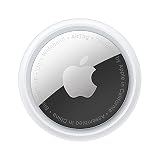
At just under $100, it's the priciest pick on this list — and also the one where the gap between sticker price and gift-opening reaction is the widest. Four AirTags means the recipient can tag a bag, a wallet, a set of keys, and a jacket, which turns one gift into four small moments of "oh, this is actually useful" instead of one.
What to skip: items that cost $100 and still look like it
The trap runs in both directions. Plenty of gifts land right around the $100 mark and manage to look like exactly what they cost — sometimes less. A few patterns worth avoiding:
Mall-kiosk leather goods. A wallet or card case from a brand nobody's heard of, dressed up with embossed logos and a "genuine leather" tag, tends to look like exactly what it is within a month — creased in the wrong places, with hardware that tarnishes. Real perceived value comes from restraint and known quality, not from trying to visually announce that something cost money.
Drugstore gift-basket sets. Shrink-wrapped bundles of lotion, candles, and bath salts in a wicker basket almost always undersell their own price tag. The packaging telegraphs "assembled to hit a price point," which is the opposite of the unboxing feeling you're going for.
Generic "as seen online" tech gadgets. Portable blenders, off-brand charging stations, and novelty gadgets with no recognizable maker behind them tend to feel disposable the moment they're out of the box, regardless of what they actually cost — because there's no brand trust doing any of the emotional work.
Anything trying too hard to look premium. Heavy gold foil, oversized "luxury" fonts, and packaging that over-explains how special the item is are usually compensating for a product that doesn't feel special on its own. The gifts that read expensive on this list mostly do it quietly — through material choice and a design that didn't need updating, not through marketing language on the box.
The through-line: a gift's perceived value rarely comes from the price tag getting closer to $100. It comes from picking something with a real design point of view, a material that holds up, or a brand story the recipient already trusts — all of which are available well under that number.
If you can only buy one: for a coffee-obsessed friend, the Chemex wins — it's the gift most likely to sit out on the counter permanently instead of getting shelved in a cabinet. For someone who carries a bag every single day, the Fjällräven Kanken wins on pure frequency of use. For anyone who's already lost a wallet or a set of keys once this year, the AirTag 4-pack wins on genuine usefulness relative to its price. And if you're gifting someone whose taste you don't know especially well, the Stanley Quencher is the safest bet on this entire list — it's hard to find someone who doesn't already want one.
The common thread across all of it: these are gifts that would still feel good to receive even if the recipient knew the exact price. That's the actual test for "reads expensive" — not whether it fools anyone, but whether the value holds up once the guessing is over.
FAQs
What makes a gift "read expensive" even when it isn't?
Usually a combination of three things: a design that hasn't needed to change in years, a brand the recipient already recognizes and trusts, and materials or mechanisms that feel solid in the hand. None of those require a big budget — they're often cheaper to produce than flashier, more forgettable alternatives.
Is it actually possible to find gifts under $100 that don't feel like a compromise?
Yes, and it's usually easier than finding something in the $150–200 range that feels worth it, because brands with strong design identities — Fjällräven, Chemex, Fellow, Stanley — price their most iconic items well under $100 specifically because the design itself is doing most of the persuading.
Why does the Apple AirTag 4-pack make the list when it's basic tracking hardware?
Because so much of its perceived value comes from the ecosystem around it, not the hardware itself. It plugs into an interface the recipient already trusts, arrives in Apple's recognizable packaging, and solves a genuinely anxious problem — losing something — which makes it feel considerate rather than gimmicky.
What's the biggest mistake people make gift shopping in this price range?
Assuming that spending closer to $100 automatically buys a more impressive gift. Generic tech accessories and mall-brand leather goods often land right around $100 and still manage to look like exactly what they cost — sometimes less — because they lack any real design point of view or brand trust behind them.
Are any of these picks better as a "just because" gift versus a milestone gift?
The Baggu bag and the OXO tool set both work well as lower-stakes "just because" gifts — they're useful without feeling like they're announcing an occasion. The Fjällräven backpack and the AirTag 4-pack carry a bit more weight and read better tied to an actual milestone, like a new job or a big trip.
How is this different from an "under $50" or "under $25" gift guide?
Those guides are built around a hard ceiling well below $100, which usually means smaller, single-purpose items. This list sits in the mid-tier on purpose — $100 or under, but leaning into picks with enough design weight and brand recognition to feel like a real gesture, not a stocking stuffer.