Twenty-five dollars is an oddly specific gift budget, and that's exactly why it works. It's past stocking-stuffer territory, but it's not the number where you start justifying a splurge either. It's the budget for a coworker's last day, a teacher gift, a "just because" for your sister, a hostess gift that needs to look like more thought than the drive over. A $25 gift has one job: look like more than it cost, without anyone having to say so.
- Top pickSilpat Premium Non-Stick Baking Mat (Half Sheet)~$25
- Best budgetFURTALK Cashmere-Feel Shawl Wrap~$17
- Worth the splurgeSpacesaver Vacuum Storage Bags (10-Pack)~$28
We've already covered $20 gifts and $30 gifts on this site, and reshuffling the same eight things and calling it new would be lazy. So this list sticks strictly to the $25-ish lane — nothing that's secretly a $12 stocking stuffer padded with tissue paper, nothing that's really a $40 item that happened to be on sale. These are things built to live right at this price point.
The $25 trap: too big for an afterthought, too small for an event
Here's where $25 gifts usually go wrong. People either treat it like a slightly nicer stocking stuffer — a scented candle, a mug, a paperback grabbed at the airport — or they overcorrect and buy something pricier that's been marked down, which reads as exactly what it is: a discount, not a choice. Neither lands. The candle says "I needed to get you something." The marked-down thing compliments your bargain-hunting, not the recipient.
The gifts that work at $25 share one trait: they're the full-price, correctly-sized version of something useful, not the clearance version of something impressive. A $25 item genuinely good at one job beats a $40 item discounted to $25 that's merely fine at three. Specificity reads as thoughtfulness. Range reads as filler.
The kitchen upgrade nobody buys for themselves
If you've ever lined a baking sheet and realized you're out of parchment paper again, a Silpat solves that permanently, and it feels like a real step up rather than a gadget. It's a French-made silicone and fiberglass mat that goes straight on a sheet pan — no parchment, no spray, no burnt edges — rated for thousands of uses. Anyone who bakes even occasionally notices the difference immediately, then wonders why they spent a decade buying rolls of parchment.
It works as a gift because it replaces a recurring annoyance with a permanent fix. The recipient isn't unwrapping "a mat." They're unwrapping the end of a problem they'd stopped noticing they had.
Small tech that reads as considered, not gadgety
Tech gifts under $25 usually skew novelty — the USB gadget nobody asked for, the cartoon-shaped charging cable. Skip that aisle entirely. The tech that actually lands at this price quietly solves a specific, universal annoyance instead of announcing itself as "a gadget."
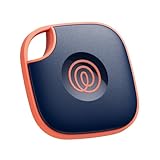
A Tile Mate is the clean example: a small Bluetooth tracker that clips onto keys, a bag, a remote — whatever someone is chronically losing — and pairs with their phone to ring it or pin its last known location. Give it to the specific person who's always patting down the couch cushions as you're trying to leave the house. They'll think of you every time it saves them ten minutes.
The second pick is less flashy and arguably more useful: a real cable management box. Anyone working from a desk has a power strip and a nest of cords in plain view, and a fabric-covered box hides all of it behind one clean case with slots for the cords that need to stay accessible. Not exciting to unwrap. Extremely satisfying to use.
The "how did I not know I needed this" home fix
Some of the best $25 gifts aren't glamorous at all — they're the small home fixes people complain about out loud but never get around to solving. That's exactly the gap this budget should fill.
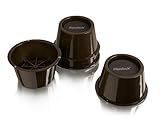
Furniture risers are the sleeper pick. If anyone's mentioned wanting more under-bed storage, or has a couch or bed frame sitting low enough that vacuuming underneath is a whole production, a set of sturdy risers fixes it in ten minutes with zero tools. Unglamorous on paper, genuinely appreciated in practice, because it solves an annoyance the person has quietly lived with for months.
Vacuum storage bags are the other unglamorous winner, especially for anyone who's just moved or swaps out bedding and out-of-season clothes twice a year. Stuff a comforter in, roll a vacuum hose over the valve, and a laundry basket's worth of bulk shrinks to pillow size. It's almost too practical to feel like a "real" gift, until the person uses it and realizes how much closet space they got back for free.
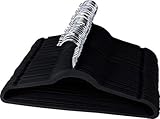
And for a whole-closet upgrade rather than one shelf, a big set of slim velvet hangers does more for how a closet looks and functions than almost anything else at this price. They take up a fraction of the space of wire hangers, the velvet grip keeps slippery blouses in place, and fifty of them replace a mismatched hanger collection in one go. Open a closet redone this way and it looks like a calmer, more expensive room.
A cozy layer that looks like it cost more than it did
Soft goods are a great $25 category because the gap between "looks cheap" and "looks considered" comes down almost entirely to material, not price. A lightweight wrap in a cashmere-feel blend drapes and photographs like something off a boutique rack, and at this price it's an easy "just because" gift or a travel throw for someone who's always cold on planes. The trick with soft goods is texture over logo — nobody's checking the tag, they're touching the fabric.
For someone lower-maintenance — a dad, a brother, a friend who wears the same three hats on rotation — a small set of well-made, pre-washed baseball caps does the same job in a different register. Three good hats instead of one mediocre one reads as "I thought about your rotation," not "I grabbed a hat off a rack." A strange amount of goodwill from something this simple.
What to skip at exactly $25
Anything from the gift-set aisle. Shrink-wrapped bath sets, "spa day" boxes, coffee-and-mug combos assembled by a marketing team rather than a person — these are almost always worth less than the sticker, because you're paying for packaging instead of quality. If you can't tell what's good inside without opening it, that's the tell.
Gift cards under the full budget. A standalone $25 gift card reads as exactly what it is: the amount of thought required to type in a number. Pair it with one small, specific item instead — a $15 card plus a $10 item they'd pick for themselves reads as far more considered.
Anything monogrammed with the wrong-name energy. A lot of $25 "personalized" gifts are a generic object with a name slapped on in a font that screams mass customization. If the base object wouldn't be a good gift without the initial, the initial won't save it.
The candle, unless you actually know their scent. Candles are the default $25 gift for a reason — genuinely nice when right, forgettable when wrong, and most givers are guessing at a near-stranger's preferences. Unless you've clocked what's already burning on their counter, this is the category most likely to end up quietly regifted.
How to make a $25 gift read as a $40 one
Presentation does more lifting at this price point than almost any other. A Silpat in its retail packaging is a kitchen tool. The same Silpat rolled with a wooden spatula and tied with butcher twine is a gift.
The second lever is restraint. One well-chosen $25 item beats two mediocre $12 items every time, even though the math is identical on paper. A single object says "I picked this specifically." Two random objects say "I hit twenty-five dollars and stopped." Resist padding a gift out just to fill the box — a specific note does more work than filler.
The last lever is matching the gift to something you've actually heard the person say out loud — "I keep losing my keys," "I hate how my closet looks," "I'm always cold at my desk." A $25 gift that answers a specific complaint beats a $60 gift that's generically nice, because it proves you were listening. That's the whole game at this price point.
FAQs
Is $25 actually enough to buy someone a good gift?
Yes, as long as you spend it on one well-made, specific item instead of splitting it across several small ones. Gifts that feel cheap at $25 are almost always assembled from filler pieces; the ones that feel considered put the whole budget toward a single object.
What's the difference between this list and the $20 or $30 gift guides on this site?
Different products entirely, chosen specifically for the $25-ish range rather than stretched from a cheaper list or trimmed from a pricier one. Nothing here repeats those guides' picks — this is its own lane.
Are practical, unglamorous gifts like furniture risers or vacuum bags actually good gifts?
Often better than something flashier, because they solve a specific annoyance the recipient has been living with quietly. A gift that fixes a real problem gets used and appreciated far more than a decorative item on a shelf.
Should I avoid gift cards at this price entirely?
Not entirely, but a standalone $25 gift card can read as low-effort. Pairing a smaller card with one small, specific item almost always lands better than either alone, because it shows real thought.
What's the single biggest mistake people make with $25 gifts?
Splitting the budget across multiple small, forgettable items instead of putting it all toward one good one. A single well-chosen object reads as intentional; a bundle of small things usually reads as padding.
Does presentation really matter that much at this price point?
Yes — arguably more than at any other price point, because $25 items are exactly the ones people expect to arrive in plain retail packaging. Rewrapping and adding a specific handwritten note costs almost nothing and changes how expensive the gift reads.