You know the look. A wire rack sagging under sneakers at odd angles. A canvas over-the-door pocket organizer stretched out and gray at the edges. A pile that starts as "just today's shoes" and never stops growing. It's not that you own too many shoes — it's that most shoe storage is designed like a dorm fix: cheap, temporary, built to be replaced in a year, not to actually live in your house.
- Top pickSlipstick Furniture Risers, 3in (4-Pack)~$20
- Best budgetOXO Good Grips POP Container (3.4qt)~$16
- Worth the splurgeBayka Floating Shelves (3-Pack)~$36
The good news: fixing it doesn't require a custom mudroom build or a four-figure closet system. It requires storage built for weight and daily use instead of a stock photo, and honesty about which "solutions" never actually work long-term. That's what this is — a real system, organized by where the problem shows up, plus the traps worth skipping entirely.
Why shoe storage reads as "dorm" in the first place
It comes down to three things: flimsy materials, no weight capacity, zero flexibility. A wire rack that bows under six pairs of sneakers, a fabric cube that collapses the second you overload one slot, a canvas over-door hanger that sags into a permanent smile shape — all of it looks like storage in the box and clutter within a season. The materials are chosen to hit a price point, not to hold weight over years.
The fix isn't a "nicer" version of the same flimsy idea. It's building storage around what you already own — a bench, a closet shelf, a stretch of wall — instead of buying a single-purpose tower that does one thing badly. Load-bearing and flexible reads as intentional. A pile of stopgap purchases reads as a dorm, no matter what it cost.
What to skip entirely
A few categories show up in every "shoe storage" search result and fail almost immediately with real use. Worth knowing before you spend money on them:
- Flimsy fabric cube organizers. The kind sold as a 6- or 9-cube grid with a fabric shell over a wire frame. They look tidy in the photo and sag within weeks once actual shoes — not the single lightweight sneaker shown in the listing — sit in every cube. The frame bows, the fabric stretches, and the whole thing tilts.
- Canvas over-the-door shoe organizers. The pockets stretch out permanently after a few months of heavier shoes, and the fabric holds onto shoe odor and moisture in a way that never fully airs out. If you want an over-door organizer, get one with rigid, wipeable pockets — clear vinyl or molded plastic — not woven fabric.
- Ultra-cheap wire racks with no crossbar support. They tip forward the moment weight isn't distributed evenly, which it never is. If a rack's shelves aren't triangulated or cross-braced, it's a matter of time before it leans.
- "Shoe towers" over four feet tall. They look efficient in square footage but are almost always top-heavy, and they ask you to remember which shelf has which shoe — nobody does past week two. Wide and low beats tall and narrow.
The pattern across all of it: anything that trades structural weight capacity for a lower price tag will look fine on day one and bad by month three. That's the actual definition of "dorm room" storage — not the price, the lifespan.
The entryway fix: raise what you already have
If there's a bench, a low cabinet, or even a sturdy stool by your door, you likely already own the base of a real shoe system — it's just not using its full footprint. Furniture risers lift an existing bench or cabinet two to three inches, which opens up a gap underneath just tall enough for a flat bin of off-season boots or the extra pairs that don't fit in daily rotation. It's the cheapest structural upgrade in this entire list, and it works with furniture you already have instead of asking you to buy a dedicated shoe piece.
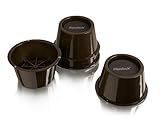
Once the bench is raised, the top surface becomes the actual landing zone — wide, low, no decisions required. That's the detail most shoe storage gets backwards: a rack with individual slots asks everyone in the house to sort shoes correctly every single day, forever. A flat, wide surface just asks them to set shoes down. One of those habits survives contact with a Tuesday morning. The other doesn't.
Closet shoe storage that doesn't eat your floor
Inside a closet, the biggest mistake is a freestanding shoe tower that competes with hanging clothes for floor space. A wire shoe shelf that mounts above the existing closet floor — hanging from the shelf edge or resting on brackets — adds a second full row of storage in the same footprint, so you're not trading shoes for room to fit a hamper or bin.
Shopping for closet shoe shelving in person, check two things: a front lip so shoes don't slide off when the door swings open, and a crossbar or triangulated support underneath — the same weight issue that sinks cheap freestanding racks, just at a smaller scale. Wood and heavy-gauge wire both work; thin chrome wire that flexes under a press of your hand doesn't.
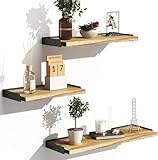
Above the shelf, use the vertical wall space you're otherwise wasting. A floating shelf at eye level gives you a landing zone for what doesn't sit flat — a shoe brush, polish, a small basket of laces — and it visually finishes the space so the closet reads as designed instead of crammed.
The maintenance layer nobody photographs
The difference between shoe storage that stays organized and storage that slowly reverts to a pile is a small system for the stuff that isn't shoes — laces, inserts, polish, cedar trees, the felt bags dress shoes came in. Without a spot for it, all of it gets thrown out and repurchased later, or ends up loose on the closet floor, undoing the point of organizing the shoes on top of it.
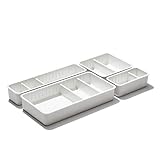
An interlocking drawer organizer solves this in a bench or closet drawer — laces get a slot, polish and brushes get another, and inserts stop migrating into random pairs of shoes.
For the smaller, loose stuff that doesn't belong in a drawer — cedar balls, moisture-absorbing packs, a spare tin of polish — a lidded, airtight container beats an open dish or a random shoebox. It stays visually contained on a shelf and only holds what you actually put there on purpose, instead of turning into a catch-all for whatever's nearby.

Off-season rotation and reclaiming rod space
Most closets hold every pair of shoes you own, year-round, though you're only wearing a fraction at any given time. Vacuum storage bags compress bulky winter boots or off-season sandals down to a fraction of their footprint and store them elsewhere — a top shelf, under a bed — so your primary shoe shelving only holds what's actually in rotation. That frees up more space than buying an entirely new rack ever does.
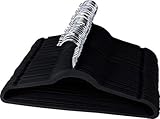
If your shoe shelving lives inside a closet that also holds clothes, the other easy win is reclaiming rod space above it. Swapping bulky wire or plastic hangers for slim, uniform ones can free up a meaningful chunk of hanging width — space you can use to hang a garment bag of out-of-rotation boots or coats, instead of stacking more bins on the closet floor where your shoe shelf needs to sit.
Putting the system together
Start with whatever furniture already sits at your door — raise it with risers, and the daily-rotation problem is mostly solved. Then the closet: shelving that adds a row without eating floor space, a floating shelf above it for the small stuff, a drawer organizer so laces and polish stop drifting loose. Last, rotate off-season pairs into vacuum bags so primary storage never holds more than what's actually worn. None of it requires a renovation, and none of it requires the flimsy single-purpose tower that looks fine in a listing photo and sad in your entryway six months later.
The honest bar to clear: would this still look intentional if a guest saw it on a random Tuesday, not staged for a photo? Wide, low, weight-rated storage clears that bar. A sagging canvas pocket organizer never does.
What's the single best upgrade for shoe clutter by the front door?
Raising whatever bench or cabinet you already have with furniture risers. It turns dead space underneath into hidden storage for off-rotation pairs, and keeps the top surface wide and low — a landing zone that gets used every day, unlike a tiered rack that asks people to sort shoes correctly.
Are over-the-door shoe organizers actually worth buying?
Only the rigid, wipeable kind — clear vinyl or molded plastic pockets. Canvas versions stretch out within a few months of holding real shoes and trap odor in the fabric. Skip anything described as canvas or woven entirely.
How many pairs of shoes should fit in a closet shoe shelf before it needs a second one?
Most standard wire or wood shoe shelves hold roughly eight to ten pairs per row. If you're stacking shoes or wedging pairs sideways to make them fit, add a second shelf or rotate some pairs into vacuum storage rather than overloading the one you have.
Do I need to drill into the wall for any of this?
No. Furniture risers, a bench, a drawer organizer, and vacuum storage bags need zero wall modification. A floating shelf is the one item here that involves small anchor holes, easily patched at move-out — a fair trade for wall-mounted storage that doesn't take up floor space.
What actually causes wire shoe racks to tip over or sag?
Uneven weight distribution combined with a frame that has no crossbar or triangulated support. Cheap racks cut costs exactly there, since bracing doesn't show up in a product photo. Press down on a shelf corner before buying — if it flexes noticeably, it will sag under real shoes within weeks.
Is it worth buying stackable shoe cubes instead of a fixed shelf?
Only rigid, hard-sided cubes with a hinged front door — not the soft fabric-cube version. Rigid cubes hold their shape and reconfigure as your shoe count changes, which fixed shelving can't. They cost more per pair of storage, so they make the most sense in a small closet where flexibility beats raw capacity.