There's a specific kind of chaos that happens by the front door of every house with kids in it, somewhere between 3:15 and 6:30pm: backpacks dropped mid-stride, shoes kicked off in three different directions, mail sliding onto the floor, someone yelling "has anyone seen my keys" from a room that is definitely not the entryway. Pinterest entryways do not have this problem, because Pinterest entryways do not have children, dogs, or actual mail walking through them. Real entryways do, every single day, forever.
- Top pickSlipstick CB654 3" Furniture Risers (4-pack)~$20
- Best budgetOXO Good Grips POP Container (3.4qt)~$16
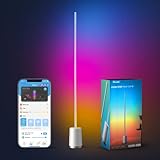
- Worth the splurgeGovee Corner Floor Lamp~$40
This isn't a list of a single ceramic catchall bowl and a nice runner rug. It's what actually holds up when four people, two backpacks, a dog, and a rotating cast of muddy shoes come through the same 25 square feet on repeat. Some of it is furniture. Most of it is smaller, cheaper, and more boring than you'd expect — which is exactly why it works.
Shoe storage that doesn't turn into a pile by 6pm
Every family goes through the same arc with shoe storage: buy a cute open shoe rack, watch it hold exactly the shoes that were on it the day you bought it, then watch everyone start dropping shoes on the floor next to it instead of on it. Open racks fail because they ask kids (and let's be honest, adults) to make a decision — which shelf, which direction, lined up or not — in the two seconds between walking in the door and wanting a snack. Nobody makes that decision every day for years.
The fix that actually sticks is a closed bench or cabinet at the door, with a wide, low, no-decisions landing zone on top for the shoes in daily rotation. The trick almost nobody uses: lift that bench or cabinet a few inches with furniture risers, and you double its storage without buying new furniture. The gap underneath becomes exactly enough room for a flat bin of off-season boots or the shoes that are one size too small but not going anywhere yet.
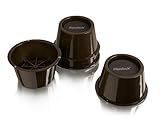
If you don't have a bench yet, don't buy one built for shoes specifically — buy any low storage bench with a lid or doors, and use the risers to make it work harder. It's a cheaper, more flexible solution than most single-purpose "shoe cubby" furniture, and it doesn't advertise to guests that you have a shoe problem.
Hooks and the bag drop zone
Hooks work when they're at the height of the person using them and within arm's reach of the door — not above it, not across the room. A single row of hooks at adult height means kids will never use them, which means backpacks land on the floor forever. The fix is two rows: one low enough for the shortest kid in the house, one at adult height for coats. It sounds obvious. Almost nobody actually does it, which is why the backpack pile persists in houses that own plenty of hooks.
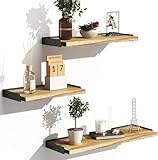
Above the hooks, a floating shelf gives you a landing zone for the stuff that doesn't hang — sunscreen, the dog's leash coiled up, a basket for gloves and hats in winter. It also visually "finishes" the wall so the hook zone reads as a designed space instead of a random cluster of pegs.
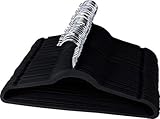
For the coats that overflow past the hooks — guest coats, the bulky winter ones nobody wants hanging on a peg — a slim hanger inside a nearby closet does more than another hook ever will. Velvet hangers specifically matter here: they're thin enough that you can fit roughly twice as many coats in the same closet width, and jackets don't slide off them the way they slide off wood or wire.
Mail, keys, and the black hole by the door
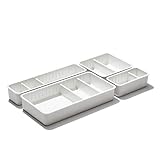
Every house has a surface where mail, keys, sunglasses, and random Amazon packaging accumulate until someone declares bankruptcy on it and starts over. The reason it keeps happening isn't laziness — it's that most catchall solutions are open and undivided, so everything piles into one drift instead of sorting itself. An interlocking drawer organizer, dropped into a console table or entry cabinet drawer, gives keys, sunglasses, and loose chargers their own slot instead of one shared heap. It takes about ten minutes to set up and the effect lasts for years, not days.
For the things that don't belong in a drawer — dog treats for the leash-grab on the way out, hand sanitizer, spare masks, loose change for parking meters — a lidded, airtight container works better than an open dish. The lid matters more than you'd think: an open dish becomes a magnet for whatever's in someone's pocket that day, while a container with a "pop" lid stays visually contained and only holds what you actually put there on purpose.

A bench worth sitting on
A bench that only exists to hold decorative pillows isn't doing its job. The point of an entryway bench is that someone can actually sit on it to put on shoes — which means the top has to stay clear, not become the new landing spot for everything that used to pile on the floor. That's mostly a discipline problem, but it's also a design problem: if there's nowhere else for phones and tablets to charge, they'll charge on the bench, and the bench stops being sittable.
A dedicated charging catch-all near the bench solves this specifically. A cable management box hides the power strip and the tangle of cords so you get a clean surface with just the devices sitting on top charging — not a power strip, three cables, and a wall wart all visible and in the way of anyone trying to sit down and tie their shoes.
If your entry space is tight, skip the bench entirely rather than cramming in a too-large one. A wall-mounted fold-down seat or even a single sturdy step stool at kid height solves the "put shoes on while standing on one foot" problem without eating floor space you don't have.
Mudroom-adjacent solutions for renters
Most of us don't have a mudroom. We have a hallway, a landing, or a stretch of wall between the door and the living room, and a lease that frowns on drilling into it. The good news: almost everything above works in a rental with minor adjustments — furniture risers need zero permanent modification, and a bench with a lid needs nothing but floor space. Floating shelves do involve small anchor holes, but they're patchable in five minutes when you move out, which is a fair trade for a wall-mounted landing zone that doesn't eat floor space.
Two more things matter more than people expect in a rental entry. First, lighting: rental hallways and entries are almost always underlit, which makes even a well-organized space feel like a junk closet. A plug-in floor lamp needs no electrician and no lease amendment, and it instantly makes the same pile of shoes look like an intentional space instead of an afterthought.
Second: rotation. Renters usually have less closet space overall, which means the entry closet gets asked to hold every coat, boot, and umbrella year-round instead of just the current season's. Vacuum storage bags let you compress last season's coats and boots down to a fraction of their size and store them elsewhere — a bedroom closet, under the bed, a hall closet shelf — so the entry closet only has to hold what's actually in use right now.
What's worth buying vs. what just looks nice in photos
A few entryway products show up in every "cozy entryway" roundup and fail almost immediately with actual kids, shoes, and bags in the mix. Worth knowing before you spend money on them:
- Open wicker baskets without lids. Gorgeous in a styled photo, useless in practice — shoes get tossed near them instead of into them, and loose items just make the basket look messier than the floor did. A closed bin or a lidded container beats an open basket every time real life is involved.
- A single decorative catchall bowl. It holds exactly four things — one set of keys, one pair of sunglasses — before it overflows into a pile of receipts and gum wrappers next to it. Fine for a studio apartment with one person. Doesn't scale to a family.
- Wall-mounted mail sorters with labeled slots. They photograph beautifully and nobody sorts mail into them consistently. Mail ends up in a stack on top of the sorter instead of inside it. A single closed drawer with one "mail" section works better because it hides the mess instead of asking you to maintain a system.
- Matching acrylic label systems. Satisfying to set up, requires ongoing maintenance most families won't keep doing past week three. Anything you have to relabel every time the contents change will eventually just become "whatever's near that container."
- Tall, narrow shoe cabinets with fixed shelves. They look tidy empty in a showroom and immediately fail with kids' shoes, which come in wildly different sizes and get kicked off at odd angles. A wide, low, adjustable or open landing surface beats a narrow cabinet with fixed slots almost every time.
The pattern across all of it: closed beats open, low and wide beats narrow and tall, and anything that requires a maintained system loses to anything that just contains the mess automatically. That's the whole philosophy behind every product on this list — none of it asks your family to become more organized people. It just makes the disorganized version less annoying to live with.
Frequently asked questions
What's the single best entryway upgrade for a family with kids?
A closed bench or cabinet with a wide, low landing zone for daily shoes, paired with two rows of hooks — one at kid height, one at adult height. That combination fixes the two biggest daily failure points: shoes dropped on the floor and backpacks that never make it onto a hook.
How do I stop shoes from piling up by the door?
Open shoe racks fail because they require a decision every time someone walks in. Switch to a wide, low, no-decisions surface — the top of a closed bench works better than any tiered rack — and use furniture risers to add hidden bin storage underneath for off-season pairs.
Do I need an actual mudroom to have an organized entryway?
No. A mudroom is nice but not required — a bench, hooks at two heights, a floating shelf, and a lidded drawer or container for keys and mail solve most of what a mudroom solves, and all of it fits in a hallway or landing.
What's the best way to keep mail from turning into a pile?
Skip decorative wall sorters — almost nobody uses them consistently. A single drawer with a dedicated section, using an interlocking drawer organizer to keep it from becoming a junk drawer, works better because it hides the mess instead of requiring you to maintain a labeled system.
How do I actually get kids to use hooks and bins instead of dropping things on the floor?
Height and distance matter more than the product. Hooks have to be low enough for the shortest kid to reach without help, and positioned within a step or two of the door — not across the entryway or behind another piece of furniture. If a hook takes more effort than dropping something on the floor, it loses every time.
Can renters get real entryway storage without drilling into the walls?
Mostly yes. Furniture risers, a bench, a drawer organizer, and a lidded catchall container need zero wall modification. Floating shelves need small anchor holes, which are easily patched at move-out — a reasonable trade for a wall-mounted landing zone that doesn't take up floor space.