Every shapewear ad promises the same thing: smooth lines, no lumps, you'll forget you're wearing it. Every shapewear owner knows the real story. You put it on at 4pm feeling sleek. By 8pm you're doing the discreet hallway shimmy at a wedding, yanking the waistband down half an inch without anyone noticing. By 10pm it's balled up in your bag and you're free, and slightly dented around the ribs.
Here's the thing almost nobody says out loud: that's not a you problem. It's a fabric and construction problem. Some shapewear is genuinely engineered to be worn for ten hours without a fight. Most of it is not, and the difference has almost nothing to do with price and everything to do with a handful of specific design choices — where the seams sit, how the fabric stretches, whether the waistband is bonded, and whether the size you bought was ever going to work for your body in the first place. This is a guide to telling the two apart before you buy, not after you're peeling something off your ribcage in a bathroom stall.
One more thing up front: shapewear is a tool, not a moral obligation. It doesn't fix anything that was broken, and your body doesn't need smoothing to be worth dressing well. If you like the way it makes certain outfits sit, great — this guide is for you. If you've been forcing yourself into something uncomfortable because you think you're supposed to, that's worth unpacking separately from anything on this list.
Why most shapewear turns on you by hour three
Shapewear discomfort almost always comes from one of three specific failures, and once you know what they look like, you can spot them in a product photo before you ever try the thing on.
The waistband rolls or digs. A cheap elastic waistband is built to compress, not to grip evenly. Once you sit down or eat anything, it finds the spot with the least resistance — usually the natural waist — and digs a groove into it. Good shapewear uses a wider, bonded waistband that distributes pressure across several inches instead of one line. That's the difference between "supported" and "sliced in half."
The fabric doesn't breathe. A lot of budget shapewear is thick, non-porous synthetic compression material that traps heat against your skin. Wear it under a dress for a few hours at an indoor event and you're sweating into fabric with nowhere to send that moisture — the specific, miserable combination of feeling restricted and overheated at once.
The size is wrong on purpose. A lot of shapewear brands size their charts tight, on the theory that tighter equals more "shaping." It backfires. Shapewear that's too small doesn't smooth anything — it just gets uncomfortable faster and creates new bulges at the edges. The right size should feel snug and supportive, not like you're wrestling a wetsuit two sizes too small.
Every genuinely comfortable piece on this list solves at least two of those three problems. Every piece worth skipping fails at least one of them badly.
What actually holds up: the fabric and construction that matters
Ignore the marketing copy for a second and look at three concrete things instead.
Four-way stretch fabric moves with you in every direction instead of just one. Nylon-spandex blends in the 80/20 to 90/10 range are the sweet spot: enough spandex for real compression, enough nylon that the fabric doesn't feel like a rubber band against your skin. If a listing doesn't mention the fabric blend at all, treat that as a small red flag.
Seam placement is the difference between shapewear that disappears under clothes and shapewear you feel with every step. Look for laser-cut or bonded seams rather than visible stitched ones, especially around the leg openings and waistband — those are the spots that chafe first.
Graduated compression — firmer in some zones, lighter in others — feels completely different from uniform, all-over squeezing, which is what makes shapewear feel like a full-body blood-pressure cuff. Graduated compression targets the areas that need smoothing and leaves room to breathe, bend, and eat dinner everywhere else. It's usually the single biggest reason one brand's shorts feel wearable for ten hours and another brand's nearly identical-looking shorts don't make it past two.
The all-day pick: a mid-thigh short built for actual wear
For a full day at the office followed by dinner, or a wedding running from ceremony to last dance, mid-thigh shorts are the most forgiving category of shapewear that exists. They smooth the stomach, hips, and upper thighs without a strapless top half that slides, and the extra thigh coverage means no chafing under a dress — a problem plain waist cinchers don't solve at all.
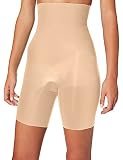
What makes this one specifically an all-day piece rather than a two-hour piece is the waistband — roughly two to three inches wide, sitting flat against skin instead of carving a line, and bonded as one piece rather than stitched elastic, so there's no seam edge to dig in at a long dinner. That's the unglamorous engineering detail that separates shapewear you forget you're wearing from shapewear you're negotiating with by 9pm.
Strapless bodysuits: the hardest category to get right — and one that mostly does
Strapless shapewear has a well-earned bad reputation. Anything that stays up without shoulder straps is fighting gravity all night, and a lot of cheaper strapless bodysuits solve that with an overly tight top band that leaves a deep red line under your arms by the time you're home. It's the single most common shapewear complaint there is, and it's almost entirely a construction issue, not an inevitable tradeoff.
The silicone grip strip is the detail that matters. It lets the bodysuit stay up using friction instead of raw squeezing — the actual trick to a strapless piece that doesn't leave marks. Worth noting plainly: some of this product's catalog images load as a generic placeholder tile rather than a lifestyle photo. That's a listing quirk, not a product issue — the affiliate link goes to the real item and works exactly the same either way.
One honest caveat: strapless bodysuits are a better choice under a strapless or off-the-shoulder dress than under anything with straps, since a strapless silhouette under a strapped dress can create its own visible line at the shoulder. Match the shapewear style to the dress style, not just the body part you want smoothed.
Sizing shapewear so it works with you, not against you
Sizing is where most shapewear disappointments actually start, and it happens before the product ever touches your skin. A few rules that consistently hold up.
Size up if you're between sizes, always. Shapewear brands size tighter than regular clothing on purpose, and going down for "more shaping" almost always backfires — less comfort and, ironically, less smoothing, since fabric that's too small creates its own bulges at the edges.
Measure, don't guess from your regular clothing size. Every brand's chart is a little different, and a medium in one line can fit like a small or a large in another. Five minutes with a tape measure saves an entire evening of misery later.
Match compression level to how long you're wearing it. Firm compression for a three-hour event is different from firm compression worn for a twelve-hour workday. For a day that runs from morning meetings through an evening dinner, a moderate-compression piece you can forget about beats a firm-compression piece that wins in photos but loses by 3pm.
| Style | Best for | Comfort level (full day) | Price |
|---|---|---|---|
| Mid-thigh short (SPANX Power Series) | Dresses, work-to-dinner days, anything where thigh chafing is a concern | High — wide bonded waistband, breathable fabric | ~$36 |
| Strapless full bodysuit (SHAPERX) | Strapless or off-shoulder dresses, events with dancing | Medium-high — silicone grip beats a tight top band | ~$33 |
| Waist cincher / trainer | Photos, short-duration wear only | Low — concentrated pressure, hard to sit or eat in | ~$20-40 |
| Full-body firm-control suit | Formalwear under a fitted gown, under two hours | Low-medium — smooths everything, fatigues fast | ~$50-90 |
| Bargain no-name compression shorts | Skip — see below | Very low — thin elastic, no breathability | ~$10-15 |
What to skip entirely
Waist cinchers and "trainers" for all-day wear. They concentrate pressure in one narrow band around the midsection, which is exactly what creates digging, difficulty breathing deeply, and the inability to eat a normal meal. Fine for a couple of hours in photos. Not fine for a wedding, a workday, or a sit-down dinner.
Full-body firm-control suits for long events. They smooth the most surface area, which is exactly why they fatigue the fastest — compressing your whole torso and thighs at once, even a well-made one feels like a lot by hour four. Save these for short, high-stakes formalwear moments, not a day that starts at 9am.
Anything without a stated fabric blend or compression level in the listing. Brands that engineered breathable, graduated-compression fabric say so, because it's what differentiates them from a $12 pair of thick spandex shorts. Listings that just say "shaping" with no other detail usually are that $12 pair.
Sizing down "for extra hold." Worth repeating because it's the single most common mistake: shapewear one size too small doesn't create more shaping. It creates more discomfort and new visible lines at the edges — the opposite of the entire point.
If you're choosing just one thing from this list: the mid-thigh short is the more versatile buy, wearable under nearly any dress or pair of trousers for a genuinely long day. The strapless bodysuit is the better call specifically for a strapless or off-shoulder dress, or any event where you know you'll be dancing. Neither one requires you to grit your teeth through the night to get the smooth line you wanted.
Frequently asked questions
How do I know what compression level I actually need?
Match compression to event length, not just the outfit. Moderate compression is right for anything over four or five hours — a workday, a long event, travel — since it smooths without the fatigue firm compression causes over time. Save firm compression for shorter, high-stakes wear.
Should I size up or down in shapewear compared to my normal clothing size?
Size up if you're between sizes, and measure against that specific brand's chart rather than assuming your regular clothing size translates directly. Brands intentionally size tighter than standard clothing, and sizing down for "more shaping" backfires — it creates new bulges at the edges instead of smoothing anything.
Why does my shapewear roll down or dig into my waist by the end of the day?
Almost always a waistband construction issue, not a sizing one. Thin, stitched elastic concentrates pressure on a single narrow line and rolls once you sit or move. A wide, bonded waistband — like the one on the SPANX Power Series short — distributes that pressure across several inches instead, so it holds up through sitting and eating without rolling.
Is strapless shapewear ever actually comfortable, or is the discomfort just part of the deal?
It can be genuinely comfortable with the right construction. The discomfort people associate with strapless shapewear comes from brands relying on a very tight top band to keep the piece up, which digs in under the arms. Silicone grip lining, like on the SHAPERX Strapless Shortie Bodysuit, solves the same staying-up problem with friction instead of raw compression.
Why does a product listing show a placeholder image instead of a real photo?
Some Amazon listings, including a couple in this guide, occasionally show a generic placeholder tile instead of a lifestyle photo due to how the catalog renders that listing. It has no bearing on the product or the affiliate link — clicking through takes you to the real item page and works exactly the same as any other link on this site.
Can shapewear be worn every day, or is it only for special events?
Moderate-compression, breathable pieces are reasonable for regular wear if they're comfortable for you, but shapewear isn't something you're obligated to wear daily or ever. It's a styling tool, not a requirement, and comfort should always outrank a specific silhouette if the two conflict.
What's the actual difference between graduated compression and firm all-over compression?
Graduated compression varies in intensity across the garment — firmer through the areas being smoothed, lighter everywhere else — which lets you move, bend, and breathe more normally. All-over uniform compression squeezes everything at the same intensity regardless of need, which is why it reads as more restrictive and fatigues faster over a long day.