Here is what nobody tells you when you get a dog: summer is a problem. Not in a cute, my dog likes ice cubes way — in a my 60-pound Lab is panting on the floor at 11pm and I have no idea if he's overheating or just being dramatic way. Dogs can't sweat. They cool through panting and through the pads on their feet. Which means the surface they're lying on actually matters a lot.
- Top pickArf Pets Self-Cooling Gel Mat~$30–45
- Best budgetKONG Classic Dog Toy~$13
- Worth the splurgeThe Green Pet Shop Self-Cooling Mat~$40–55
Cooling mats work by absorbing body heat away from the dog (pressure-activated gel) or by staying cool through water evaporation or simply being a non-heat-retaining material. I've tested four of them with my own animals across two summers, consulted the specs obsessively, and read through enough Amazon reviews to question my life choices. Here's what actually works — and what to skip.
Why your dog needs a cooling mat (and when they really don't)
Let's be honest: if you have central air and your dog has access to tile floors, a cooling mat is a quality-of-life upgrade, not a necessity. Dogs are good at finding the cold spots in a house. But cooling mats genuinely matter in a few situations:
- Brachycephalic breeds — bulldogs, pugs, Frenchies, Boston terriers. These dogs overheat faster and have less ability to pant effectively. A cooling mat is genuinely important for them in warm months.
- Senior dogs — older dogs have slower circulation and less ability to thermoregulate. A cool surface helps them rest comfortably.
- Post-exercise recovery — after a run or a long fetch session, a cooling mat shortens the panting period and reduces recovery time.
- Anyone without AC — if you're working from a non-air-conditioned apartment in July, your dog is suffering too.
- Car trips and crates — enclosed spaces get hot fast. A pressure-activated gel mat in a crate or back seat makes a meaningful difference.
If your dog is healthy, has AC access, and gravitates toward the bathroom tile anyway? They'll probably ignore the mat. Get one anyway — they're cheap enough that the occasional hot afternoon justifies it.
The best overall: Arf Pets Self-Cooling Mat
The Arf Pets gel mat is the one I've re-bought twice and recommended to everyone who asks. Pressure-activated gel means no electricity, no water, no refrigeration — you lay it down and it works. The gel recharges itself in about 15–20 minutes after the dog gets up. It comes in sizes from small (enough for a cat or small dog) up to XL (36" x 28"), has a durable PVC exterior, and is easy to wipe clean. It doesn't fold particularly flat, but it rolls reasonably well for travel.
The honest downside: the gel pad lasts about 30–45 minutes of continuous use before it warms up and needs to recharge. If your dog plants themselves on it for hours, it becomes a regular mat after 45 minutes. For most dogs who get up to drink water, move around, and investigate things, this isn't a problem. For a dog who finds a cool surface and doesn't move for three hours? You'll want a water-based mat or a fan.
Best for big dogs and heavy users: Green Pet Shop Self-Cooling Mat
The Green Pet Shop version uses the same pressure-activated gel principle but with a heavier-duty construction that holds up better for larger breeds. The XL hits 36" x 28" — big enough for most Labradors, Golden Retrievers, and German Shepherds to fully stretch out. The fill is a slightly different gel formula that reviewers consistently say stays cooler slightly longer than the Arf Pets version, though I haven't done a side-by-side timer test to confirm this personally.
It's about $10 more than the Arf Pets at comparable sizes. If you have a 70-pound dog who is truly a heat sponge, the extra durability is worth the price difference. If you have a smaller or medium dog, save the money and get the Arf Pets.
Best water-filled option: All for Paws Chill Out Ice Mat
Water-filled mats stay cool longer — the thermal mass of water takes much longer to equilibrate to body temperature than a thin gel layer. The All for Paws mat is filled with non-toxic water-based cooling liquid, folds flat for storage and travel, and works by the same principle as a cold water bottle: it just stays cold longer. You can also put it in the fridge for an additional boost on extremely hot days.
The trade-off: water-filled mats can spring leaks if your dog is a chewer or if the valve gets compromised. This mat is not for dogs who will bite at it out of curiosity. But for calm dogs or for use inside a crate where the dog is just lying on it, it's excellent. Longer cooling duration than gel, works well in cars and crates.
The budget pick worth knowing: KOPEKS Orthopedic Cooling Pad
If you're primarily concerned about comfort and temperature regulation on a tight budget, the KOPEKS orthopedic pad is a solid option. It combines a memory foam base with a cooling cover fabric — not a gel fill, just a breathable mesh fabric that doesn't trap heat the way a regular dog bed does. It won't match a gel mat for active cooling, but it won't collect and radiate heat back at your dog either. Good for older dogs who need orthopedic support alongside a cooler surface.
This is the "upgrade from a regular dog bed in summer" option rather than a true active cooling mat. Expectations managed: it keeps dogs cooler than a fleece bed, not cooler than a gel mat.
What to skip: the cooling mats that don't work
The cooling mat category has a frustrating amount of junk on Amazon. Here's what to avoid:
- Extremely cheap gel mats ($8–12) — the gel layer is so thin it warms up in under 10 minutes. You might as well put a damp towel on the floor. The savings are not worth it.
- Cooling mats marketed as "high-tech" with UV-resistant fabric claims — UV resistance is irrelevant for a dog mat used indoors. These listings are padding the feature list to justify a price.
- Cooling vests that double as "mats" — entirely different category, works differently (evaporative cooling for active dogs), don't confuse them. A vest is excellent for a hike; it's not a rest surface.
- Anything with a price under $12 and no brand name — the build quality is uniformly bad. The PVC seams split within two weeks.
One additional skip: electric cooling pads that plug into USB and use a small fan or thermoelectric element. They make noise, the dog almost always refuses to lie on them after day two, and they're not meaningfully cooler than a quality gel mat. Save yourself $30 and the frustration.
Complementary gear: what else actually helps on hot days
A cooling mat alone isn't the full picture. A few additions that make a real difference:
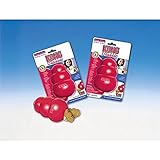
A KONG Classic for hot days — fill it with peanut butter or banana and freeze it. A frozen KONG occupies your dog's attention and provides internal cooling through what they're consuming. It's not a cooling mat, but it's one of the best summer dog tools in existence. The rubber holds up to years of serious chewing, and it's the one dog toy I'd buy before any other.
And if your dog primarily hangs out in one room: a basic box fan pointed low moves air efficiently and works in tandem with any cooling mat. Dogs benefit from airflow in the same way we do. A fan plus a gel mat is a genuinely effective combination for hot apartment summers, no AC required.
Frequently asked questions
Do cooling mats actually work for dogs?
Pressure-activated gel mats genuinely lower the surface temperature that a dog's body is in contact with, which draws heat away from them and reduces panting. Multiple veterinary sources recommend them for brachycephalic breeds and senior dogs. They're not a substitute for shade and water, but they're a real and effective tool for heat management.
How long does a cooling mat stay cold?
Pressure-activated gel mats typically stay noticeably cool for 30–45 minutes of continuous use, then need 15–20 minutes to recharge once the dog moves off. Water-filled mats last longer — often 1–2 hours — depending on ambient temperature and the size of the dog. No mat stays cold indefinitely without electricity or refrigeration.
Are cooling mats safe for dogs who chew?
Gel mats are generally non-toxic — the fill is a proprietary gel that's not harmful if ingested in small amounts — but a chewed-up mat is a destroyed mat, and some gel types cause mild GI upset. If your dog is a chewer, either supervise mat use or go with a cooling fabric mat (like the KOPEKS orthopedic option) that doesn't have a fill that can be extracted.
Can I put a cooling mat in the freezer to make it colder?
Water-filled mats: yes, and it works well. Gel mats: it's not recommended and can damage the gel structure. A water-based mat placed in the fridge (not freezer — freezer makes it too hard) for 20–30 minutes before a hot afternoon gives excellent cooling performance.
What size cooling mat do I need?
Your dog should be able to fully lie on their side with some extra room. For reference: small mats (~20"x16") work for dogs under 20 lbs; medium (~28"x20") for 20–50 lbs; large (~36"x28") for 50–90 lbs; XL for anything larger. When in doubt, size up — dogs like room to stretch, and a mat slightly too large beats one they can only partially lie on.
How do I clean a cooling mat?
Wipe down with a damp cloth and mild soap for gel mats — most can't go in the washing machine because the PVC exterior will crack. Water-filled mats can often be wiped similarly, and some have removable covers that are machine washable. Check the specific product's care instructions. None of them go in the dryer.