Somewhere around the second year of a long-distance friendship, you both quietly stop sending birthday cards that just say "miss you!!" in gel pen. Not because you miss each other less — usually the opposite — but because a card that only names the ache doesn't actually do anything about it. It just sits on a shelf being sad. The gifts that work for long-distance friends aren't the ones that point at the distance. They're the ones that shrink it, even for twenty minutes at a time.
- Top pickStanley Quencher 40oz Tumbler~$45
- Best budgetThe Midnight Library by Matt Haig~$13
- Worth the splurgeBearaby Cotton Napper Weighted Blanket~$199
That's the whole filter for this list. Every pick below either recreates something you used to do in the same room, or gives your friend something to hold, use, or flip through on the nights the group chat goes quiet and they're wishing you were on the other end of the couch instead of the other end of a time zone. A few things that photograph well for a gift guide but don't actually do that job didn't make the cut, and I'll tell you which ones and why.
What actually makes a long-distance gift land
Two things, really. First, can it be used together, even asynchronously — a book you're both reading, a coffee ritual you're both doing on the same Tuesday morning, a recipe you're both cooking on a video call. Second, if it can't be shared in real time, does it make the ordinary, gift-less days better — something soft to sit under, something to look at, something that makes their apartment feel a little less like a place they're doing this alone. Gifts that fail both tests are usually the ones built entirely around the sentiment of missing someone rather than the experience of it. They read as thoughtful in a listing photo and land as a slightly sad object on a nightstand.
Budget matters less here than specificity. A $13 book you know they'll actually finish beats a $60 "bestie" gift box every time, because the box is generic and the book is you, specifically, thinking of them, specifically.
Recreate the coffee date, from two states away
If you used to grab coffee together before one of you moved, the single best gift is rebuilding that ritual on your own schedules. It sounds almost too simple, but a matching pair of good tumblers — one for you, one for them — turns "text me when you're having your coffee" into an actual shared moment instead of a vague good intention that fades by week three.
Take it one step further and mail them the exact bag of coffee you're drinking, along with something to keep it fresh in. This is the part people skip, and it's the part that actually makes the ritual identical instead of just similar — same beans, same morning, two kitchens.
Something warm to hold when you can't hug them
This is the pick that sounds like a stretch until you've actually given or received one. There's a specific kind of loneliness in long-distance friendship that has nothing to do with conversation — you can talk every single day and still miss the physical fact of someone. A weighted blanket doesn't replace a hug, but it's the closest thing a gift can do, and it's genuinely used on the nights a phone call isn't enough.
It's a bigger spend than most of this list, which is exactly why it's worth reserving for the friendship where you'd genuinely fly across the country for their birthday if you could. For a lighter-touch version of the same idea, a soft throw blanket does a smaller version of the same job for a fraction of the price — it just won't have the same "someone thought about my actual nervous system" effect.
Something to do together without being in the same room
The best long-distance gifts create a shared activity you can do on your own schedules and then talk about later, the same way you'd talk about a show you're both watching. Books are the obvious version of this, and they're underrated as gifts precisely because everyone defaults to candles and mugs instead.
For a lower-commitment version that doesn't require finishing a whole novel to have something to talk about, a photography or essay book you can both flip through and text pages of works just as well, sometimes better, because there's no pressure to keep pace with each other.

And if the two of you used to cook together more than you read together, give them the cookbook and pick a night to make the same recipe on a video call. It's a genuinely fun, low-stakes way to spend an hour together that isn't just talking.

A place to put the memories you already have
If you've traveled to see each other even once, you almost certainly have printed photos, ticket stubs, or postcards sitting in a phone camera roll that never became anything physical. A small set of floating shelves gives your friend a place to actually display that stuff instead of letting it live forever in an unopened photo app folder.
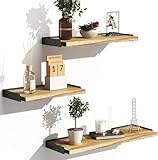
Pair it with a real plan, not just a wish. A simple planner your friend can use to actually block out the next visit — flights researched, dates picked, the trip moved from "someday" to a page with a date on it — does more for a long-distance friendship than almost anything you can ship in a box.
What to skip (and how to pick, if you're stuck)
Skip the generic "long distance bestie" merchandise — the matching necklaces that split into two halves of a heart, the mugs printed with a distance-in-miles calculation, the keychains that say "no matter the distance." These read as gifts bought for the category of long-distance friendship rather than for your specific friend, and they tend to get worn once for a photo and then live in a drawer. If you want the matched-pair effect, the coffee tumblers above do the same emotional job while also being something they'll actually use daily.
Skip elaborate "friendship lamp" gadgets unless you've confirmed both of you will actually set them up and keep them charged — they're a lovely idea on paper, but they require a working app, a stable connection, and enough consistent use from both people that they don't just end up as an unplugged nightlight within a month. If that's genuinely your friendship's love language, go for it. If you suspect one of you won't keep it charged, put that budget toward the coffee ritual instead. And skip pre-made "care package" boxes with a random assortment of snacks and a candle — they say less about your specific friendship than a book you know they'll love or a shelf for the photos you already have together. Specific always beats assorted.
If you're stuck choosing between what's above: a standing coffee or happy hour date before the move points you toward the tumblers and coffee canister — it's the cheapest pick here and the most immediately usable. A friendship built more on long phone calls than shared errands points toward the weighted blanket, the one that gets used on the hardest nights. Two readers should go with the book picks, close to foolproof and genuinely conversation-sparking. And an actual trip you keep talking about and never booking means the planner might be the most useful gift on this entire list — it turns intention into a date on a page.
One last thing worth saying: the card still matters. None of this works as well without a few actual sentences about why you picked it — "I remembered Sunday coffees" does more work than any object on this list, expensive or cheap. The gift gets the conversation started. The specific, handwritten reason is what actually closes the distance.
FAQs
What's the single best gift for a long-distance friend on a tight budget?
A book you're confident they'll love, paired with a specific note about why you picked it. Under $15, genuinely personal, and it gives you both something to talk about on your next call — which does more for the friendship than a more expensive but generic gift.
Are matching gifts (like the tumblers) actually a good idea, or are they cheesy?
They work when the matched item is something you'll both actually use daily, like a good tumbler or coffee ritual. They read as cheesy when the "matching" part is the whole point of the object, like split-heart necklaces or "bestie" merchandise, because then the gift exists to announce the friendship rather than to serve it.
Is a weighted blanket a weird gift to give a friend?
Less than it sounds. Weighted blankets are widely used as a comfort and anxiety-relief tool, not just a sleep aid, and giving one to a friend who's dealing with the specific loneliness of distance is a genuinely thoughtful, low-awkwardness gift — it's not a substitute for physical affection, but it's the closest a shippable object gets.
What if we already do video calls constantly — do we still need "activity" gifts like books or cookbooks?
Yes, arguably more than friends who talk less. Frequent video calls can run out of new things to talk about faster than people expect. A shared book or a cook-along night gives you fresh material for the calls you're already having, instead of both of you defaulting to "not much, you?" every week.
Should I send a physical care package or is that outdated?
A thoughtful, specific package is never outdated — a generic pre-assembled one is what feels stale. Skip the random snack box and instead mail two or three things that connect directly to a shared memory or an activity you can do together, like the coffee beans and canister, or a book with a note tucked inside.
How do I pick a gift if we've never actually lived in the same city?
Lean into books, a cook-along night, or the coffee ritual — all three work for friendships built entirely over distance, since they don't rely on recreating an in-person memory you don't have. The planner is also a strong pick here, since it can help you plan your very first trip to finally meet in person.
What's a good gift if my friend is going through a hard time and lives far away?
The weighted blanket and a specific, handwritten letter tend to matter most here — comfort you can physically feel, plus proof that you're thinking of them even though you can't show up in person. A scheduled, recurring phone or video call on the calendar helps too, since uncertainty about when you'll next talk can be its own source of stress during a hard stretch.