Laundry rooms get zero design budget in most homes. They're an afterthought closet, a corner of the garage, or a stacked unit crammed into a hallway nook — and because nobody plans to spend time in there, nobody plans to spend money in there either. Which is a shame, because a laundry room is one of the few rooms in the house where a handful of small, cheap fixes make an outsized difference. You're not renovating. You're solving five specific annoyances: no storage, no counter space, tangled hangers, a detergent jug that never pours clean, and lighting that makes the whole room feel like a chore before you've touched a single sock. None of the fixes below cost more than $40, and most of them install in under ten minutes.
- Top pickSlipstick Furniture Risers 3in (4-pack)~$20
- Best budgetOXO Good Grips POP Container 3.4qt~$16
- Worth the splurgeGovee Corner Floor Lamp RGB~$40
Why laundry rooms stay chaotic no matter how often you clean them
It's not a mess problem, it's a design problem. Most laundry rooms were built with exactly enough space for a washer and a dryer and nothing else — no shelf, no counter, no drawer, sometimes not even room to fully open the dryer door without backing into the opposite wall. So every bottle of detergent, every dryer sheet box, every lonely sock that didn't make it back to its owner ends up stacked on top of the machines, which is the one surface in the room that vibrates. Bottles fall. Boxes get damp from vented steam. And because there's no logical home for anything, "put it away" quietly turns into "put it somewhere," which is how a laundry room ends up looking like a junk drawer with plumbing.
The fix isn't a bigger room. It's using the vertical space and the dead space you already have — above the machines, underneath them, and on the one wall you've been ignoring because it seemed too narrow to bother with.
Lift the machines first — it's the cheapest square footage you'll ever gain
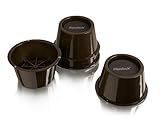
This is the upgrade nobody thinks of and everybody wishes they'd done sooner. A set of heavy-duty furniture risers under your washer and dryer adds three inches of clearance underneath both machines, and three inches is more than it sounds like — it's enough for a shallow storage bin holding detergent pods, dryer balls, and stain sticks, or a flat under-machine tray for the stray socks and lint that otherwise vanish into the gap behind the units. It also raises the machines to a slightly more comfortable loading height, which your lower back will notice after about the third load.
The only thing to check first: your washer and dryer's total weight rating against the riser's capacity, and make sure the machines are unplugged and the water line is disconnected before you tilt anything. It's a two-person job for five minutes, and it's the single highest-leverage $20 you can spend in this room.
Give the wall above the machines an actual job
Almost every laundry room has one strip of unused wall directly above the washer and dryer, and almost nobody uses it for anything other than staring at while waiting for a cycle to finish. A single floating shelf mounted there turns dead wall space into a real counter — somewhere to set folded clothes as they come out of the dryer, stash the detergent and fabric softener so they're not balanced on a vibrating lid, or keep a small caddy of stain removers and a lint roller within arm's reach instead of in a cabinet three rooms away.
Go with solid wood shelves rated for real weight, not the flimsy floating shelves meant for picture frames — a full jug of detergent alone can run four or five pounds, and you'll likely stack more than one thing up there. Mount two if the wall allows it: one at eye level for things you grab constantly, one higher up for the stuff you use once a season, like stain pretreatment or the sweater-drying rack.

Get detergent pods and loose supplies out of their ugly packaging
Detergent pod tubs are a specific kind of annoying: the flip-top lid never quite latches after the first few uses, they're not stackable, and if one tips over on a shelf you're picking sticky pods up off the floor for a week. The fix is moving pods, dryer sheets, and stain-stick refills into a proper airtight, stackable container. It sounds like overkill for laundry supplies until you've done it once and realized you can finally see how many pods are actually left instead of shaking the tub and guessing.
This is also the move for anyone dealing with kids or pets in the house — a container that seals shut and doesn't pop open if it gets knocked off a shelf is a small safety upgrade, not just an organizational one.

Fix the actual bottleneck: drying, hanging, and off-season storage
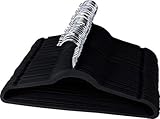
The step that slows a laundry routine down the most isn't washing or drying — it's the fifteen minutes after, when clean clothes need somewhere to go and there's no hanging space nearby. If your laundry room backs up to a closet or has even a foot of rod space, a set of slim, non-slip hangers changes the whole flow. Thin velvet hangers take up a fraction of the space wire or thick plastic hangers do, which means shirts stop sliding off mid-cycle and you can actually hang a full load straight out of the dryer instead of piling it on top of the machine "for now" — which is how that pile becomes permanent.
The other half of this problem is seasonal bulk: comforters, out-of-season coats, and extra bedding that get washed occasionally but otherwise just take up shelf space you need for regular laundry supplies. Vacuum storage bags compress that bulk down to a third of its size, freeing up the one shelf or cabinet most laundry rooms have for things you actually reach for every week.
Hide what you can't fix, and light what you can
Not every laundry room can be renovated, but almost every laundry room can be disguised a little. If yours is an open utility nook with exposed plumbing, a wire shelf, or a stacked unit with no doors, a simple tension-rod curtain hung just in front of it hides the utilitarian look for the cost of a rod and a length of fabric — no contractor, no cabinet install, done in twenty minutes. It's the same trick people use under open bathroom vanities, and it works exactly as well here.
The other upgrade that punches way above its price: actual light. Laundry rooms are almost always windowless, tucked in a basement, garage, or interior closet, and lit by a single bare bulb that makes it hard to tell if a stain actually came out before you toss something in the dryer and set it forever. A bright corner lamp — even a cheap one — makes stain-checking possible and makes the room feel like somewhere you don't mind spending ten minutes folding towels instead of a place you're rushing to leave.

One more drawer, and what's not worth your money
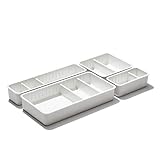
If your laundry area has any kind of drawer nearby — even a shallow one meant for something else — a modular organizer insert turns it into the home for lint rollers, stain pens, spare buttons, and the sewing kit you swear you'll use someday. It's the same principle as a kitchen utensil drawer: give loose small things a designated compartment and they stop migrating onto every flat surface in the room.
As for what to skip: scented in-wash storage sachets and "laundry room decor" plaques are pure impulse-buy filler that solve nothing structural. Same with over-the-top wall organizers built for laundry rooms twice the size of a typical American one — measure your actual wall before buying anything marketed as a full laundry system, because most of them assume six feet of clearance nobody's closet-sized laundry nook actually has. And skip any "laundry pod dispenser" gadget that claims to measure and drop pods automatically; they jam constantly and cost more than the container-and-scoop method above, for a worse result.
Frequently asked questions
What's the single best laundry room upgrade under $50?
Furniture risers under the washer and dryer. For about $20 you gain real storage space underneath both machines and a slightly better loading height, and it takes less than ten minutes with two people. Nothing else on this list creates more usable space for less money.
Is it safe to raise a washer and dryer on furniture risers?
Yes, as long as the risers are rated for the combined weight of the machine plus a full load of wet laundry, and they sit flat on a level floor. Unplug the machines and disconnect the water line before tilting them, and do it with two people — a loaded washer is heavier than it looks.
How do I add storage to a laundry room with no closet or cabinets?
Start with a floating shelf above the machines — most laundry rooms have that strip of wall going completely unused. Pair it with an airtight container for detergent pods and a curtain on a tension rod to hide any open shelving or exposed plumbing. All three fit in a space with zero built-in storage.
Why does my laundry room always smell musty?
Usually poor airflow combined with damp items sitting too long — a wet towel left on top of the machine, or a laundry basket of just-washed clothes that sat a few hours before drying. Better lighting won't fix the smell directly, but it helps you notice and address damp items faster instead of forgetting they're there.
Are detergent pod containers actually worth buying instead of using the tub it came in?
Yes, mostly for two reasons: the original tubs rarely stack and the flip lids wear out fast, and a clear airtight container lets you see your remaining supply at a glance. It's a small upgrade, but it's one of those things that removes a tiny daily annoyance you'd stopped noticing you had.
What laundry room products should I skip?
Scented in-wash sachets, decorative laundry-room wall plaques, automatic pod dispensers prone to jamming, and any "complete laundry system" that assumes a six-foot wall of clearance. Measure your actual space before buying anything marketed as a full system — most laundry nooks are smaller than the marketing photos suggest.
Can I hide an open laundry nook without a full renovation?
Yes — a tension rod and a curtain hung just in front of an open shelf, stacked unit, or exposed plumbing does the job for under $30 and takes about twenty minutes with no tools beyond a tape measure. It's the same trick used under open bathroom vanities, and it works just as well here.