Every robot vacuum comparison eventually collapses into the same unhelpful advice: "it depends on your budget." True, but useless. So instead of a broad roundup, this is a direct, two-product showdown — the iRobot Roomba j7+ Self-Emptying ($550) against the Eufy RoboVac 11S Max ($200) — because these two machines represent the two real decision points most people are actually stuck between. One is the "buy it once, forget it exists" premium option. The other is the "does what it says on the box and costs a fraction of the price" budget option. There isn't a right answer for everyone. There's a right answer for your specific floor plan, your patience for maintenance, and whether you have a dog that occasionally has an accident on the living room rug.
- Top pickiRobot Roomba j7+ Self-Emptying Robot Vacuum~$550
- Best budgetAnker Cable Management Box~$26
We're not testing a mop-vs-vacuum question here — that's a different article entirely. This is two vacuums, same job, wildly different approaches to doing it. Here's exactly where they differ, where they don't, and which one you should actually buy.
The 30-second verdict
If you have pets, a busy household with stuff on the floor (cables, shoes, toys), and $550 you're willing to spend to never think about vacuuming again, get the Roomba j7+. If you live in a smaller space, have a simpler floor plan, and want a robot vacuum that just quietly does its job without a subscription-adjacent ecosystem, get the Eufy 11S Max. Neither is the "wrong" choice — they're built for different households, not different quality tiers.
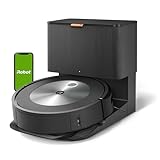
Head-to-head: the actual spec comparison
Marketing copy makes every robot vacuum sound revolutionary. The table below strips that out and puts the two machines side by side on the things that actually change how they perform in your house.
| Category | Roomba j7+ | Eufy 11S Max |
|---|---|---|
| Price | ~$550 | ~$200 |
| Self-emptying base | Yes — up to 60 days of debris | No — empty the bin after every 1–2 runs |
| Navigation | Smart mapping, remembers room layout, supports room-specific cleaning | Reactive/random-bounce navigation, no room mapping |
| Obstacle avoidance | AI camera-based detection avoids cords, pet waste, shoes, socks | Basic bump-and-sensor avoidance for furniture and walls only |
| App features | Room-by-room scheduling, keep-out zones, cleaning history, voice control via Alexa/Google | Basic scheduling and on/off control, no mapping-based zones |
| Battery / runtime | ~75 minutes, auto-returns and resumes where it left off | ~100 minutes, self-charges but does not resume mid-clean |
| Noise level | Moderate — louder during self-empty cycle (a few seconds) | Quiet — one of the lowest-noise budget models available |
| Best for | Pet owners, multi-room homes, hands-off maintenance | Small-to-mid apartments, simple layouts, budget-first buyers |
The two numbers that matter most in that table are the ones people usually skip past: navigation and obstacle avoidance. Suction power gets all the marketing attention, but both machines pick up dirt just fine on a single pass. What actually separates a good robot vacuum experience from a frustrating one is whether it gets stuck, tangled, or lost — and that's a navigation and sensor problem, not a suction problem.
What the extra $350 on the Roomba actually buys you
The Roomba j7+'s headline feature is the self-emptying Clean Base, and it's genuinely the single best quality-of-life upgrade in the entire robot vacuum category. You interact with the vacuum roughly once every one to two months, instead of after every single run. That alone reframes the whole ownership experience — it stops being "a chore you delegated to a robot" and starts being "a thing that just happens."
But the more interesting upgrade is the AI-based obstacle avoidance. iRobot trained the j7+'s onboard camera system on millions of real household images specifically to recognize cords, shoes, pet toys, and — famously — pet waste. iRobot is confident enough in this that they offer a guarantee: if it runs over solid pet waste, they'll replace the unit for free. That's not a feature you'll find on any budget model, and if you have a dog with an unpredictable stomach, it's not a small thing. Mapping is the other real upgrade: the j7+ learns your home's layout well enough that you can tell the app "just do the kitchen" and it goes straight there instead of covering the whole floor plan.
The tradeoff is exactly what you'd expect from a more complex machine: more to potentially go wrong, a noisier self-empty cycle (a loud few seconds, not a constant hum), and a price that's nearly three times the Eufy's. For a lot of households, that math doesn't pencil out. For pet owners and people who genuinely never want to think about vacuuming, it does.
What the Eufy proves: you don't need all of that to get clean floors
The Eufy 11S Max is proof that a robot vacuum doesn't need mapping, a camera, or a subscription-adjacent app to actually clean a floor well. It's slim enough to get under furniture the Roomba can't reach, quiet enough to run while you're on a video call in the next room, and its 100-minute runtime actually outlasts the pricier Roomba's battery. For a studio, one-bedroom, or any home with a straightforward, mostly-open floor plan, the case for spending an extra $350 gets thin fast.
The honest limitation is navigation. Without mapping, the 11S Max cleans in a semi-random bounce pattern — it'll cover the floor eventually, but it can't be told to clean one specific room, and it's more likely to miss a corner on any single run (it usually catches it on the next one). It also has no camera-based obstacle detection, so loose cords, phone chargers, and stray socks need to be picked up before you run it, the same way you would for any older robot vacuum. That's a real chore, but it's also a five-second habit most households already have from years of regular vacuuming.
What you're not giving up: suction, reliability, or build quality. Eufy has been in this category long enough that the 11S Max's mechanics are proven, not experimental. You're specifically giving up mapping, self-emptying, and camera-based smarts — three things that matter enormously in a pet-heavy, cluttered, multi-room home, and much less in a simpler one.
Building the full smart-clean-home setup
Whichever vacuum you land on, a few small additions make the whole system work better rather than just adding it to an already-cluttered floor plan. None of these are required — but if you're setting up a dedicated cleaning corner, they solve the actual friction points that come with owning a robot vacuum.
The charging dock — especially the Roomba's Clean Base, which needs a power outlet and a few feet of clearance on either side — tends to become a cord magnet. A cable management box keeps the excess power cord and outlet strip contained instead of turning into exactly the kind of tangle a robot vacuum is supposed to avoid, not create.
And if you're already thinking about the room the vacuum lives in as a "smart clean home" project rather than a single appliance purchase, blackout curtains are a genuinely underrated pairing — less UV fading on the floors the vacuum is working to keep clean, and a room that reads as more finished and intentional overall.
Where each one falls short
Neither machine is perfect, and it's worth being upfront about both. The Roomba j7+ struggles with thick shag or high-pile rugs the same way most robot vacuums do — the AI avoidance system is excellent with objects, less excellent with terrain — and the self-emptying base is loud enough during its few-second cycle that some people schedule cleanings for when they're not on a call. It's also the more expensive machine to eventually service, since replacement filters, brushes, and bin bags for the Clean Base add up over a couple of years.
The Eufy 11S Max's shortcomings are simpler and more predictable: no mapping means no "just do the bedroom" convenience, no self-empty means a weekly-ish habit of dumping the bin yourself, and the lack of camera-based avoidance means it will absolutely run over a phone charger you forgot on the floor. None of these are dealbreakers — they're just the tradeoffs of a $200 machine doing a $550 machine's job with fewer sensors.
The verdict: who should actually buy which
Buy the Roomba j7+ if any of these are true: you have a dog or cat and want the pet-waste avoidance guarantee, your home has multiple rooms and you want to schedule cleaning by room, floors regularly have cords or clutter on them, or the idea of not touching the vacuum for two months sounds worth $350 to you. This is the "set it and forget it" option, and it earns that reputation.
Buy the Eufy 11S Max if you live in a smaller space with a simple, mostly-open layout, you don't mind emptying a bin once a week, you'd rather pick up stray cords for thirty seconds than pay for a camera to avoid them, or $200 is simply the ceiling of what this category is worth to you. It is not a compromise pick — it's the correct pick for a specific, common kind of home, and it will clean that home just as thoroughly as the Roomba does.
The mistake to avoid is buying the expensive one out of habit or FOMO when your home doesn't actually need what it's solving for. A studio apartment doesn't need room-by-room mapping. A house with two dogs and a toddler's toy collection absolutely does. Match the machine to the mess, not the price tag to your budget ceiling.
Frequently asked questions
Is the Roomba j7+ really worth $350 more than the Eufy 11S Max?
It depends entirely on your home. For pet owners and multi-room households, the self-emptying base and AI obstacle avoidance solve real, recurring friction — that's worth the premium for most people in that situation. For a simple, single-level, clutter-light home, the Eufy delivers comparable actual cleaning performance for less than half the price.
Does the Eufy 11S Max really not need an app to work?
Correct — it operates fully with its physical remote and onboard controls. The Eufy Home app adds convenience (scheduling, remote start), but unlike some competitors, it's optional rather than required to run basic cleaning cycles.
Which one handles pet hair better?
Both handle pet hair well, but the Roomba j7+ has the edge for households with pets specifically because of its pet-waste avoidance guarantee and stronger obstacle detection — it's less likely to drag waste across a rug mid-cleaning. For hair pickup alone, both machines perform comparably.
Do I need mapping, or is random-path navigation good enough?
For a single open room or small apartment, random-path navigation (like the Eufy's) covers the floor thoroughly over a few runs and works fine. Mapping becomes valuable once you have multiple rooms, want to clean specific areas on demand, or want to set no-go zones around a pet's food bowl or a kid's play area.
How loud is the Roomba's self-emptying base?
It's noticeably loud, but only for about 10–15 seconds at the end of a cleaning cycle when it empties the bin into the base. It's not a constant noise — most owners say it stops being noticeable within a week of living with it.
Can either of these vacuums mop as well as vacuum?
No — both the Roomba j7+ and Eufy 11S Max are vacuum-only. If mopping matters to you, that's a separate decision with its own tradeoffs between combo units and dedicated mop robots, worth researching on its own rather than folding into a vacuum-only comparison.
Will either vacuum get tangled in long hair or cords?
The Roomba j7+'s camera-based avoidance actively steers around visible cords, which cuts down on tangles significantly. The Eufy 11S Max has no such detection, so cords and long hair on the floor should be cleared before running it — the same habit needed for most budget robot vacuums.