Somewhere along the way, "fidget" became a punchline — a spinner clattering on a middle-schooler's desk, a cube of clicky buttons that makes an open office turn around and glare. That reputation does a disservice to a real thing. Fidgeting isn't a distraction habit to break; for a lot of brains it's a release valve, a way of offloading restless energy so the rest of the brain can focus on the meeting or the spreadsheet. The problem was never fidgeting. It was the toys. Here's the difference between something built to entertain you for thirty seconds and something built to quietly help you think, plus the picks that hold up at a desk.
- Top pickFull Focus Planner by Michael Hyatt~$45
- Best budgetPerform Better Light Resistance Mini Band Set~$22
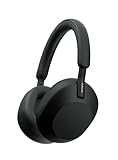
- Worth the splurgeSony WH-1000XM5 Noise-Cancelling Headphones~$398
The research is more legitimate than the stigma suggests
Occupational therapists have used movement-based tools for sensory regulation for decades, and research has caught up with what a lot of ADHD and autistic adults already knew: small, repetitive movement can improve attention rather than pull it apart. A frequently cited 2015 UC Davis study found that children with ADHD who were allowed to fidget — swiveling, bouncing a leg — performed measurably better on cognitive tasks than when told to sit still. The working theory: ADHD brains often run under-aroused, and small physical input raises baseline alertness to a level where focus becomes possible.
This is also just stimming, minus the stigma-loaded word. Rocking, tapping, twisting a ring — these are self-regulatory behaviors autistic and ADHD people have quietly done forever, often while masking them in professional settings because of how they're perceived. The shift worth making isn't to stop moving. It's to stop hiding it, and instead pick a form subtle enough to coexist with a client meeting — and effective enough to be worth doing.
Toy vs. tool: the distinction that actually matters
A fidget toy is designed to capture attention — that's the whole point of a spinner or a cube with eight buttons and switches. Great for a kid in a waiting room. Terrible for an adult trying to hold a thought during a budget review, because the toy competes with the task for the same attention it's supposed to free up.
A genuine focus tool works the opposite way. It's boring on purpose — quiet, repetitive, and it doesn't ask your eyes or working memory to participate. Nothing below lights up, plays a sound, or needs to be looked at. It just needs to be within reach.
One underrated focus tool isn't tactile at all — it's structural. A lot of restlessness at work isn't sensory, it's a mind casting around for the next thing because there's no visible container for it. A planner built around daily anchor points gives a wandering brain somewhere to land instead of spinning.
Desk-appropriate: what actually survives a meeting
The test for whether something belongs on your desk during a call isn't whether it helps you focus — plenty of things do that. It's whether a coworker could sit across from you for an hour and never notice you're using it. That rules out anything with a click mechanism, anything that requires looking at it, or anything louder than fabric brushing fabric.
One option almost nobody frames as a fidget tool, but functions exactly like one: a soft resistance loop band, looped loosely around your ankles or your chair legs. It gives restless legs something to press against under a desk — silent, invisible, and unlike foot-tapping, it doesn't telegraph through the floor to the person next to you. It's marketed for glute activation, but the same light tension is what a lot of people are chasing when they bounce a knee through a two-hour meeting.
The other half of desk-appropriate focus is controlling what's coming at you, not just what your hands are doing. Auditory sensitivity is common among neurodivergent adults, and an open office is a low-grade assault of keyboard clatter, HVAC hum, and other people's calls. Noise-cancelling headphones aren't a fidget tool in the traditional sense, but they do the same job: remove a source of dysregulation so the rest of your attention has somewhere to go.
Tactile vs. visual: matching the tool to the actual itch
Not all restlessness lives in the same place, which is why a one-size-fits-all "fidget toy" so often misses. Some people need something in their hands — squeezing, rolling, pressing. Some need proprioceptive input, a clinical way of saying "pressure that tells the nervous system where it is in space." That second category is the most overlooked, and it's where a weighted lap pad earns its keep. Occupational therapists have used weighted items for this purpose for years — deep, even pressure has a measurable calming effect, the same mechanism behind why a firm blanket feels grounding when you're overwhelmed.
You don't need a full weighted blanket at your desk (please don't try to work under one), but folding a lighter one across your lap at a home desk gives you that same steady input without asking anything of your hands or eyes — a fidget that regulates in the background instead of occupying your attention.
If your itch is more environmental than physical — you focus better when the room feels settled — that's a real category too, and the one people are least likely to name as a "focus tool." A near-silent diffuser running in the background gives a wandering mind a steady, low sensory anchor without adding visual or auditory clutter. It's the opposite of a fidget toy in the best way: something you stop noticing within ten minutes, which is the point.
What to actually skip
A few categories are almost never worth buying, no matter how good the reviews look:
- Anything with a click mechanism. Clicky pens, pop-its, and button cubes are the fastest way to get side-eyed in a shared office. If it's audible more than a foot away, it's not a desk tool.
- Anything that requires looking at it. Spinners, puzzle cubes, and kinetic sand are visually engaging by design — competing for the same attention you're trying to protect, not freeing it up.
- The $3 novelty version of anything. Dollar-bin spinners and stress balls split or stop working within weeks. If it's worth adding to your desk, it's worth buying the version built to survive years of daily handling, not months.
- Anything marketed at kids and rebranded for adults. A lot of "adult fidget" marketing is just kids' sensory toys in a matte colorway. The tell is in the reviews: "broke in a week," "too loud for work."
The honest litmus test: if you'd be embarrassed to use it in front of your boss, it's a toy. If nobody in the room would ever notice, it's a tool.
Building an actual kit, not another drawer of clutter
You don't need five of these. Most people land on one primary tool and a backup for different contexts — one for calls, one for solo deep work, one for the more sensory-overloaded parts of the day. A reasonable starting kit: a resistance loop band for calls where your hands are visible but your legs aren't, noise-cancelling headphones for loud environments, and a planner or weighted lap pad for restlessness during solo focus blocks. Add a diffuser if the environment itself feels like part of the problem. That's it — no drawer of half-used novelty items, just a small set of things that quietly do the job.
Frequently asked questions
Is fidgeting during meetings actually rude, or is that just perception?
It depends on the form. Audible fidgeting — clicking a pen, tapping a desk — is genuinely distracting, and that perception is fair. Quiet, self-contained fidgeting — a loop band under the desk, shifting weight — has no impact on anyone else in the room. The goal isn't to stop fidgeting to seem professional; it's to make it invisible so the question never comes up.
Do fidget tools actually help with ADHD, or is that a myth?
There's real research behind it, though it's not universal. The 2015 UC Davis study on movement and attention in children with ADHD supports the idea that physical movement can raise arousal to a level where focus becomes accessible. It's not a replacement for other ADHD management strategies, but for many people it's a legitimate, low-cost tool rather than a placebo.
What's the actual difference between stimming and fidgeting?
Mostly the word, and who's using it. "Stimming" is the clinical and community term, most associated with autism and ADHD, for repetitive movement used for self-regulation. "Fidgeting" is the more casual, less stigmatized word for largely the same behavior. Neither is a problem to fix — both are ways a nervous system manages input, and the goal is finding a form that works in your environment, not eliminating it.
Why do cheap fidget toys break so fast?
Most novelty fidget toys use thin plastic, cheap springs, or bearings not designed for constant daily handling. A spinner bearing rated for occasional use wears out fast under someone using it the way it's meant to be used — hundreds of times a day. The products worth buying are usually built for a different primary purpose (resistance bands, weighted textiles, headphones) to a genuine durability standard, then repurposed as a focus tool.
Is it weird to use a weighted lap pad at a desk?
Not in a home office, and increasingly not in flexible workplaces either. Weighted lap pads are a well-documented occupational therapy tool for both children and adults, used specifically for focus and anxiety regulation during seated work. At a shared office desk it's a more personal call, but at home there's nothing to explain — it's a blanket on your lap, not a device.
What should I look for if I want something for my hands specifically?
Look for smooth, matte, silent materials — worry stones, smooth wood, silicone rings — over anything with moving mechanical parts. The click-free rule matters most here, since hand fidgets are most likely to end up in visible use during a call. A plain object with a pleasant texture outperforms a mechanical toy for actual focus, because there's nothing novel enough to compete for your attention once the first minute of curiosity wears off.
How do I bring this up if a coworker or manager questions why I fidget?
You don't owe a deep explanation, but a short, matter-of-fact one lands better than an apology: "This helps me focus, it's not distracting anyone." Fidgeting for focus is increasingly recognized in workplace accommodation conversations, particularly for ADHD and autism, and framing it as a tool rather than a habit to justify tends to shift the conversation quickly.