Your dog does not check the weather app. Your dog wants to walk at 6:45am regardless of what's happening outside, and unless you want a stir-crazy animal reorganizing your couch cushions out of boredom, you're going out in it — the sideways rain, the ankle-deep mud, the 12-degree morning, the July pavement that could fry an egg. We already covered raincoats sized by breed in a separate deep-dive, so this isn't that. This is everything else in the bad-weather walking kit: what's actually in your hands, what's on your dog's feet, what makes you visible at dusk, and what happens to all of it once you're back inside dripping on the mat.
- Top pickBagsmart Toiletry Bag with Hanging Hook~$20
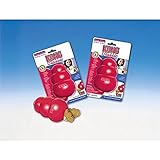
- Best budgetKONG Classic Dog Toy~$13
- Worth the splurgeSpacesaver Vacuum Storage Bags 10pk~$28
Rain: it's not just the coat, it's what's in your hands
A raincoat keeps your dog dry. It does nothing for the part where you're holding a leash with wet gloves while trying to bag something in a downpour with your free hand, which is somehow always the hand you need for the umbrella. This is where a hands-free leash earns its keep — a waist-belt leash that clips around your body instead of dangling from your fist means you have two hands free for an umbrella, a phone, or just staying upright on a slick sidewalk. Ruffwear's Flagline hands-free leash and Tuff Mutt's waist-belt version are both well-reviewed, adjustable, and built with a bungee section that absorbs sudden pulls without yanking your hip out — genuinely useful if your dog lunges at a squirrel mid-puddle.
For the leash itself, skip anything cotton or webbing that soaks up water and stays cold and heavy for the rest of the walk. A coated nylon or biothane leash sheds water and wipes dry in seconds — biothane in particular (brands like Perri's and various Etsy leatherworkers make them) is basically the vinyl-record equivalent of a leash: it never actually gets wet in any way that matters.
The other rain problem nobody talks about: treat pouches. Paper treats turn to mush, and a soggy pocket is miserable. A small zippered pouch clipped to the hands-free leash keeps training treats dry, which matters more in the rain because that's exactly when you need extra reinforcement to keep a wet, distracted dog walking calmly instead of dragging you toward the nearest awning.
Mud: paw protection that isn't a losing battle
Mud season is the one where owners either give up entirely (fine, track it through the house, mop later) or go to war with it. If you're going to war, you have two real options: boots or paw wax, and they solve different problems.
Musher's Secret is the paw wax nearly every serious dog owner eventually lands on. It's a thick balm you rub into the pads before a muddy or salted walk — it creates a semi-permeable barrier that blocks mud, ice-melt chemicals, and hot pavement from directly contacting the pad, without restricting the paw the way a boot does. It doesn't stop mud from touching the paw entirely, but it stops it from caking in and drying between the pads, which is where the real post-walk mess and irritation comes from. It's also the low-effort option — no fitting, no sizing, no "my dog refuses to walk with things on his feet" standoff.
If your dog's paws need more coverage — long-haired breeds where mud mats into the fur between the toes, or dogs recovering from a pad injury — actual boots are worth the adjustment period. Ruffwear's Grip Trex boots have a genuinely grippy sole and a secure closure that doesn't pop off in deep mud the way cheaper boots do. PawZ disposable rubber boots are the budget, low-commitment version — thin, balloon-like, and disposable after a few wears, which is honestly perfect for "let's just try this once and see if he tolerates it" before you invest in the real thing.
Whatever you use, expect three or four short walks of your dog doing the high-step "why are my feet like this" walk before they stop noticing. That's normal. Don't give up after one bad reaction.
Cold: it's about wind and ground contact more than temperature
Dogs handle cold air better than people assume — it's wind and wet ground contact that actually cause problems. A dry, still 25°F morning is usually fine for most adult dogs with any kind of coat. A windy, wet, or salted 35°F morning is harder on a dog than a still, dry 10°F one. That's why the raincoat we covered separately does real winter duty too — a shell blocks wind, which is often the bigger issue than the raw temperature number.
For genuinely cold climates, layering matters the same way it does for people: a base layer (a light fleece for short-haired or senior dogs) under a wind/waterproof shell traps warmth without restricting movement. Skip anything all-fleece with no shell — it looks cozy but does nothing against wind and gets waterlogged in snow.
Paw protection matters even more in winter than in mud season, because of ice-melt salt. Rock salt and chemical de-icers are genuinely irritating to paw pads and toxic if licked off afterward — this is the single best argument for either boots or Musher's Secret in winter, and for wiping paws down with a damp towel the second you're back inside, before your dog has a chance to lick the salt residue off their own feet.
Heat: the walk you should probably skip
This is the "what to skip" advice hiding inside a gear section: on a genuinely hot day, the best piece of bad-weather walking gear is the decision not to walk at midday at all. Pavement absorbs and radiates heat well past what feels tolerable to a human standing on it in shoes — the reliable test is to press the back of your hand to the sidewalk for seven seconds; if you can't hold it there, it's too hot for paws, full stop, boots or no boots.
If you do need to walk in heat — early morning, late evening, shaded routes only — a cooling vest (soaked in water and left slightly damp, using evaporation rather than ice packs) helps more than people expect for short-haired dogs and brachycephalic breeds who struggle to regulate heat through panting alone. Bring water on any walk over fifteen minutes in real heat; a collapsible silicone bowl clipped to the leash weighs nothing and means you're not relying on your dog finding a puddle, which in hot weather is often stagnant and not something you want them drinking anyway.
Visibility and safety: the gear that actually prevents accidents
Bad weather usually means low light — overcast rain, early winter darkness, fog — and this is the category of gear that matters most and gets skipped most. A driver who can see your dog has time to react. A driver who can't, doesn't.
Nite Ize NiteHowl LED safety necklaces are inexpensive, battery-powered, and visible from a genuinely long distance — they loop over a collar or harness and glow steadily or blink, your choice. Ruffwear's Beacon clip-on light does the same job attached directly to a collar D-ring, and it's tougher and more water-resistant if you're walking in actual rain rather than just dim light. For yourself, a reflective vest or armband does more good than people think — drivers scanning the road pick up a moving reflective strip on a person much faster than a small dog-shaped shadow at ankle height.
Reflective leashes and harnesses are a nice layer on top of active lighting, but they only work when a light source (headlights) hits them directly — they're a backup, not a replacement for an actual LED light in genuinely dark or foggy conditions. Don't let a reflective harness give you false confidence on a pitch-black, unlit street; that's exactly when you want the blinking light, not just the reflective piping.
What to skip
- Novelty umbrella leashes: the leash-with-built-in-umbrella gadgets look clever online and are miserable in actual wind — the umbrella catches gusts and yanks the whole rig sideways. A separate hands-free leash and a normal umbrella work better than a combined gadget.
- Cheap balloon-style dog boots with a single velcro strap: they pop off in real mud within one walk. If you're going the boot route, spend the extra $20-30 for a secure closure system.
- Retractable leashes in bad weather, period: the thin cord is genuinely dangerous with wet or gloved hands — it can slip, and the mechanism doesn't handle mud or grit well. Bad weather is exactly when you want a fixed-length leash you can control.
- Scented or heavily dyed paw balms: your dog will lick their paws. Stick to products explicitly formulated and marketed for dog paw protection, not a repurposed human hand balm.
- Ice-cold cooling vests packed with actual ice packs: counterintuitively these can cause a dog to overheat faster once removed, because the body hasn't had to regulate itself. Evaporative cooling (just water) is the safer mechanism.
Post-walk cleanup and keeping the whole kit organized
The unglamorous truth about bad-weather dog walking is that the walk is only half of it — the other half is what happens in your entryway afterward. A soaked, muddy dog and a pile of wet gear turn into chaos fast if you don't have a system. A small towel by the door for a quick paw-and-belly wipe-down before your dog is allowed past the mat solves 80% of the tracked-mud problem on its own.
For keeping small walk essentials together and dry — poop bags, a couple of treats, a compact towel, the paw wax — a repurposed toiletry bag works better than you'd expect. A hanging toiletry bag with a hook, like the Bagsmart below, clips onto a doorknob or hook by the door and keeps everything in one zippered, water-resistant spot instead of scattered across three different jacket pockets and a kitchen drawer.
Then there's the seasonal gear itself — the winter coat, the summer cooling vest, a spare set of boots — which takes up real closet space if you leave it loose. Compressing it into vacuum storage bags between seasons means you're not digging through a bin of tangled leashes and half-deflated boots every time the weather turns. Label each bag by season and you'll actually find the right gear on the first cold or rainy morning instead of improvising with whatever's on top.
One more tangential but real tie-in: bad weather isn't just a walking problem, it's an indoor-comfort problem too. Thunderstorms and high wind rattle a lot of dogs, and part of managing a genuinely miserable weather day is what you do inside. A dim, quiet room helps a anxious dog settle during a storm — blackout curtains cut down on the flash of lightning through the windows, which for a sound- and light-sensitive dog is half the battle. It's not a walking-gear item, but if you're already dog-proofing your home against bad weather, it's worth having in the same room as the crate or bed your dog retreats to.
And on the days where the weather genuinely isn't walkable — ice storm, severe thunderstorm warning, dangerous heat advisory — the honest answer is to skip the walk entirely rather than force it. A frozen, stuffed KONG buys a legitimately exhausted-feeling dog 20-30 minutes of focused chewing, which takes the edge off the missed exercise far better than a five-minute compromise walk in genuinely unsafe conditions.
FAQs
Do I really need a hands-free leash, or is a regular leash fine in bad weather?
A regular leash works fine for a calm dog on a dry-ish day. Hands-free leashes earn their cost specifically in bad weather, when you need a free hand for an umbrella, a phone flashlight in the dark, or just balance on slick or icy ground. If your dog pulls hard or you walk in genuinely bad conditions often, the waist-belt style is worth it; for occasional light rain, don't feel obligated.
Is paw wax or boots better for muddy walks?
Paw wax (like Musher's Secret) is lower-effort and works well for everyday mud and light ice-melt exposure — no fitting, no adjustment period, just rub it in before the walk. Boots give more complete coverage and are worth it for long-haired breeds where mud mats into the fur, dogs recovering from a pad injury, or serious winter salt exposure. Many owners use wax as the daily default and keep boots for the worst days.
How cold is too cold to walk a dog?
There's no single number — it depends on coat type, age, size, and wind. A dry, calm 20°F is manageable for many adult dogs with a shell coat; a windy, wet 35°F can be harder on the same dog. Watch for shivering, lifting paws repeatedly, or trying to turn back — those are your dog telling you it's enough, regardless of what the thermometer says. Small, short-haired, senior, and very young dogs need shorter, more cautious walks in cold weather across the board.
What's the seven-second pavement test for heat?
Press the back of your hand (not your palm, which is more callused) to the pavement and hold it for seven seconds. If it's too hot for you to keep your hand there, it's too hot for your dog's paws — boots or wax won't fully fix that, the real fix is walking earlier, later, or on grass instead.
Do I need both a reflective leash/harness and an LED light?
Ideally yes, but if you only get one, get the LED light. Reflective material only works when a light source hits it directly, which means it's useless on an unlit street with no passing headlights. A blinking or steady LED clip (like a Nite Ize NiteHowl or Ruffwear Beacon) is visible on its own in genuine darkness or fog, which is when visibility gear matters most.
How do I stop my dog from tracking mud through the whole house?
A towel stationed right at the door for an immediate paw-and-belly wipe before your dog is allowed further in solves most of it. Keep a small hanging toiletry-bag-style kit by the door with the towel, some paw wax, and poop bags so the whole routine — walk gear out, cleanup gear in — lives in one spot instead of being scattered around the house.
What should I do with my dog on days too dangerous to walk at all?
Skip the walk rather than force it during ice storms, severe thunderstorms, or extreme heat advisories. Indoor enrichment — a frozen stuffed KONG, a snuffle mat, short indoor training sessions, or tug and fetch in a hallway — burns real mental and physical energy as a substitute. For storm-anxious dogs specifically, dimming the room with blackout curtains and adding white noise helps more than people expect.