Most training plans don't fail because the dog is stubborn or the method is wrong. They fail because the treats are too big, too crumbly, or too boring, and the handler is fumbling in a pocket while the dog's attention drifts to a squirrel. Training treats and the way you deliver them are the unglamorous, unsexy backbone of every successful session, and almost nobody talks about them with any real specificity. Everyone will tell you to "use high-value treats," and then leave you standing in the pet aisle staring at forty bags of jerky strips the size of a deck of cards, wondering which one is actually going to work for twenty rapid-fire repetitions in a row. Here's the honest breakdown — what makes a treat good for training versus just a treat, how to think about the high-value-versus-everyday split, and the pouch and storage system that turns "I should train more" into something you actually do.
- Top pickOXO Good Grips POP Container 3.4qt~$20
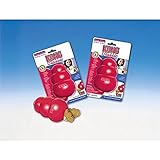
- Best budgetKONG Classic Dog Toy~$13
What actually makes a treat good for rapid-fire training
Training treats live or die on four things: size, texture, crumb, and scent. Everything else — the packaging, the "grain-free" callout, the shape — is noise.
Size. A good training treat is pea-sized or smaller. Not because your dog can't handle a bigger bite, but because you're going to deliver ten, twenty, sometimes forty of these in a five-minute session, and a dog that has to stop and chew a nickel-sized chunk breaks the rhythm every single time. Speed of consumption is the whole game in rapid-fire work like loose-leash walking, recall drills, or shaping a new behavior with a clicker. If your dog is chewing, they're not learning. Most bagged treats are sized for a leisurely once-a-day biscuit, not twenty reps of "sit-stay-release," so you'll often need to break bigger treats into training-sized pieces yourself.
Texture. Soft and semi-moist beats hard and crunchy for anything requiring speed. A dog can inhale a soft treat in under a second; a crunchy biscuit takes several seconds of audible chewing, which is dead time in a training session and, worse, a moment where their focus leaves you. Freeze-dried treats are the exception — they're crunchy but shatter almost instantly, so they behave more like soft treats in terms of consumption speed. True hard biscuits (the kind meant to help with dental health) belong in a different bucket entirely — they're a reward for later, not a training tool.
Crumb. This is the one nobody warns you about until you're standing in a park with treat dust all over your hands, your pockets, and somehow your car upholstery three days later. Low-crumb treats keep your hands clean enough to also hold a leash, a clicker, and possibly a coffee, which matters more than it sounds like it should when you're mid-session. High-crumb treats also tend to fall apart in a pouch, turning into a sad paste of crumbs stuck to the fabric that you then have to wash out.
Scent. This is the actual engine of high-value treats. A treat that smells strongly — real meat, fish, liver — pulls a dog's attention away from distractions in a way that a bland, dry biscuit simply cannot compete with. If you're training somewhere with real competition for attention (other dogs, food smells, a busy sidewalk), scent intensity is often the deciding factor in whether your dog engages with you at all.
High-value versus everyday: when to use which
The mistake most people make is using their best treats for everything, which means there's no ceiling left when you actually need one. Save the strongest stuff for the hardest asks.
Everyday treats are for behaviors your dog already knows well and performs reliably — a sit before the leash goes on, a polite "off" from the counter, general reinforcement on a walk. These can be lower-value, lower-cost treats, and honestly this is where a lot of regular kibble works fine if your dog is food-motivated enough. Something like Charlee Bear Crunch Treats or plain freeze-dried liver bits cut small work well here — they're cheap enough to use constantly without a second thought.
High-value treats are reserved for new behaviors, distraction-heavy environments, recall (always, forever, recall is never "off duty" for high-value rewards), and anything genuinely difficult for your dog — reactive dog work, loose-leash walking past another dog, or "leave it" with something actually tempting on the ground. This is where real meat or fish-based soft treats earn their keep. Zuke's Mini Naturals are close to the industry standard for a reason — pea-sized, soft, low-crumb, and strongly scented without being greasy. Wellness Soft Puppy Bites and Blue Buffalo Mini Bits are both reasonable alternatives in the same category if your dog's stomach doesn't love Zuke's specific recipe. For dogs with sensitivities or for handlers who want something even more potent, single-ingredient freeze-dried options like PureBites freeze-dried chicken, beef liver, or salmon are about as high-value as it gets — pure protein, intensely scented, and they crumble into perfect training-sized pieces with a squeeze.
A genuinely useful trick: keep two treats in rotation at all times, one everyday and one high-value, and switch deliberately based on the difficulty of what you're asking. Your dog will start to read the difference, and that differential reinforcement is exactly what keeps the high-value stuff special instead of just becoming the new baseline.
Storage: keeping treats fresh between sessions
Soft training treats go stale, dry out, or attract every ant in a five-mile radius if they're left in an open bag clipped shut with a binder clip. If you're buying in bulk — and you should, because per-treat cost drops fast at bigger bag sizes — you need real storage, not the bag it came in.
An airtight container solves this cleanly. The OXO Good Grips POP Container is designed for exactly this kind of job even though it's marketed for pantry staples — the push-button airtight seal keeps moisture and odor contained (so your pantry doesn't start smelling like liver treats), and the wide mouth means you can scoop a handful into your pouch before a walk without treats sticking to the sides. The 3.4-quart size holds a full bulk bag of most soft training treats with room to spare, and because it's clear, you can see at a glance when you're running low before you're standing at the door with an empty pouch and a dog who already has their leash in their mouth.

The pouch system: why delivery matters as much as the treat
You can have the perfect treat and still blow a training session if you're digging through a jacket pocket for it. A dedicated treat pouch changes the entire mechanics of a session — it's the difference between a smooth, fast reward and a three-second delay where your dog's attention has already moved on to something else. The classic dedicated options are worth knowing by name: the PetSafe treat pouch is a simple, inexpensive clip-on bag with a magnetic or drawstring closure that most people start with, and the Ruffwear Trail Runner Pouch is the step up for anyone who trains outdoors regularly — it's built more like a small fanny pack, sits closer to the body so it doesn't swing while you're moving, and holds up to trail conditions far better than a basic clip pouch.
What actually matters in a pouch, regardless of brand: a wide opening you can reach into without looking (you want your eyes on your dog, not your hand), a closure that stays shut when you're not using it but opens in one motion when you are, and a shape that doesn't flop against your leg mid-stride. Magnetic closures are faster than zippers for repeated one-handed access, which matters more than it sounds like over a twenty-minute session.
If you don't want to buy a dedicated pouch — maybe you're not sure training is going to stick as a regular habit yet, or you already have something lying around — a small hanging toiletry bag works as a genuinely solid stand-in. The Bagsmart Toiletry Bag with Hanging Hook has the wide-mouth opening and the hook that a treat pouch needs built right in — clip or hang it from a belt loop or your bag strap, and the hook that's meant for a bathroom door does the same job clipped to your waistband. It won't have the ergonomic "fanny pack" fit of a purpose-built training pouch, but for the price of something you might already own or grab cheap, it solves the actual problem: fast, one-handed access to treats without breaking eye contact with your dog.
Training multiple dogs or treat types? Here's the organizer trick
If you're training more than one dog, or you rotate between several treat types depending on the exercise (everyday kibble for loose-leash work, high-value freeze-dried for recall, a totally different treat for a dog with allergies), a single pouch stops being enough. This is where something like the Anker Cable Management Box earns a spot on this list, and yes, we're aware it's built for charging cables, not liver treats — but the small, separate compartments are exactly what you want for keeping treat types from turning into a single mixed pile. Load one compartment with everyday treats, one with high-value, one with a hypoallergenic option for the second dog, and the lid keeps everything sealed and un-squished in a training bag or car console between sessions. It's a genuinely practical repurpose for anyone managing multiple dogs, a reactive dog and a confident one on the same walk, or just someone who trains with enough variety that a single pouch pocket turns into treat soup.
The reward after the reward: decompression matters too
A training session that ends the second the last treat is gone can leave a dog keyed up with nowhere for that focus and energy to go, especially after a session heavy on impulse control (stays, leave-its, loose-leash walking past distractions). Following a session with a longer-duration reward — something that isn't rapid-fire but instead gives the dog twenty or thirty minutes of quiet, absorbed chewing — closes the loop and lets them come down. A stuffed KONG Classic is the standard tool here: pack it with a mix of the same soft treats you just trained with, some peanut butter, or kibble, and let your dog work at it on their bed while you both decompress. It's not a training treat in the rapid-fire sense, but it's the other half of a session that keeps training from feeling like nothing but demands.
What to skip
A few categories that sound reasonable but don't hold up in practice for actual training work.
Jerky strips and long treats as training rewards. These are great as a standalone chew or a car-ride distraction, but they're the wrong shape entirely for rapid-fire work — you either hand over the whole strip (way too much food, way too much chew time) or you're trying to tear pieces off with your teeth mid-walk, which nobody has time for.
Treats with a strong hard-biscuit crunch as a "high-value" reward. Crunch does not equal value to a dog. A hard biscuit that takes five seconds to chew through is slower and less exciting than a soft, strongly-scented treat a third of the size. Save biscuits for dental-health purposes at the end of the day, not as a training currency.
Treat pouches with a single small zipper opening. They look tidy on a shelf and are miserable in practice — fumbling with a zipper pull while your dog is mid-behavior is exactly the delay that breaks a session's rhythm. Magnetic or drawstring wide-mouth closures beat zippers every time for this use case.
Treats you haven't broken down to size before the walk. This sounds obvious, but it's the single most common mistake: buying the right treat, then handing over full-sized pieces because pre-cutting them at home felt like an extra step. Spend the five minutes before you head out. It changes the whole session.
FAQs
How small should training treats really be?
Pea-sized or smaller for most dogs, even large breeds. The goal isn't to fill them up — it's to reward fast enough that you can do many repetitions without your dog stopping to chew. If a treat requires more than a second or two to consume, break it into smaller pieces before the session starts.
Do I need separate high-value and everyday treats?
Yes, and keeping them distinct is what makes the high-value ones actually work. If you use your best treats for every single behavior, there's no "step up" left for the hard stuff — new behaviors, recall, or distraction-heavy environments. Save the strongest-smelling, most exciting treats for when you genuinely need the extra pull on your dog's attention.
What's the single most important quality in a training treat?
For rapid-fire work, speed of consumption beats almost everything else — a soft, pea-sized, low-crumb treat that disappears in under a second keeps the session's rhythm intact. Scent matters most for high-value treats specifically, since that's what pulls attention away from distractions.
Is a dedicated treat pouch worth it over just using a pocket?
For anyone training regularly, yes. A pocket means fumbling, delayed rewards, and treat crumbs everywhere. A pouch with a wide, easy-open mouth lets you deliver a reward within a second of the behavior, which is what actually builds a reliable association for your dog. If you're not ready to commit to a dedicated pouch, a small hanging toiletry bag with a hook works as a reasonable substitute.
Can I use regular kibble as a training treat?
Yes, for easy or well-established behaviors, and it's a smart way to control your dog's overall calorie intake if you're doing a lot of reps in a day — just subtract it from their regular meal portion. For harder asks or new behaviors, kibble usually doesn't have enough scent pull to compete with real distractions, so keep a higher-value option on hand for those moments.
How do I stop treats from going stale or smelling up my pantry?
Store soft training treats in an airtight container rather than a clipped-shut bag. This keeps moisture and odor contained, extends freshness meaningfully, and makes it easy to see how much you have left before you run out mid-week. A wide-mouth container also makes refilling a pouch before a walk much faster than digging into a bag.
What should I do with treats after a hard training session?
Consider following a demanding session — lots of impulse control, distractions, or new behaviors — with a longer, calmer reward like a stuffed KONG. It gives your dog twenty or thirty minutes of absorbed chewing to come down from the session instead of ending on a keyed-up note with nothing to do.