Most dog owners buy a toothbrush kit with real intentions, use it four times, and then it lives in a drawer for the rest of the dog's life. This isn't a willpower problem. It's a design problem — brushing a moving animal's teeth twice a day is a genuinely hard habit to sustain, and most dental care advice is written for the fantasy owner who has unlimited patience, not the actual one who's running late and has a dog who thinks the toothbrush is a threat. By age three, most dogs already show some sign of periodontal disease, according to veterinary dental surveys, and it's almost never because owners didn't know brushing was good. It's because the routine they were told to build didn't survive real life. This is a guide to the version that does.
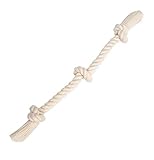
- Top pickMammoth Flossy Chews Cottonblend 3-Knot Rope Tug~$12
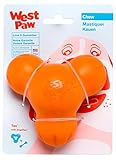
- Worth the splurgeWest Paw Zogoflex Tux Treat Toy~$18
The compliance problem nobody puts on the packaging
Every dental product at the pet store implies the same origin story: a calm dog sits still, opens wide, and tolerates two minutes of bristles working along the gumline, every single day, forever. Vets recommend daily brushing because it's the single most effective thing you can do — it's also the thing almost nobody actually does past the first two weeks. The realistic goal isn't daily brushing. It's stacking two or three lower-effort habits that don't require your dog's full cooperation, so the plaque control happens whether or not you remembered, whether or not today was a good day, whether or not your dog is in the mood to be handled.
That means leaning on mechanical chewing first, treating brushing as a bonus rather than the foundation, and picking products that actually have evidence behind them instead of a bag that says "dental" in bold letters. A shocking number of pet store dental products have never been tested for plaque or tartar reduction at all — the word "dental" on packaging is not a regulated claim.
Two chewing-based habits that need zero cooperation from your dog
The lowest-friction dental habit is one that requires zero new behavior from your dog, because chewing is something they were already going to do. The mechanical scraping action of a good chew toy against the tooth surface does real work — not as much as brushing, but far more than nothing, and it happens automatically during time your dog was going to spend chewing regardless.
Rope toys are an underrated entry point here specifically because of the texture. The fibers work slightly like unwaxed dental floss as your dog gnaws and tugs, pulling debris away from the base of the teeth in a way smooth rubber can't. It won't replace brushing, but it's genuinely doing something every time your dog uses it, which is more than you can say for a squeaky toy.
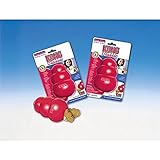
The other piece is what you stuff inside a chew toy, because the stuffing habit is where you can sneak in an actual dental product without your dog knowing they're getting dental care. Freeze a stuffable rubber toy with a smear of dog-safe enzymatic toothpaste along the inside ridges instead of (or in addition to) peanut butter, and the enzymes get worked against the tooth surface for the twenty-plus minutes your dog spends licking it out. It's a genuinely clever workaround for dogs who won't tolerate a toothbrush anywhere near their mouth.
If chew toys are the passive layer, dental treats are the active-but-easy layer — the one habit that survives because it requires exactly the same effort as giving a normal treat. The trick is picking one that's actually been shown to do something, not just one shaped like a toothbrush. Look for the VOHC seal (Veterinary Oral Health Council) on the packaging. It means the product has been through actual plaque or tartar reduction testing, not just marketing copy. A lot of dental chews on shelves have never applied for it.
Greenies is the category leader for a reason: it's one of the most-studied dental chews on the market, it carries the VOHC seal for both plaque and tartar control, and the ridged, slightly abrasive texture is specifically engineered to scrape the tooth surface as your dog chews through it, not just get gulped down in two bites. Sizing matters more than people think here — a chew that's too small for your dog's mouth gets swallowed almost whole, which does nothing for their teeth and creates a real choking and obstruction risk. Always size up to your dog's actual weight, not down to save money.
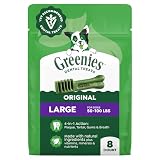
One a day, given at roughly the same time — after the evening walk, right before you sit down for dinner — turns into a habit that runs itself within about two weeks, the same way a dog learns exactly when dinner happens. That consistency is worth more than a perfect brushing technique you only do six times a year.
If you're going to brush, here's the version that actually works
Brushing is still the gold standard, and if you can build the habit, it outperforms everything else on this list combined. But the two-minutes-twice-daily advice is where most people quietly give up, so here's a version with a lower bar to clear. Start with the lift-the-lip test, not a full brushing session: once a day, gently lift your dog's lip and run a finger along the gumline for ten seconds. That's it. You're desensitizing your dog to mouth handling and checking for redness or buildup at the same time, and it takes less time than pouring their water bowl.
Once that's boring to your dog (a week or two, usually), swap the finger for a finger brush — a soft silicone sleeve that fits over your fingertip, which most dogs tolerate far better than a hard-handled toothbrush because it feels closer to petting than to a procedure. Use an enzymatic dog toothpaste, never human toothpaste, since the fluoride and foaming agents in ours are toxic to dogs and the xylitol in some "natural" human pastes is genuinely dangerous. You don't need to brush the inside surfaces — a dog's tongue does a reasonable job of keeping those clean on its own. Focus entirely on the outside surfaces along the gumline, which is where tartar actually accumulates. Three or four times a week, done imperfectly, beats a daily routine you abandon by week three.
What to skip, even though it's marketed as dental
Not everything sold in the dental aisle deserves to be there, and some of it can genuinely hurt your dog. The rule of thumb vets give: if you can't press your fingernail into it and leave a mark, it's too hard for teeth. Real bones, antlers, and hooves are the most common cause of slab fractures — the kind of broken tooth that ends in an extraction — because they don't give at all under bite pressure. Ice cubes fall into the same trap; they feel harmless because they're "just water," but they're rock-hard and dogs bite down on them the same way they would a bone.
| Item | Actual dental benefit | Main risk | Verdict |
|---|---|---|---|
| Real bones, antlers, hooves | Minimal — too hard to flex against teeth | Slab fractures, splintering | Skip |
| Ice cubes | None | Fractures on aggressive chewers | Skip as a chew, fine as a rare treat |
| Tennis balls (as chew toys) | None | Fuzz acts like sandpaper, wears down enamel over time | Fetch only, not for chewing |
| Cotton rope toys | Moderate — floss-like fiber action | Ingested strings on aggressive chewers if left unsupervised | Keep, supervised |
| Rubber stuffable toys | Moderate — gnawing plus saliva stimulation | Low, if sized correctly | Keep |
| VOHC-approved dental chews | High — clinically tested | Choking if undersized for the dog | Keep, size up |
| Water additives | Low to moderate — reduces bacteria, doesn't remove tartar | Some dogs refuse treated water | Situational add-on |
Making it a habit instead of a resolution
The dental routines that survive past February are the ones stapled to something your dog already looks forward to. Keep a treat-dispensing toy in permanent rotation specifically for the "we just did something dental" reward — lift-the-lip check, finger brush pass, or dental chew, immediately followed by five minutes of a stuffed toy while you finish making dinner. Your dog starts associating the whole sequence, mouth handling included, with something good happening right after, which is the actual mechanism that makes any habit stick for an animal that doesn't understand the concept of long-term health.
Set a recurring reminder for the professional piece too: most dogs benefit from a vet dental cleaning under anesthesia every one to two years, more often for small breeds who are genetically prone to crowded teeth and faster tartar buildup. Home care slows the buildup; it doesn't replace a real cleaning below the gumline, which is where the damage that actually costs teeth happens and which no amount of chewing reaches.
Signs that need a vet, not another chew toy
Some breath is just dog breath. But a sudden change in odor, especially something sweet or metallic, along with any of the following, is worth an appointment rather than a new dental chew: bleeding when you lift the lip, visibly loose or discolored teeth, pawing at the mouth or face, dropping food while eating, reluctance to chew on the side they normally favor, or a hard swelling under one eye (often a sign of a tooth root abscess, not a sinus issue). Dogs are exceptionally good at hiding dental pain — it's a survival instinct, not stoicism — so behavior changes are frequently the only early signal you get before a tooth is already in trouble.
Frequently asked questions
How often do I actually need to brush my dog's teeth?
Daily is the ideal, but three to four times a week done consistently beats a daily routine that falls apart after two weeks. Pair brushing with dental chews and chew toys so plaque control doesn't rely on brushing alone.
Are dental chews actually effective, or is it a marketing claim?
It depends on the product. Look for the VOHC (Veterinary Oral Health Council) seal, which means the chew has been through real plaque or tartar reduction testing. Chews without that seal may do very little despite "dental" branding.
Can I use human toothpaste on my dog?
No. Fluoride and foaming agents in human toothpaste are toxic if swallowed, and some contain xylitol, which is dangerous to dogs in small amounts. Use an enzymatic toothpaste made specifically for dogs — it's also flavored to be swallowed, since dogs won't spit and rinse.
My dog won't let me near their mouth. What's the lowest-effort option?
Start with chew-based mechanical cleaning — a rope toy and a VOHC-approved dental chew — since neither requires handling your dog's mouth at all. You can also stuff a rubber chew toy with enzymatic toothpaste instead of trying to brush directly.
How do I know if my dog has a dental problem that needs a vet, not just a chew toy?
Watch for bleeding at the gumline, loose or discolored teeth, pawing at the face, dropping food, favoring one side while chewing, or sudden bad breath with a sweet or metallic smell. Any of these warrants an appointment rather than a new dental product.
Do dental water additives actually work?
They reduce bacteria in the mouth and can help with breath, but they don't remove existing tartar the way chewing or brushing does. Treat them as a minor add-on to a chewing and brushing routine, not a replacement for either.
How often does my dog need a professional dental cleaning?
Most dogs benefit from a vet cleaning under anesthesia every one to two years. Small breeds often need it more frequently because crowded teeth and faster tartar buildup are common in smaller mouths. Home care slows buildup between cleanings — it doesn't replace what a cleaning below the gumline can do.