Not medical advice. Talk to your doctor before starting any supplement, especially if you have kidney disease, take prescription medication, or are pregnant or nursing.
- Top pickThorne Creatine Monohydrate (180 servings)~$40
- Best budgetJarrow Formulas Ashwagandha KSM-66 300mg~$16
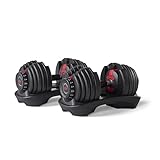
- Worth the splurgeBowflex SelectTech 552 Adjustable Dumbbells (pair)~$429
Creatine has an image problem. Say the word out loud and most people picture a gym bro with a shaker bottle and questionable opinions about pre-workout. That reputation is doing creatine a real disservice, because it's arguably the single most-researched, most boring, most effective supplement that exists — and the newer research on cognition and women's health has almost nothing to do with biceps. We already mentioned creatine in passing in our vitamins-past-30 roundup as one line among several. This is the deep dive that line deserved: what creatine actually does in your body, why the loading phase is a myth, whether it's safe for women (yes, emphatically), the brain benefits nobody markets, and which form is worth your money.
What creatine actually is (it's not a "bro supplement")
Creatine is a molecule your body already makes, mostly in the liver and kidneys, from three amino acids. You also get a little from food — red meat and fish are the main sources, at roughly 1-2 grams per pound of raw meat. It gets stored primarily in skeletal muscle (about 95%) with a small amount in the brain, and its job is unglamorous but foundational: it helps regenerate ATP, the molecule your cells burn for quick, explosive energy. Think of ATP as cash and creatine phosphate as the ATM that refills your wallet fast during short, intense effort — a heavy set of squats, a sprint up the stairs, standing up quickly from a chair when you're 70.
That's the whole mechanism, and it's why creatine isn't a "muscle drug" in the way people assume. It doesn't build muscle directly. It lets your muscles do slightly more work per set, recover slightly faster between efforts, and hold slightly more water inside the muscle cell (which is a good thing here — more on that later). Over weeks and months, more work per set adds up to more strength and more muscle, but the mechanism is energy availability, not some hormonal shortcut. That's also why it works for a 68-year-old doing chair squats in physical therapy and a 24-year-old training for a powerlifting meet — the underlying chemistry doesn't care about your goals.
The loading phase is a myth you can skip
Every old bodybuilding forum tells you to "load" — 20 grams a day for a week, split into four doses, to saturate your muscles fast. It works, technically. It's just not necessary. The loading protocol was designed to get your muscle creatine stores full in about 5-7 days instead of 3-4 weeks. If you're not in a hurry (and almost nobody actually is), a flat 3-5 grams a day gets you to the exact same saturation point, just more gradually and without the bloating and mild GI upset some people get from the higher loading dose. There's no meaningful downside to skipping it beyond patience.
The one caveat: if you have a meet, a photo shoot, or some specific event in 10 days and you've never taken creatine before, loading is a legitimate way to compress the timeline. For literally everyone else — which is almost everyone reading this — just start at 3-5 grams daily and stay there. No cycling on and off either. Creatine isn't something your body adapts to or becomes "immune" to. Consistency, not cycling, is what makes it work.
Is creatine safe for women? Yes — and the case may be stronger than for men
This is the part that gets buried because creatine marketing has spent thirty years talking exclusively to men. The actual research tells a different story. A 2021 review in Nutrients looking specifically at creatine in women found no evidence of the water-retention or "bulky" effects that show up in social media comment sections, at the standard maintenance dose. Creatine draws water into the muscle cell itself, not under the skin — it's not the same mechanism as the bloating people associate with sodium or hormonal water retention, and it doesn't show up as a puffy face or tight rings.
More interesting: some of the strongest emerging evidence for creatine's benefits beyond muscle — mood support, cognitive resilience during sleep deprivation, and potential support during specific life stages like perimenopause and postpartum recovery — comes from studies in women specifically, partly because women naturally store about 70-80% of the creatine in muscle that men do, and get less from a typical diet if they eat less red meat. That gap means supplementation can close a larger relative shortfall. None of this is a substitute for medical care around menopause or postpartum recovery, but "creatine is a men's supplement" is simply outdated as a claim, and the newer research runs the opposite direction.
The known safety profile, for what it's worth, is one of the best of any supplement category. Long-term studies (some running 4-5 years) in athletes show no evidence of kidney or liver damage in people with healthy organ function to begin with. The caveat matters: if you already have kidney disease, talk to your doctor before adding it, since your kidneys are doing the filtering.
The brain benefits nobody talks about
Your brain uses roughly 20% of your body's total energy despite being about 2% of your body weight, and it turns out creatine phosphate matters there too — the brain stores a meaningful amount of creatine and uses the same ATP-recycling system muscle does. The research on cognitive effects is newer and smaller than the strength literature, but it's converging on something real: several trials have found improved short-term memory and reasoning performance under conditions of stress, like sleep deprivation, in people supplementing with creatine versus placebo. A widely cited 2023 trial had participants go 21 hours without sleep and found the creatine group performed measurably better on cognitive tasks than the placebo group.
This tracks with something anecdotally reported by new parents, shift workers, and anyone chronically under-slept: creatine seems to blunt some of the cognitive fog that comes with poor sleep, even if it obviously doesn't replace sleep itself. There's also early, smaller research on mood — some trials suggest creatine may modestly support antidepressant treatment response, though this is far less established than the strength or cognition data and shouldn't be read as "creatine treats depression." Treat the brain angle as a genuine bonus on top of the muscle benefit, not the main event, and definitely not a reason to skip actual sleep.
Monohydrate vs. HCl, buffered, and every fancy form — why monohydrate wins
Walk down a supplement aisle and you'll see creatine HCl, buffered creatine (Kre-Alkalyn), creatine ethyl ester, magnesium creatine chelate, and liquid creatine, usually priced at two to four times what plain monohydrate costs, with marketing copy promising better absorption, no bloating, or no need to cycle. Here's the honest version: creatine monohydrate is the form used in essentially every major long-term safety and efficacy study — decades of research, thousands of subjects, consistent results. The newer forms mostly have small manufacturer-funded studies, if they have any studies at all, and none has been shown to outperform monohydrate on the outcomes people actually care about — strength, muscle retention, or cognition.
Creatine HCl's whole pitch is that it's more soluble, so you need a smaller dose and get less stomach upset. It probably is somewhat more soluble. It hasn't been shown to work better, and the GI upset claim about monohydrate is mostly overstated anyway — it happens at high loading doses, not at a normal 3-5 gram daily maintenance dose. Buffered creatine's marketing claim (that it survives stomach acid better and needs no loading) has been directly tested against monohydrate and came out equivalent, not superior, in the studies that exist. If a brand can't point you to independent, third-party research showing their proprietary form beats plain monohydrate, that's because it doesn't. Cheap, plain, micronized creatine monohydrate is the boring, correct answer, and "boring but correct" is basically the theme of this whole article.
How to actually take it: timing barely matters
The internet has strong opinions about pre-workout versus post-workout creatine timing. The actual research shows the difference is negligible — what matters is that you take it daily, not when. Creatine works by saturating your muscle stores over time, the way a bank account fills up regardless of which day of the month you deposit into it. Pick whatever time you'll actually remember: with your morning coffee, mixed into a glass of water at breakfast, or scooped into your protein shake after a workout. Consistency beats precision here by a wide margin.
It dissolves fine in room-temperature water or coffee with a little stirring — it doesn't fully dissolve in cold water without some grit, which is a texture complaint, not a safety issue. Some people worry about caffeine canceling out creatine's benefits; the actual research on this is mixed and any effect, if real, is small. If you're someone who takes it with your morning coffee and it's working for you, there's no strong reason to separate them. Drink extra water on days you take it since it draws water into muscle tissue, and that's it — there's no complicated protocol hiding underneath the simple version.
Creatine works better paired with resistance training (but isn't useless without it)
Creatine amplifies the work you're already doing — it doesn't manufacture results out of nothing. If you're lifting, doing bodyweight strength work, or even just doing consistent physical therapy exercises, creatine gives you a slightly bigger tank to draw from each session, and that compounds over months. If you're taking it purely for the cognitive or recovery angle and doing zero resistance training, you'll likely still get some brain-related benefit, just not the strength and muscle-retention upside that makes it such a good value past your 30s and 40s, when muscle mass starts declining a percent or two a year without intervention.
What to skip
A few categories of creatine spending are not worth it. Expensive "next-generation" forms (HCl, buffered, ethyl ester, liquid) that cost two to four times more than monohydrate with no proven performance edge — save the money. Loading phases you don't actually need, which just mean more powder and more mild bloating for a saturation point you'll reach anyway in a month. And proprietary "muscle recovery blends" that bury a small, unlabeled amount of creatine inside a mix of a dozen other ingredients — you have no way to know if you're getting a therapeutic dose, and you're paying blend-pricing for what should be a $15-a-month staple. If a product doesn't clearly state "creatine monohydrate" and the milligrams per serving on the front of the label, put it back.
Building it into a basic supplement stack
If you're going to open a supplement drawer every morning anyway, creatine slots in cleanly next to a couple of other well-evidenced basics without any interactions to worry about. Magnesium glycinate in the evening covers sleep and muscle relaxation — a different job than creatine entirely, so there's no overlap or competition between the two. Vitamin D3 with K2 covers a gap most adults past 30 actually have regardless of how their diet looks. None of these need to be taken together or apart from creatine; they're independent, and stacking them just means fewer bottles to keep track of.
The honest bottom line
Creatine monohydrate, 3-5 grams a day, taken consistently, mixed into whatever you're already drinking, no loading phase required, no cycling required. It's safe and well-studied for healthy adults of any gender, the evidence for women is if anything more compelling than the old "bro supplement" framing suggested, and the cognitive benefits are a legitimate bonus reason to take it even if you never set foot in a gym. Buy the plain, cheap, third-party-tested version. Skip everything with a fancier name and a bigger price tag. That's the whole deep dive.
Frequently asked questions
Do I need to do a loading phase?
No. Loading (around 20g/day for a week) gets you to full muscle saturation faster, but a flat 3-5 grams daily gets you to the same place in about three to four weeks with less bloating and GI upset along the way. Loading is only worth considering if you have a specific event within the next 10 days and have never taken creatine before.
Is creatine safe for women specifically?
Yes. Research reviews focused on women have found no evidence of the bloating or "bulky" effects sometimes claimed on social media at a standard maintenance dose, since creatine draws water into muscle cells rather than under the skin. Some of the more interesting emerging research on mood and cognitive resilience has come from studies in women specifically.
Does creatine cause kidney damage?
Not in people with healthy kidney function — long-term studies running several years in athletes show no evidence of kidney or liver harm. If you already have kidney disease or another condition affecting kidney function, talk to your doctor before starting, since your kidneys are what clears it.
What time of day should I take it?
Whenever you'll actually remember. The research shows timing relative to a workout makes little to no meaningful difference — what matters is taking it daily so your muscle stores stay saturated. Morning coffee, breakfast water, or a post-workout shake all work equally well.
Is monohydrate really better than the "advanced" forms like HCl or buffered creatine?
Monohydrate isn't better in a lab-chemistry sense, but it's the only form with decades of consistent, large-scale research behind it. HCl, buffered (Kre-Alkalyn), and ethyl ester versions have little to no independent evidence showing they outperform plain monohydrate on strength, muscle, or cognition, despite costing two to four times as much.
Will creatine make me gain weight?
You may see a small increase on the scale in the first week or two — typically one to two pounds — from water being drawn into muscle tissue. That's not fat gain, and it's the same mechanism that helps muscles perform better, not a sign of bloating under the skin.
Can I take creatine without lifting weights?
Yes, though you'll get a different mix of benefits. You'll likely still see cognitive and recovery-related effects, but the strength and muscle-retention upside is amplified specifically by resistance training or consistent physical activity. It's not useless without a gym membership, just more powerful with one.
Does caffeine cancel out creatine's benefits?
The research on this is mixed, and any interaction, if real, appears small. If you already take your creatine with morning coffee and it seems to be working for you, there's no strong evidence-based reason to separate them.