Somewhere along the way, "floating shelf" became code for "a narrow ledge that can support one candle and a single framed photo of your dog." That's not a floating shelf, that's a very expensive coat hook. A real floating shelf should hold a stack of hardcovers, a trailing pothos in a ceramic pot, and your good cast iron — at the same time, without a slow, sad droop developing in the middle after three weeks. Most of what's sold under the name "floating shelf" simply isn't built for that. This is the guide to the ones that are, how to hang them so they actually stay up, and how to style them so the end result looks like a room you designed on purpose instead of a dorm you're renting by the semester.
- Top pickBayka Floating Shelves (Set of 3)~$36 for set of 3
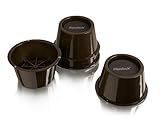
- Best budgetSlipstick CB654 3" Furniture Risers (4-pack)~$20
- Worth the splurgeGovee Corner Floor Lamp~$40
The shelf that actually holds real weight
Start with the shelf itself, because no amount of correct mounting saves a shelf that's fundamentally too thin or too flimsy for the job. The particleboard-and-veneer floating shelves you'll find at the very bottom of a search results page are the ones that bow under a row of paperbacks. What you want is solid wood or a genuinely reinforced composite, with a steel bracket system hidden inside — not a shelf that's just resting on two pegs and hoping for the best.
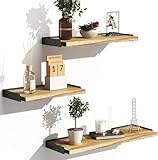
The 33-lb rating on a shelf like this isn't a marketing number to skim past — it's the difference between "holds a small library" and "holds three picture frames before it starts complaining." Compare that to the flimsier shelves that top out around 10–15 lbs, and you can see why so many floating shelves end up holding exactly what the name implies people expect: framed photos and nothing heavier.
Weight ratings, stud-mounting, and why a drywall anchor alone won't save you
Here's the part almost nobody explains before you're standing there with a drill: the weight rating printed on the box assumes you're mounting into a stud, or using hardware rated for the wall type you actually have. Drywall on its own holds almost nothing — a single drywall screw into bare drywall will pull out under maybe 10–20 lbs of consistent, distributed weight, and floating shelves put uneven, front-loaded stress on that connection every time you set something down.
Find your studs with an actual stud finder, not the knuckle-knock method (which is honestly closer to guessing with extra steps). Studs are typically 16 inches apart, center to center, and hitting even one solidly changes everything about how much weight a shelf can carry. If your ideal shelf placement doesn't line up with a stud — and it often won't — the fix isn't to skip the anchor and hope. It's a proper toggle bolt or a heavy-duty drywall anchor rated for the load, which distributes the pull-out force across a much wider area of drywall instead of concentrating it on one small screw hole. Cheap plastic anchors from the junk drawer are not that. They're rated for towel bars, not book weight.
The honest rule: if a shelf is going to hold anything heavier than a small plant and a candle, mount at least one bracket into a stud. If you can't, use anchors rated for the actual load you're planning to put up, and stay meaningfully under the shelf's max weight rating rather than treating it as a target to hit.
Styling shelves so they don't look like a dorm room
The dorm-room look happens for one specific reason: everything on the shelf is the same height, the same distance apart, and facing the same direction. A stack of textbooks, a lamp, repeat. The fix is deliberate variation — mix vertical and horizontal. Stack a few books flat and lean a couple upright against them. Let one plant trail off the edge instead of sitting stiffly in the center. Leave real negative space; a shelf that's 70% full reads as curated, a shelf that's 100% full reads as storage.
Grouping in odd numbers (three or five objects, not two or four) consistently looks more intentional, and it's a trick worth stealing because it works almost every time. Vary the height of what you place — a tall vase next to a short stack of books next to a medium plant creates a visual rhythm instead of a flat line. And don't ignore what's happening in the air above and around the shelf. A warm, layered light source next to or below a styled shelf does more for how "designed" a room feels than another decorative object would.
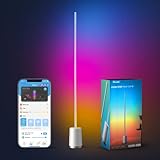
One more styling note that matters more than people expect: keep labels and packaging out of sight. A beautiful ceramic planter next to a cardboard shipping box defeats the entire point. If a shelf is meant to be looked at, everything on it should earn its spot.
What goes next to the shelf, not just on it
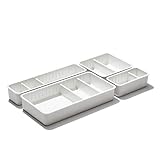
A floating shelf rarely exists in isolation — it's usually part of a kitchen wall, an entertainment setup, or a home office corner, and the stuff around it matters as much as what's on it. In a kitchen, a floating shelf holding mugs or cookbooks looks a lot more finished when the counter or drawer underneath isn't visibly chaotic. This is where a drawer organizer earns its spot in this conversation — it's not glamorous, but it's the difference between a styled shelf above a clean counter and a styled shelf above a junk drawer someone's about to open in front of guests.
If you're floating a shelf above a TV console or a desk — a genuinely popular use case, since it opens up floor space a media stand would otherwise eat — you're almost certainly dealing with cords. A router, a speaker, a charging cable running down to an outlet. Nothing undoes a clean, styled shelf faster than a visible tangle of cords hanging off the edge of it.
How many shelves is too many (and what goes underneath)
Three is usually the ceiling for a single wall before a floating shelf setup stops looking curated and starts looking like storage overflow. Two staggered shelves, offset in width and height, almost always outperform a uniform row of four — the asymmetry is what reads as designed. If you genuinely need more storage than two or three shelves provide, that's a sign you need a different piece of furniture, not a fourth shelf crammed onto the same wall.
It's also worth thinking about what sits below the shelves, since floating shelves are frequently mounted above a console table, media stand, or low dresser, and the proportions between the two matter. If that piece of furniture sits a little low relative to the shelf above it, furniture risers are a cheap, invisible fix — they lift the console a few inches, tighten the visual gap, and free up genuine storage space underneath at the same time.
What to skip
Skip any floating shelf under about $15 that doesn't list a specific weight rating on the packaging — if the manufacturer won't commit to a number, assume it's low, and assume it's being tested with a feather duster, not a stack of cookbooks. Skip the temptation to mount purely with the peel-and-stick or plastic anchor hardware that ships in the box when you're planning to put anything heavier than a candle up there; that hardware is sized for the lightest possible use case, not yours.
Skip mounting into drywall alone with no stud and no rated anchor, full stop — this is the single most common reason floating shelves end up on the floor, usually taking whatever was on them down too. And skip over-cluttering: the instinct to fill every inch of a new shelf the day you hang it is real, but a shelf crammed edge-to-edge with objects of the same size and height is exactly the dorm-room look you're trying to avoid. Hang it, style a third of it, live with it for a week, then add.
Frequently asked questions
How much weight can a floating shelf actually hold?
It depends entirely on the shelf and how it's mounted, but a genuinely reinforced shelf like the Bayka set is rated up to 33lbs per shelf when properly mounted. That rating assumes correct installation — into a stud, or with anchors rated for the load. The same shelf mounted with weak hardware into bare drywall will hold far less than its printed rating, regardless of what the box says.
Do I really need to hit a stud, or can I just use a good anchor?
For anything light — a candle, a small framed photo — a rated drywall anchor alone can work fine. For books, plants in ceramic pots, or kitchen gear, at least one mounting point into a stud is the safer bet. Studs give you a fixed, reliable anchor point that doesn't depend on the anchor holding up against constant pull-out force the way drywall alone does.
How do I find a stud without buying a fancy tool?
A basic magnetic or electronic stud finder is inexpensive and far more reliable than knocking on the wall and guessing by sound. Studs are typically spaced 16 inches apart, center to center, in most homes, so once you find one, you can usually estimate the location of the next.
How many floating shelves is too many for one wall?
Two to three is usually the sweet spot. Once you're past three shelves on a single wall, it tends to read as storage overflow rather than a styled display. If you need more storage than that, a different piece of furniture — not a fourth shelf — is usually the better answer.
What's the biggest styling mistake people make with floating shelves?
Filling every shelf completely and evenly, with everything facing the same direction and sitting at the same height. Real negative space, mixed heights, and grouping items in odd numbers (three, not four) reads as intentional. A shelf packed edge-to-edge with same-sized objects reads as storage, not display.
Can floating shelves hold kitchen items like plates and cast iron?
Yes, if the shelf is rated for it and mounted into at least one stud. A shelf like the Bayka set, rated to 33lbs, can reasonably hold a stack of plates or a cast iron pan. Just be mindful of total combined weight across everything on the shelf, not just the single heaviest item — the rating is for the whole load, not per object.