Somewhere around day three of a breakup, someone is going to hand you a book. It'll either be something that promises to fix you in five steps, or something so heavy and literary that reading it feels like assigning yourself more homework in a week when you can barely answer texts. Neither is actually what you need. What helps after a breakup is more specific than "read something," and it depends on which day you're having — the day you want to understand exactly how this happened and never repeat it, or the day you just need three hours where your brain is somewhere else entirely.
- Top pickAttached by Amir Levine & Rachel Heller~$12
- Best budgetThe Alchemist by Paulo Coelho~$10
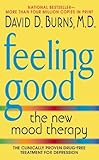
- Worth the splurgeFeeling Good: The New Mood Therapy by David Burns~$14
Both are legitimate. Neither cancels the other out. Below is a working list, split by what kind of day you're having, plus the handful of psychology and self-worth books actually worth your limited attention span right now, and — just as important — what to leave on the shelf.
Distraction first, processing second (not the other way around)
The order matters more than people admit. In the first week or two, your nervous system is not in a state to absorb a dense psychology book, no matter how good it is. You'll read the same paragraph four times and retain none of it, then feel like a failure on top of everything else. This is normal. It is not a sign the book is wrong for you — it's a sign of timing.
The more useful sequence, in practice: let yourself disappear into a story for the first stretch, however long that needs to be. Give your brain somewhere else to live for a few hours a night instead of the loop it wants to run. Then, once you've slept a few nights in a row and can actually hold a thought, pick up something that asks you to look directly at what happened. Trying to "process" before you can concentrate just produces more shame, not more insight. Trying to distract forever just delays the part where you actually learn something that changes the next relationship.
If you want to understand what happened
These are for the version of you that's past the raw stage and actually wants answers — why you picked this person, why the same argument kept happening, why "I know better" and "I did it anyway" can both be true. None of them are clinical in the bad sense. They're specific, readable, and built to be useful at 11pm on a Tuesday, not just discussed in a therapist's office.


If you just want to disappear into a story
These are not breakup books. That's the point. They're immersive enough to actually hold your attention when your attention span has shrunk to almost nothing, and they don't require you to think about your own life for a single page. Distraction isn't avoidance when you use it on purpose — it's a genuinely useful tool for getting through the nights when processing anything would just make it worse.


The ones that sit in between
A few books don't fit neatly into "understand it" or "disappear from it," because they're doing both at once — memoir and permission-slip, someone else's real unraveling that ends up handing you language for your own.


What to skip
There's a whole shelf of breakup self-help that does more damage than good, and it's worth naming so you can walk past it in the store. Skip anything whose entire premise is that you did this to yourself — the books that frame heartbreak as evidence of your own brokenness, your codependency, your "toxic patterns," delivered in a tone that reads more like a lecture than support. You can absolutely learn something from this breakup without being told the whole thing was a symptom of something wrong with you. Timing matters here too: a book that might be genuinely useful in month three can be actively harmful in week one, when you have zero capacity to hear "here's what you did wrong" without it turning into more shame on top of grief.
Also skip anything promising a rigid timeline — the "get over anyone in 30 days" genre. Grief and heartbreak don't run on a fixed schedule, and a book built around forcing yours onto one just adds a deadline to a process that was never going to be linear. If a book's whole pitch is a countdown, put it back.
The honest bottom line
You don't owe anyone a "productive" breakup. Some nights the right book is one that makes you cry in a useful way. Some nights the right book is one where nothing bad happens to anyone you're rooting for and you just need three hundred pages of somewhere else. Both are doing real work. The only actual mistake is picking up the wrong one for the day you're having — reaching for insight when you can't concentrate, or reaching for distraction forever and never circling back to the parts worth understanding. Let the day decide, and trust that eventually you'll want both kinds again.
FAQs
What's the single best book to start with right after a breakup?
If you can't concentrate yet, start with a novel — Where the Crawdads Sing or The Alchemist both work well because they're immersive without being demanding. If you're a few weeks out and ready to look at the relationship itself, Attached is the most useful starting point most people reach for.
Is it too soon to read a psychology or self-help book right after a breakup?
For the first week or two, often yes — not because the books are wrong, but because a raw, sleep-deprived brain has trouble absorbing anything dense, and that struggle can feel like one more failure. It's usually more useful to let yourself read fiction first and come back to the processing books once you can actually concentrate.
Should I avoid books that remind me of my ex or the relationship?
Not necessarily — a book that helps you understand attachment patterns or grief is doing useful work even if it stirs something up. What's worth avoiding is content that shames you for feeling bad or insists you should be "over it" by some arbitrary point. Discomfort that leads somewhere is different from discomfort that just makes you feel worse about feeling.
Are there good post-breakup books that aren't about breakups at all?
Yes, and they're often the most useful kind. Big Magic is about creativity and fear, not romance, but it's genuinely good for rebuilding a sense of identity after a long relationship. The Alchemist is about a shepherd's journey, not heartbreak, and still tends to land at exactly the right moment for people starting over.
What if reading feels impossible right now and I can't finish anything?
That's common in the first stretch and it passes. Audiobooks solve this for a lot of people — you can listen while doing dishes or walking instead of needing to hold focus on a page. Short story collections or a fast-paced novel like The Seven Husbands of Evelyn Hugo are also easier to stick with than anything slow or literary when your attention span is shot.
How do I know if a self-help book is the shaming kind to avoid?
Read the introduction or a sample chapter before committing. If the tone frames your heartbreak primarily as evidence of your own dysfunction — your attachment wounds, your codependency, your poor choices — rather than as a normal, painful thing that happened to you, put it down. The useful books help you understand patterns without implying the breakup itself was proof you're broken.