Every renter hits the same wall: the sun rises at 5am into your face, or you work nights and need your room to be a cave at 2pm, and the lease says no holes in the wall. The good news is you don't need to drill anything to get a room dark — you just need to know which products are actually built for temporary mounting and which ones only claim to be.
- Top pickNICETOWN Blackout Curtains (2 panels)~$30 per pair
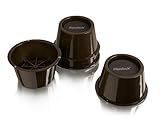
- Best budgetSlipstick Furniture Risers (4-pack)~$20
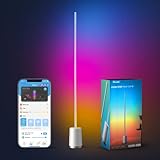
- Worth the splurgeGovee Corner Floor Lamp RGB~$40
The tension rod trick: blackout curtains with zero drilling
A spring-tension curtain rod is the easiest fix here, and most renters skip it because it sounds flimsy. It isn't. A good tension rod wedges inside the window frame using spring pressure — no screws, no anchors — and holds real curtain weight if you buy one rated for the width. Mounting inside the frame also sits the fabric closer to the glass, so less light sneaks around the edges than with a wall-mounted rod.
Pair it with actual blackout-rated curtains, not "room darkening" — the terms sound interchangeable but aren't. Room darkening cuts maybe 80–95% of light. True blackout, usually a triple weave, blocks closer to 99%. The NICETOWN panels below are the ones we keep coming back to: genuinely dense (not see-through against a lamp, which a shocking number of "blackout" curtains fail), with a grommet top that slides right onto a tension rod.
Budget for the rod separately, and buy one rated for at least 5–10 lbs more than the panels weigh — cheap ones sag in the middle within a month and let daylight through exactly where you need it blocked.
Blackout film for windows: the removable trick almost nobody uses
Blackout window film is the sleeper option here. It's a static-cling sheet that goes directly on the glass using nothing but water and pressure — no glue, no residue, peels off in one piece when you move. It's not for everyone: it turns the window fully opaque from both sides, so no daytime view out. But for a nursery, a nightshift bedroom, or a home theater, it's the most total block you can get without covering a whole wall in fabric.
Install matters more than brand. Clean the glass thoroughly first — dust gets trapped underneath permanently. Use the included squeegee, work from the center out, and don't rush the edges; a rushed job bubbles, a careful one looks like tinted glass. Test on a small window first if you've never done it before. The honest tradeoff: film is the most total block, curtains are the most flexible, and most renters end up happiest layering both.
Velcro and pressure-mounted panels: the truly zero-damage option
If even a tension rod feels like too much commitment, there's a step below it: adhesive velcro strips or 3M-style removable hooks that hold a fabric panel directly against the window trim. It's the option for a sublet or dorm room — anywhere you might need everything packed within the hour. You lose the ability to open and close it like a normal curtain, but nothing touches the drywall if you use a genuinely removable strip (test a hidden patch first; knockoff strips can pull paint on older trim).
The weak point is wind and gravity — a heavy panel hung entirely on adhesive strips sags or peels at the corners after a few humid weeks, so this works best for panels under about 2 lbs, or as a secondary layer rather than your only defense. Skip adhesive-only mounting on windows that get direct heat or humidity, where strips lose grip faster than the box promises. Also skip: cheap "blackout" curtains under $15 a pair (hold them to a light before buying — most are room darkening wearing blackout marketing), car suction-cup shades repurposed for windows (they lose grip on textured glass), and any "removable" adhesive that isn't genuinely removable. Read the label, not just the star rating.
Portable blackout: for renters who move constantly or travel a lot
Renters move more than homeowners — new lease, new apartment, new windows to figure out. The gear that survives that cycle is gear you can pack flat, not gear that's basically built-in. A vacuum storage bag earns its keep here in a way people don't expect: compress your blackout curtains down for the move and they come out ready to hang, instead of crushed at the bottom of a garbage bag.
For actual travel — hotel rooms, a guest room, camping near a summer solstice sunrise — a portable blackout shade is a different category: a compact fold-up panel with suction cups that sticks to any glass in under a minute. It won't fully black out a picture window, but for a standard hotel window it gets shockingly close, and it rolls up small enough to live in a suitcase pocket permanently. If you travel for shift work — flight crews, touring musicians, nurses on rotating schedules — this is worth buying even if you already have curtains at home.
Best for shift workers vs. best for light sleepers
These get lumped together, but the right setup isn't the same for both.
Shift workers sleeping during the day need total, not partial, darkness — a 20% light leak that's invisible at midnight is glaring at 2pm. For this group: film as the base layer, real blackout curtains over it, and door gap coverage too, since light bleeding under a bedroom door is the last 10% nobody thinks to fix. It's also worth being deliberate about the light you do use before bed — a lamp that shifts to warm, dim, low-blue light helps your body actually downshift, whatever hours your "evening" falls on.
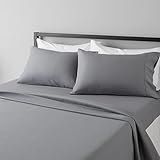
Light sleepers on a normal schedule usually don't need the nuclear option — just to stop the specific light that's waking them, most often a streetlight or thin curtains at sunrise. A well-fitted tension-rod curtain is almost always enough on its own, and the bigger lever after that is the rest of the sleep environment — temperature, noise, and what you're sleeping on. Fresh, breathable sheets solve more "I keep waking up" complaints than the window alone.
Removing everything without losing your deposit
None of this should leave a mark, but "no drilling" isn't automatically "no trace" — you still have to take it down correctly:
- Test adhesive strips on a hidden spot first. Trim paint varies in how it holds up to removal. Fifteen seconds behind a nightstand tells you which kind you have.
- Remove adhesive slowly, warm, at a low angle. Pulling straight out tears paint; pulling slowly along the wall almost never does. A hair dryer on low heat softens the adhesive first.
- Static cling film peels off in one piece — start a corner with a fingernail and pull steadily. No heat, no residue.
- Keep the original hardware. Tension rods and suction shades pack down flat — a vacuum storage bag keeps it all organized instead of buying it all again at the next lease.
- Hide cords instead of drilling hooks for them. If you added a white noise machine or the floor lamp above, a small cable box keeps cords tidy without a nail.
If your bed frame sits low enough to let a strip of light sneak in beneath a curtain that just barely reaches the floor, furniture risers solve a problem most blackout guides don't mention: they lift the whole frame two to three inches, which is sometimes exactly the difference between curtains that puddle on the floor and curtains that stop an inch short.
Frequently asked questions
Will a tension rod really hold blackout curtains without falling down?
Yes, as long as you buy one rated to hold more weight than your curtains actually weigh — check the listed weight capacity, not just the length. Most sagging complaints come from people using a lightweight rod meant for sheers to hold heavy triple-weave fabric.
Does blackout window film damage the glass or leave residue when removed?
Static-cling film uses only water and pressure to adhere, so it comes off clean with no residue. Adhesive-backed film is a different product — check the label, since some adhesive films marketed as removable can leave a faint outline on older or single-pane glass.
What's the actual difference between "blackout" and "room darkening" curtains?
Room darkening blocks roughly 80–95% of light and still glows at the edges in full sun. True blackout, usually a dense triple weave, blocks close to 99%. If a listing doesn't specify blackout percentage or weave type, assume it's room darkening.
Can I use tension rods on textured or plaster walls?
Yes — tension rods mount inside the window frame itself, not on the wall, so wall texture doesn't matter. What matters is that the frame is deep and sturdy enough to hold spring pressure. Test it empty for a day before hanging curtains on it.
How do I stop light from leaking around the edges of curtains that are too narrow?
Extend the rod so it sits 6–8 inches past the window frame on each side, and choose panels wide enough to cover that extended width when closed. Most light leaks are a "rod is exactly window-width" problem, not a fabric problem.
Do I need blackout curtains and film, or is one enough?
For a light sleeper on a normal schedule, well-fitted curtains alone are usually enough. For shift workers sleeping during daylight hours, layering film as a base with curtains on top gets you closer to true darkness.