Every bookshelf looks fine in the store. Give it eighteen months of real books — actual hardcovers, not the three decorative titles in the showroom photo — and the middle of every shelf starts curving downward like a smile that's given up. This isn't bad luck. It's physics meeting bad material choices, and almost nobody explains it before you buy. The good news: you usually don't need a new bookshelf. You need to understand why the one you have is sagging, fix the two or three things actually causing it, and add a small amount of the right gear around it.
- Top pickSlipstick CB645 3-Inch Furniture Risers (4-Pack)~$20
- Worth the splurgeGovee Corner Floor Lamp RGB~$40
This isn't a "best bookshelves" roundup with fifteen nearly identical options. It's the short version: why shelves sag, the cheap fixes that solve most of it, when to give up on a shelf entirely and go modular instead, and the small stuff around your shelving that's quietly making the problem worse.
Why your bookshelf is sagging in the first place
Sag is just span, load, and material fighting each other, and material almost always loses. A shelf is a beam supported at two ends. The longer the unsupported distance between those supports, the more any given weight will bend it — and the relationship isn't linear, it's roughly cubic. Double the span and you don't double the sag, you multiply it by roughly eight. That's why a 36-inch shelf holding forty pounds of hardcovers looks perfectly fine while the identical shelf stretched to 48 inches, holding the same books, visibly bows within a year.
Material is the second half of the story. Solid wood resists bending better than almost anything else at a given thickness, because the wood fibers run continuously along the length of the board. Plywood is close behind — the cross-laminated layers add real strength. Particleboard and MDF, which is what most budget bookshelves are actually made of underneath a wood-look laminate, are compressed wood dust and glue. They have almost no fiber continuity, which means they creep — they keep slowly deforming under sustained load even if the weight never changes. A particleboard shelf holding the same books for three years will sag more than it did after six months, even with nothing added to it. That's not a defect. That's the material doing exactly what particleboard does.
Add it up: long spans plus heavy, densely packed hardcovers plus particleboard is the exact combination that guarantees a sagging shelf, and it's also the exact combination most affordable bookshelves ship with. Once you know that, the fixes make a lot more sense.
The $20 check almost nobody does before blaming the shelf
Before you spend money on anything, check whether your bookshelf is actually level. An uneven floor — and most floors, especially in older homes and apartments, are uneven by at least a quarter inch somewhere — puts a bookshelf into a permanent twist. One leg or corner takes more of the load than it was designed to carry, the frame racks slightly out of square, and every shelf inside starts sagging faster and unevenly, with one side visibly worse than the other. This is one of the most common causes of "my bookshelf is sagging" that has nothing to do with weight at all — it's a structural stress problem hiding as a weight problem.
The fix costs about twenty dollars and takes ten minutes: rigid furniture risers under the low corners bring the whole frame back to level, which redistributes weight evenly across all four legs and stops the racking that accelerates sag. This matters even more for tall, narrow bookshelves, which are the most tip- and twist-prone furniture in most homes. Leveling first, before you do anything else, is the single highest-value five-minute fix in this entire article.
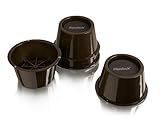
Leveling also buys you something else: a couple extra inches of clearance underneath, which is enough room to slide flat storage bins under a bottom shelf for the overflow books that don't have a home yet. That overflow, by the way, is a bigger contributor to sag than people realize — more on that below.
Stop fighting long spans — go modular with floating shelves
If you've already got a shelf sagging under a long, unsupported span, the actual fix usually isn't a sturdier version of the same shape. It's changing the shape entirely. Wall-mounted floating shelves solve the span problem at the root, because instead of a single board spanning 36-plus inches between two end panels, you're mounting shorter individual shelves directly into wall studs, each one independently supported along its entire back edge rather than just at the corners. A 24-inch floating shelf anchored into two studs will out-perform a 36-inch shelf sitting on cabinet sides every time, because the load path goes straight into the wall instead of bending an unsupported span.
This is also the right move for anyone dealing with an awkward reading nook, a stairwell, or a narrow hallway where a full bookcase doesn't fit but a few staggered shelves do. Solid wood floating shelves with hidden brackets look intentional rather than makeshift, and because each one is short, sag simply isn't in play the way it is on a long cantilevered shelf. The only real requirement is finding actual studs — floating shelves anchored only into drywall anchors will eventually pull loose under a full row of hardcovers, so a stud finder is a five-dollar tool worth owning before you commit to this.
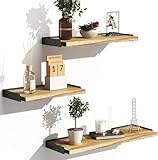
One underrated way to use floating shelves: don't try to replace your whole bookcase with them. Use them as the release valve. Move your heaviest art books and oversized hardcovers — the ones doing the most damage to a long shelf span — onto two or three short, stud-anchored floating shelves, and let your existing bookcase carry only the lighter paperbacks it was actually built for. That single move can take a sagging shelf back to flat within a few weeks, since wood and even MDF have some ability to relax once the sustained overload is removed (though a badly creeped shelf won't fully recover — more on that in the FAQ).
What's secretly adding phantom weight to every shelf
Books aren't the only thing sagging your bookshelf. Almost every bookcase in a real home becomes a catch-all — remotes, phone chargers, a candle, a stack of unread mail, a small plant, three picture frames — and none of that gets counted when people estimate how much weight is actually sitting on a given shelf. Loose clutter also concentrates weight unevenly, which is worse for sag than the same total weight spread out, because it creates a point load in the middle of the span exactly where the shelf is weakest.
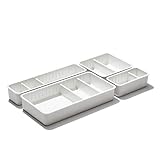
The fix isn't "own less stuff," it's containing what you already own so weight gets distributed instead of piled. A shallow tray or bin organizer on a shelf does two things: it keeps small objects from migrating into one dense clump, and it makes it obvious at a glance when a shelf is getting overloaded, because the bin fills up visibly before the shelf itself starts to bow.
The other phantom-weight problem is books you're not actually reading or reaching for. A shelf that's been packed floor-to-ceiling for years, including duplicate copies, textbooks from a decade-old degree, and paperbacks you'll never reread, is a shelf under permanent maximum load with zero slack for anything new. Rotating out the genuinely dead weight — donate it, or box it for storage — into vacuum-sealed bags for the guest closet frees up real linear feet on your active shelves and takes pressure off the boards holding your current rotation.
Protecting the books themselves, and the built-in shelf problem
A sagging shelf isn't the only way a bookcase quietly damages your books. Direct sun is the other one, and it's just as common. UV exposure fades spines, yellows paper, and can warp paperback covers within a single summer if a bookcase sits anywhere near an uncovered south- or west-facing window. You'll notice it first on the spines facing the window — a faded stripe running down one side of the shelf while books an arm's length away, out of direct light, look untouched. Once that fading happens it's permanent; there's no reversing a sun-bleached spine.
The fix is the same one that protects your furniture and your energy bill: a real blackout or heavy light-filtering curtain on any window that gets direct sun near your shelving. You don't need to keep the room dark all day — closing the curtains during the couple of peak sun hours in the afternoon, or whenever you're not actively in the room, is enough to stop most of the cumulative UV damage.
If your bookshelf is part of a built-in media unit or console — a very common setup, since shelving and a TV stand often share the same footprint — cord clutter is its own quiet contributor to shelf strain and visual chaos. A tangle of power strips and cables draped across a shelf edge doesn't just look messy, it puts uneven point pressure on the front lip of the shelf every time something gets tugged or repositioned, and it makes it much harder to actually see when a shelf is starting to bow because the eye reads "cable mess" instead of "sagging board." Corralling cords into a dedicated box keeps that whole section of the unit both tidier and structurally cleaner.
Light it right, and what to skip entirely
A dim bookshelf hides problems until they're bad. Good side or corner lighting near your shelving does two useful things at once: it makes your books and shelf styling actually look intentional instead of like storage, and it means you notice a shelf starting to bow while it's still a five-minute fix rather than something you discover after it's cracked. A warm floor lamp tucked into a reading corner next to a bookcase is one of the cheapest ways to upgrade the whole area without touching the furniture itself.

Now, the part worth being blunt about: a few categories of bookshelf are not worth buying no matter how the listing photos look. Anything described only as "engineered wood" with no mention of plywood, hardwood, or MDF thickness — that's almost always thin, hollow-core particleboard dressed up in a wood-grain sticker, and it will sag under a genuinely full load of hardcovers within a year or two. Extra-long single-span shelves over 40 inches with no center support or back panel bracing are a sag guarantee regardless of material, because you're maximizing the exact variable — span — that causes the most damage. And cheap standalone units with no back panel at all should be treated as decorative shelving for a handful of paperbacks and knickknacks, not a real book storage solution — without a rigid back panel, the whole frame racks out of square under real weight, which is the twisting problem from earlier in this article, just built into the furniture from day one.
If you want the version of this that just works, without any of the diagnosing: buy shorter spans (24–30 inches per shelf section), solid wood or void-free plywood over particleboard, and a rigid back panel or wall anchoring on anything holding real book weight. Everything else in this article — leveling, floating shelves for overflow, containing loose clutter, protecting from sun, and lighting it properly — is the maintenance layer that keeps a good shelf good for the next decade instead of the next two years.
Frequently asked questions
Can a sagging bookshelf be fixed, or do I need to replace it?
It depends on the material and how long it's been overloaded. Solid wood and plywood shelves that have only recently started to bow will often relax back toward flat once you reduce the load and level the frame — wood has some natural memory. Particleboard and MDF shelves that have crept and sagged for a year or more usually won't fully recover, because the deformation is permanent creep in the material rather than a temporary bend. In that case, redistributing weight onto floating shelves and treating the old shelf as light-duty going forward is more realistic than expecting it to flatten out again.
How do I know if my bookshelf is actually unlevel versus just overloaded?
Check with a level or by eye from across the room — if one side of the shelf sags more than the other, or the whole unit leans slightly, that's a leveling problem, not purely a weight problem. Uneven floors put a bookcase into a twist that accelerates sag unevenly across the shelf. If the sag is even across the whole width with no lean, it's more likely straightforward overload from span and weight.
What's the maximum shelf span I should trust with a full row of hardcovers?
As a rough rule, keep unsupported spans to 30 inches or less for particleboard or MDF, and up to about 36 inches for solid wood or good plywood, assuming a reasonably thick shelf (3/4 inch or more) and a full row of standard hardcovers. Beyond that, sag risk increases fast because the relationship between span and bending is closer to cubic than linear — a modest increase in length produces a much bigger increase in sag.
Do floating shelves actually hold up better than a traditional bookcase?
Yes, when they're properly anchored into wall studs — a stud-mounted floating shelf has its entire back edge supported continuously by the wall, rather than resting only at two end points like a freestanding bookcase shelf. The failure mode changes too: a floating shelf mounted only into drywall anchors (no stud) will eventually pull away from the wall under sustained weight rather than sag in the middle, so finding real studs before mounting is the part that actually matters.
Does sun exposure really damage books that much?
Yes, and it's one of the most underrated causes of visible book damage. Direct UV exposure fades and yellows paper and can warp paperback covers within a single season of consistent afternoon sun, and the fading is permanent once it happens. A blackout or heavy light-filtering curtain on any window that hits your bookshelf directly, even just closed during peak sun hours, prevents most of the cumulative damage.
Is it worth adding a back panel to an open-back bookcase?
Generally yes, if the unit is going to hold real book weight rather than light decorative items. A rigid back panel keeps the whole frame square under load and stops the racking that happens when an open-back unit twists slightly under uneven weight — that racking is a major hidden contributor to accelerated sagging that has nothing to do with the shelf boards themselves.
What should I actually skip when shopping for a new bookshelf?
Skip anything listed only as "engineered wood" with no plywood or hardwood specifics, skip single spans longer than about 40 inches with no center support, and skip open-back units if you plan to store real book weight rather than a handful of paperbacks and decor. Those three shortcuts account for the vast majority of "why is my new bookshelf already sagging" complaints.