Every book club has had that meeting. The one where somebody says "I liked it, it was good," three other people nod, and you're all eating cheese and staring at each other for forty-five minutes before somebody suggests refilling the wine. That's not a book club, that's a reading-adjacent social hour. The good meetings — the ones people actually show up for, the ones that run two hours over and end with someone saying "okay but wait, one more thing" as they're putting their coat on — happen because the book itself has a fault line running through it. Something to disagree about. A choice a character made that half the room defends and half the room can't forgive. A thesis that sounds right until someone in the group picks it apart.
- Top pickThe Midnight Library by Matt Haig~$13
- Worth the splurgeFull Focus Planner by Michael Hyatt~$45
Below are seven books that reliably produce that kind of meeting, plus two popular picks that look like book club material but usually fall flat, and why. I've run and sat in on enough of these to know the difference between a book that generates conversation and a book that just generates polite agreement.
The novel that turns into a two-hour argument about regret
Matt Haig's The Midnight Library has a premise simple enough to explain in one sentence — a woman between life and death gets to try out every version of her life she didn't choose — and that simplicity is exactly why it works so well for discussion. Everyone in the room has a version of "the life I didn't pick," and the book forces the question of whether that unlived life would actually have been better, or just different-shaped regret. Some readers find the ending too tidy, a bow on a book that spent 300 pages being messy. Others think the tidiness is the point — that peace, not more chaos, is what the protagonist actually needed. That disagreement alone can carry a full meeting, and it's a fast enough read that nobody has an excuse for skimming the back half.
The self-help books that turn your book club into a courtroom
Nonfiction is where book clubs get the most heated, and no self-help title in the last decade has generated more argument at more kitchen tables than James Clear's Atomic Habits. The book's central claim — that identity change, not willpower, drives lasting behavior change — is genuinely useful and genuinely contestable. The pushback that always surfaces: is this framework actually new, or is it repackaged behavioral psychology with better branding? Does "systems over goals" hold up for people dealing with poverty, chronic illness, or caregiving loads where the "system" isn't fully within their control? Assign this one and you will get readers who've used it to rebuild their whole morning routine sitting across from readers who think it's privilege dressed up as science. Both sides usually have a point, which is exactly why it's worth the argument.

The business memoir that makes people defend or dismantle hustle culture
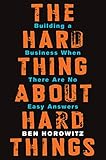
Ben Horowitz's The Hard Thing About Hard Things reads less like a business book and more like a war memoir, which is exactly what makes it work outside of business-book circles. Horowitz writes with brutal honesty about near-bankruptcy, layoffs, and the loneliness of leadership decisions with no good options — and that honesty is what earns the book its fans. But it's also a book steeped in a very particular Silicon Valley worldview, where survival at any cost is treated as a moral good, and that's where the arguments start. Is the relentlessness Horowitz describes admirable discipline, or is it exactly the mindset that burns employees out and treats layoffs as strategy rather than tragedy? Readers who've worked inside a startup that "did the hard thing" tend to have strong, specific opinions here, and they rarely match the readers who haven't.
The photo-essay book that argues with itself
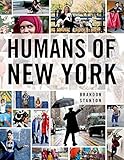
Brandon Stanton's Humans of New York looks like a coffee-table book, and it functions like one on a shelf — but it's a surprisingly rich book club pick because the format itself is up for debate. Is stopping strangers on the street and asking them to hand over their grief, their trauma, their private history, in exchange for a photo and a caption, a genuine act of empathy and connection, or is it a kind of low-grade extraction dressed up as art? Stanton's fans point to the real relationships and real fundraising his platform has generated for the people he features. His critics point out that a stranger's worst day, condensed to two sentences under a portrait, can flatten a life into content. Both readings are defensible, and a room split on that question tends to produce one of the better conversations you'll have all year — plus it's an easy one to flip through together at the meeting itself, which most books aren't.
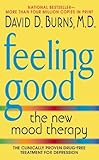
David Burns's Feeling Good is decades old, sold in the tens of millions, and still one of the most argued-about self-help books in print, because it makes a specific and unpopular-in-some-circles claim: that cognitive distortions, not chemistry, are the primary driver of most everyday depression and anxiety, and that you can train your way out of them the way you'd train out of a bad habit. For some readers this book was a genuine turning point — a workbook that gave them tools no therapist had ever handed them directly. For others, especially readers managing clinical depression with medication, the book's confidence in cognitive reframing alone can read as dismissive of the biological piece of the equation. That's not a small disagreement, and it's worth having in a room with people who've lived both sides of it. Just know going in that this one can get personal fast, in a good way if your group is close, in an uncomfortable way if it isn't.
The cookbook that works as a book club pick (yes, really)
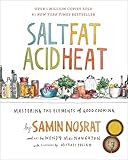
This one's a curveball, but it's a good one for a group that's tired of fiction and self-help and wants to do something different: Samin Nosrat's Salt, Fat, Acid, Heat isn't a recipe collection so much as a thesis about how cooking actually works, and it's opinionated enough to argue with. Nosrat's claim is that four elements govern almost all good cooking, and that once you understand them you don't need recipes anymore — you can improvise with confidence. Cooks who've internalized the framework swear it changed how they think about food permanently. Cooks who lean on precise recipes and exact measurements find the "trust your instincts" approach vague to the point of unhelpful, especially for baking, where chemistry is less forgiving than Nosrat's philosophy allows for. Assign it, have everyone cook one thing from it before the meeting, and bring the results. The food becomes the discussion prompt.
What to skip if you actually want people talking
Not every well-reviewed, popular title makes a good book club pick, and it's worth being honest about which ones fall flat before you spend a month on them. Two categories to be wary of: prescriptive, single-audience business books, and anything that's technically not a book at all.
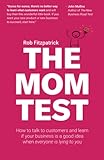
The Mom Test by Rob Fitzpatrick is a genuinely excellent, tightly written guide to talking to customers without leading them — but it's written for founders validating a specific business idea, and outside of a group that's actually building something, there's very little in it to disagree about. Everyone reads it, everyone nods, nobody has a counterargument, and the meeting is over in twenty minutes. Save it for a founder friend, not a book club.
And a Full Focus Planner, however good it is at actually organizing your year, is a planner, not a book — there's no argument to be had over a dated weekly spread, no theme to interpret, no character to defend. If someone in your group suggests it as "the pick," gently redirect them toward a productivity book with an actual thesis instead, something like Atomic Habits above, which at least gives the room something to push back on.
The book matters less than the first question you ask. Skip "did you like it," which invites a one-word answer and kills momentum before the meeting starts. Instead open with something that has no clean answer: "who in this book made a choice you would not have made, and why did they do it anyway?" or, for nonfiction, "what's one claim in this book you're not sure you buy?" Give the disagreement somewhere to go instead of hoping it happens on its own. The books above do most of that work for you — they're built with a fault line already in them — but a good opening question is what turns a fault line into an actual conversation instead of an awkward silence nobody wants to be the one to fill.
Frequently asked questions
What makes a book actually good for book club discussion, versus just a good read?
Ambiguity. A book everyone agrees was "great" produces a short meeting. A book with a genuinely debatable choice, thesis, or ending — one where reasonable readers land in different places — is what keeps a conversation going for two hours. Look for moral gray areas, contested claims, or endings that split readers, not just strong writing.
Is fiction or nonfiction better for sparking real debate?
Both work, for different reasons. Fiction generates debate over character choices and ambiguous endings — think The Midnight Library. Nonfiction generates debate over whether the author's central claim actually holds up, which tends to pull in people's real-life experience and can get more personal, faster.
Should we assign a "skip" book on purpose just to have something to critique?
It can work, but it's a different kind of meeting — more of a group takedown than a genuine debate, since everyone usually agrees the book fell short. It's fun occasionally but doesn't build the same discussion muscle as a book that splits the room in good faith.
How do we keep a heated debate about a book from turning into an actual argument between friends?
Anchor the conversation back to the text. "What in the book made you feel that way" keeps things grounded in the material instead of personal history. It's also worth agreeing as a group, up front, that disagreeing about a character or an author's thesis isn't the same as disagreeing about each other.
What if half the group didn't finish the book?
Pick discussion questions that work from the first half or two-thirds of most of these titles — several, like The Midnight Library and Atomic Habits, front-load their most debatable material early. It's not ideal, but a partial read is still enough to argue in good faith if the questions are aimed at the right chapters.
Are cookbooks and photo-essay books really worth trying for book club?
Yes, occasionally, as a change of pace. Salt, Fat, Acid, Heat works because it has an actual thesis to argue with, and Humans of New York works because the format itself raises an ethical question worth discussing. Both are better as an occasional palate-cleanser between more traditional picks than as your group's default.
What's a good rule of thumb for picking the next book?
Ask whether you can imagine two smart, reasonable people in your group disagreeing about it after finishing. If the honest answer is "not really," it might be a great read, but it's probably not your next book club pick.