Most bedside lamp shopping goes wrong for one reason: people buy on shape. A cute ceramic base, a linen shade, something that matches the duvet — and then they plug it in and the room turns into a hospital waiting area at 9:47pm. The lamp itself was never the problem. The bulb inside it was. A lamp is just a fixture; the light it throws is determined almost entirely by the color temperature of the bulb, whether it dims, and where the light actually lands relative to your face and your book. Get those three things right and a $25 lamp beats a $150 one that got them wrong.
- Top pickGovee Corner Floor Lamp RGB~$40
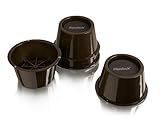
- Best budgetSlipstick 3" Furniture Risers (4-pack)~$20
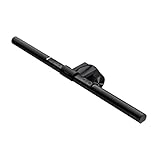
- Worth the splurgeBenQ ScreenBar Monitor Light~$120
The one number that actually matters: color temperature
Every bulb has a color temperature measured in Kelvin, and it's the single biggest lever on whether a bedroom feels like a place to wind down or a place to fill out paperwork. Anything in the 2700K–3000K range reads as "warm white" — the soft amber-leaning glow of an old incandescent bulb, candlelight, or a fireplace. This is the zone you want for every light source within ten feet of your bed. Once you cross into 4000K and above, you're in "cool white" or "daylight" territory: crisp, blue-leaning, energizing light that's genuinely great over a kitchen island or a garage workbench and genuinely terrible next to a pillow.
The mechanism isn't just vibes — it's biology. Blue-heavy light in the 450–480 nanometer range is what your eyes' intrinsically photosensitive retinal ganglion cells use to signal "it's daytime" to your brain, which suppresses melatonin production. Warm light in the 2700K range has a much smaller footprint in that wavelength band, so it does far less to convince your brain that bedtime hasn't actually arrived. This is why a bright white lamp can feel "too awake" even at a low brightness setting — brightness and color temperature are two separate dials, and most cheap lamps only let you touch one of them.
The fix is to stop buying "a lamp" and start buying "a light source with a warm, adjustable bulb," because the fixture is secondary. A well-shaded lamp with a 4000K bulb in it is worse for your bedroom than a bare bulb at 2700K. If you only change one habit from this article, check the Kelvin rating (or the "warm white" vs "daylight" label) before anything else on the box.
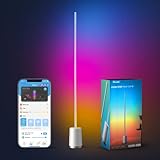
Dimmable, or don't bother
A fixed-brightness bedside lamp is a design flaw waiting to annoy you. The right brightness for reading a paperback at 8pm is not the right brightness for finding your phone charger at 2am, and a lamp that only does one setting forces you to either overshoot into wide-awake territory or fumble in the dark. Dimmability solves this, and there are three real ways to get it: a lamp with a built-in rotary or touch dimmer, a plug-in inline dimmer switch retrofitted onto any lamp cord, or a smart bulb/smart plug controlled from an app or voice assistant.
The cheapest mistake here is assuming any "dimmable" bulb works in any lamp. Standard dimmer switches are built for the electrical curve of incandescent bulbs; a lot of LED bulbs flicker or buzz on old-style dimmers because the load is too different. If you're retrofitting a lamp with a smart or LED bulb, check that the bulb is explicitly rated as dimmable and, ideally, that it's designed for LED-compatible dimming — otherwise you'll get the exact stepped, flickery dimming that makes people give up on the whole idea.
The most foolproof route for a lot of people is skipping bulb-level dimming altogether and using an app-controlled lamp or smart plug instead, since the dimming curve is handled digitally and consistently rather than through analog electrical tricks.
Smart bulbs and app control: genuinely useful, with one big catch
Smart lighting earns its reputation for a reason at the bedside specifically: it lets you dim, warm up, or kill the light entirely without getting out from under the covers, and scheduling means the lamp can fade down automatically at your usual bedtime instead of you remembering to do it. The catch nobody mentions in the marketing is that most smart bulbs and smart lamps ship set to a default "daylight" or full-brightness cool-white mode, because that's what looks impressive in a showroom. If you buy a smart bulb and never touch the settings, you've often just bought an expensive way to keep your bedroom too bright and too blue.
Budget fifteen minutes on setup day to actually dial in the warm-white preset (2700K–3000K), save it as your default "evening" scene, and set a schedule if the app supports it. That fifteen minutes is the difference between a smart lamp that improves your nights and one that sits at a default setting working against you every single time you turn it on.
Touch lamps, switches, and the half-asleep test
Here's a practical filter almost no lamp listing mentions: how easy is it to turn this off with your eyes half-closed at midnight? A tiny inline rocker switch three inches up a thin cord fails this test constantly — you end up patting around the base of the lamp in the dark, which defeats the entire point of a bedside light. Touch-activated lamps (tap the base, cycle through brightness levels) solve this well for anyone who doesn't want a phone or remote involved, though cheap ones can be oversensitive and turn on if you bump the nightstand.
Remote-controlled and app-controlled lamps solve the same problem from a different angle — you don't have to touch the lamp at all, which matters if the lamp sits slightly out of reach on a shared nightstand or floating shelf. The tradeoff is you're now managing another remote or reaching for your phone, which for some people is more friction, not less. There's no universally correct answer here; the right choice depends on whether you'd rather touch a base, a remote, or a phone screen in the dark. Just don't default into "small rocker switch on a thin cord" by accident — actually think about it once, and you won't fumble every night for years.
Placement, angle, and the reading-light problem
A lamp with perfect warm light in the wrong spot still gives you a bad reading experience. The rule of thumb for a reading lamp: the bottom of the shade should sit roughly at or just below eye level when you're propped up against pillows, so the light spills down onto the page instead of shining straight into your eyes. Too high and you get glare; too low and the shade blocks the light from reaching the book at all. If your nightstand is on the short side for your bed height, this is exactly the kind of mismatch furniture risers were built for — three extra inches under the table legs brings a lamp's shade back into the right band without buying new furniture.
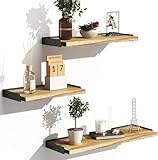
Small nightstands create a second version of this problem: there's no room for both a proper lamp and the phone, water glass, and book that also live there. A wall-mounted floating shelf just above and to the side of the pillow solves this cleanly — it holds the lamp (plug an LED-based one that stays cool to the touch) with the surface below freed up for everything else. It's also a good spot for a small clip-on or task-style light if you read in bed but your partner sleeps earlier than you do, since a narrow beam pointed straight at the page does far less to light up the whole room than a table lamp does.
What to skip
A few categories of bedside lamp reliably disappoint no matter the brand. Skip anything advertised purely on brightness ("1600 lumens!") with no mention of color temperature or dimming — that's a lamp built for a garage, not a bedroom, wearing a decorative shade. Skip bare halogen or old-style CFL bulbs in any bedside fixture; halogens run hot enough to be a real burn and fire concern that close to bedding, and CFLs contain mercury and take a slow, flickering few seconds to reach full brightness, which is exactly wrong for a light you want instantly dim and warm. And skip touch lamps with reviews mentioning "turns on by itself" — a cheap capacitive sensor picking up static or vibration from a nightstand is a genuinely common complaint, and it's worse than a normal switch, not better.
One more: be skeptical of "smart" lamps that require their own proprietary app with a mandatory account and cloud login just to change brightness. If the company folds or the app stops getting updates, you can be left with a lamp that only knows how to do full brightness, full cool-white, forever. Bulbs and lamps that work with a standard smart-home platform (or that have physical controls as a fallback) age much better than ones locked to a single app with no manual override.
Building the full warm-bedroom setup
The lamp is doing half the job of a genuinely restful bedroom; the other half is making sure outside light isn't undoing it. A warm 2700K lamp glowing softly at 9pm loses a lot of its effect if streetlight or a neighbor's porch light is also flooding through the window. Blackout curtains solve this cheaply and make the lamp's warm glow the dominant light source in the room after dark, rather than one warm point competing with cooler ambient light leaking in from outside.
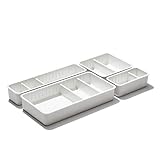
Last small thing: once you've got a lamp, a remote or smart plug, and maybe a spare warm-white bulb, they need a home that isn't loose in the nightstand drawer next to old receipts and dead batteries. A cheap drawer organizer keeps the remote, spare bulb, and charging cable each in their own slot, so you're not patting around in the dark for the one thing that controls your light.
None of this requires replacing your entire bedroom. Start with the bulb — swap whatever's currently in your bedside lamp for a warm 2700K–3000K dimmable one — and see how different the room feels within a single night. Everything else on this list is a refinement on top of that one $8 change.
Frequently asked questions
What color temperature is best for a bedside lamp?
2700K to 3000K, labeled "warm white" or "soft white" on most bulb packaging. This range mimics candlelight and incandescent bulbs and has a much smaller footprint in the blue wavelengths that suppress melatonin, compared to 4000K+ "cool white" or "daylight" bulbs.
Do smart bulbs actually help with sleep, or is that overhyped?
They help, but only if you actually change the default settings. Most smart bulbs ship set to a bright, cool-white "showroom" mode. The benefit comes from manually dialing in a warm, dimmed "evening" preset and saving it as your default — skip that step and you've just bought an expensive bright white lamp.
Why does my dimmable lamp flicker or buzz when I dim it?
Almost always a mismatch between an LED bulb and an old-style dimmer switch built for incandescent bulbs' electrical curve. Look for bulbs explicitly labeled as LED-compatible or dimmable, and if flickering continues, an app-controlled smart bulb or plug sidesteps the issue entirely since the dimming is handled digitally.
How high should a bedside lamp shade sit for reading?
Roughly at or just below eye level when you're propped up against pillows, so light spills down onto the page rather than shining into your eyes. If your nightstand is too short for this to line up, furniture risers under the table legs are a cheap fix that doesn't require new furniture.
Are touch lamps reliable, or do they turn on randomly?
Quality varies a lot by price point. Cheaper capacitive touch sensors can be oversensitive to static or a bumped nightstand, which shows up in reviews as "turns on by itself." If that's a dealbreaker, a lamp with a simple rotary switch or an app/remote-controlled smart bulb avoids the issue.
Is a table lamp or a floor lamp better for a bedroom?
Table lamps make sense when your nightstand has the surface space to spare. A slim corner floor lamp is the better call for small nightstands or rooms where surface space is already crowded with a phone, water, and a book — it frees up the table entirely while still delivering the same warm, dimmable light next to the bed.
Do I need blackout curtains if I already have a warm bedside lamp?
Not required, but they compound the effect. A warm lamp still competes with streetlight, sunrise, or a neighbor's porch light leaking in through the window. Blocking that outside light makes your lamp the dominant, controllable light source in the room after dark, which is where most of the "the room actually feels restful now" effect comes from.