The nightstand is the most personally revealing piece of furniture in a home. It's where the book you're actually reading lives, the water bottle that's getting warm, the charger you trip over, the lotion you use twice a week, and the lamp you bought in a hurry. It's also where most people have given up on organization entirely — because the default nightstand, a flat shelf with a drawer, was not designed for how people actually use bedrooms in 2026.
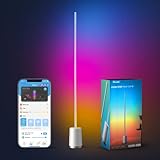
- Top pickGovee Corner Floor Lamp~$40
- Best budgetSlipstick CB654 3" Furniture Risers (4-pack)~$20
- Worth the splurgeBearaby Cotton Napper Weighted Blanket~$199
This guide is for anyone who's woken up and pawed around in the dark for their phone, knocked over a glass, or stared at the tangle of cords on their bedside table and thought "I should do something about this." You should. It takes about an hour and the difference is noticeable every single night.
Why most nightstand setups fail
The problem isn't a lack of willpower or organizational talent. It's that the average nightstand has one flat surface, one shallow drawer, and zero dedicated spots for the 8–12 items that migrate there every night: phone, charger, book, water, chapstick, headphones, reading glasses, remote, lamp, notebook, earplugs, and whatever else your particular bedtime routine requires.
The fix is either vertical space (add a shelf above the table or mount something to the wall) or a system inside what you already have (organizer inserts, cable management, a dedicated charging spot). Most people need both.
One more thing: the lamp matters more than the organization. A bedside lamp with warm, dimmable light does more for sleep quality — and more for how the room feels at 10pm — than any organizer. If you're doing one thing, start there.
The lighting problem: why warm and dimmable matters
Overhead lights are for rooms you're moving through. Bedrooms — especially at night — need layered light: something soft, warm (2700K or lower), and ideally on a dimmer. The science on blue light and sleep is well-established, but the practical issue is simpler: bright overhead light signals "activity time" to your nervous system. Warm, low light signals "wind down."
A dedicated bedside lamp or floor lamp in the corner is the first purchase worth making. The Govee corner lamp below is the one worth buying for this — it's RGB but the warm white setting (set it to 2200K, 30% brightness) turns a bedroom from a room you happen to sleep in to a room that feels deliberately restful. The app control sounds gimmicky but becomes useful when you're already in bed and don't want to reach across the table.
Floating shelves: the vertical storage most people skip
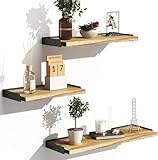
If your nightstand surface is already crowded, the answer isn't a bigger nightstand — it's adding a shelf to the wall above it. A floating shelf at arm's reach from the pillow gives you a second tier for the things that don't need to be immediately grabbable: your current read, a small plant, a candle, the book you're aspirationally working through. Everything important stays on the surface below; the visual clutter moves up and off the functional area.
The Bayka floating shelves have invisible brackets, a clean edge, and hold up to 33lbs — plenty for books and small items. A single shelf at 6–8 inches above the lamp is the right position. They come in a three-pack, which means you have two extras for the bathroom or kitchen and basically get the bedroom shelf for $12.
The drawer: stop ignoring it
The nightstand drawer is where good intentions go to die. A few months in, it becomes a graveyard of dead batteries, half-used lip balm, receipts, and items with no other home. The fix isn't more discipline — it's removing the option to throw things in randomly.
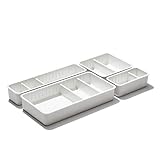
Drawer organizer inserts give every category of item a designated spot. When a spot is full, it signals that something needs to leave, which is the mental model you can't build when things are just piled in a drawer. The OXO interlocking set is the right call here: no fixed grid, so you configure it to your specific drawer dimensions, and the non-slip base keeps sections from sliding when you open and close.
For a nightstand drawer, a simple configuration works: one section for chargers and cables, one for small personal items (chapstick, hand cream, earplugs), one for a notepad and pen. That's the whole system. Twenty minutes, done.
The charging situation: cable chaos is solvable
The single most universal nightstand complaint is the charging cable situation: one outlet, three devices, cords draped across the table, phone slides off the charging pad, cable falls behind the bed in the dark. Here's the honest solution stack:
First, the cable box. The Anker management box hides the power strip and all the excess cord, leaving only the cables that actually go somewhere. It sits on the floor or at the back of the table, has ventilation slots (important — a sealed box around a power strip is a fire issue), and converts the knot of cords into a single clean object. If you've been staring at a tangle of cables for a year, this $26 purchase will make you feel absurdly good.
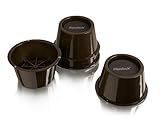
Second consideration: bed height. If your nightstand is too low (or too high), none of the above matters because you'll stop using it properly. The ideal height is 2–3 inches above your mattress surface when lying down. If your current table is the wrong height, furniture risers add 3 inches without replacing anything. The Slipstick risers are rated for 1,300lbs total, fit round and square legs, and don't require tools. A $20 fix that makes your entire sleep setup functionally better.
The bedside essentials worth having
Once you have a functional surface and working system, the items you put on and near it matter. Two that consistently improve sleep quality:
A proper water vessel. The Stanley Quencher keeps water cold for 24+ hours, which means your 3am glass of water is actually cold rather than stale and room-temperature. The lid prevents spills if you knock it over in the dark. Small thing, noticeable difference every night you use it.
A weighted blanket. The evidence on weighted blankets and sleep is reasonably solid — the deep pressure stimulation activates the parasympathetic nervous system and reduces the time it takes to feel calm enough to fall asleep. The Bearaby Cotton Napper is the one worth buying: no glass beads, no filling that shifts and rustles, just layers of organic chunky-knit cotton that drape exactly where you put them. It runs warm, so it replaces rather than supplements a regular blanket for most people.
What to skip
The "bedside caddy" that clips to the mattress. These seem smart in the product photo and turn into a floppy, unreachable pocket of items within a week. Nothing stays organized in a soft fabric pocket at mattress height. Skip it.
Multi-pocket bedside organizers that hang over the headboard. Same problem. The pocket closest to you gets used; the other four collect random items you can't see. You end up with organized chaos instead of just chaos.
Bamboo charging station organizers. You've seen these: a tiered bamboo tray with cutouts for cable routing and a row of slots for devices. They look beautiful in the product photo taken by someone who owns three devices total and does not use their bedroom for anything except sleeping. In real life: the cable routing doesn't work with your specific cables, the slots are the wrong width for your phone case, and cleaning around it is annoying. A cable management box plus a simple tray is better and more flexible.
Any nightstand under $40 with a drawer. The drawer slides are bad. The drawer bottom warps. The particle board surface chips. This is the one piece of furniture where the discount option reliably disappoints. If you're replacing the table entirely, spend $80–150 for something solid. If you're not replacing it, work with what you have using the organizer inserts above.
What should actually be on my nightstand?
The edited list: lamp, water vessel, phone charger, one current book. Optional additions: a small journal if you write at night, lip balm, reading glasses if you need them. Everything else — remote controls, multiple chargers, decorative items, things you "might need" — should live elsewhere. The nightstand only works as a functional surface if it's not also a storage surface.
How high should a nightstand be?
The ideal is 2–3 inches above your mattress height when you're lying in bed, measured from the floor. This puts the surface at arm's reach without requiring you to reach up or down. Most standard nightstands are 24–28 inches tall, which works for most mattress setups. If yours is too low, the Slipstick furniture risers add 3 inches without replacing anything.
What's the best way to manage charging cables on a nightstand?
Three-part solution: a cable management box on the floor or behind the table to hide the power strip and excess cord length, a short charging cable (6 inches to 1 foot rather than 6 feet) that reaches from the outlet to the device without pooling, and a dedicated spot on the surface where the phone goes at night. The short cable is the thing most people skip and the most impactful change.
Are weighted blankets actually useful?
For most people, yes — particularly those who have trouble feeling settled at the start of sleep. The deep pressure effect is real and well-documented. The caveat: they run warm, so hot sleepers often find them too much. The Bearaby Cotton Napper runs cooler than bead-filled options because it's breathable knit rather than sealed fabric. Try 15lbs for most adults; 10lbs if you run very warm.
Is a floating shelf a good alternative to a nightstand?
It depends on the bedroom. A floating shelf with a wall-mounted light eliminates floor footprint entirely, which matters in very small rooms. The tradeoff: you can't put anything heavy on it (books, yes; a water bottle, marginally; a lamp, only with a lightweight LED), and there's no drawer storage. In a room where every square foot matters, a 10-inch floating shelf at nightstand height outperforms a small table. In a normal-sized room, use the shelf as an addition to the table, not a replacement.
What size nightstand do I actually need?
Wider than your lamp base plus 4–6 inches. For most bedside lamps, this means a 14–18 inch surface is sufficient. Going bigger creates more surface to accumulate clutter. One functional tier is better than two tiers of storage that you stop curating after two weeks. If you're shopping for a new one: prioritize the drawer quality (open and close it in the store or check reviews specifically about the drawer) and the surface height relative to your mattress.