Every few years, a piece of home advice makes the rounds that sounds too small to matter — and then you try it and immediately wonder why you waited so long. Velvet hangers are one of those. They're not glamorous. Nobody's posting a "get ready with me" video about their hanger collection. But swap out a closet full of mismatched wire, plastic, and wood for a single matching set of thin velvet hangers, and the closet looks — and functions — like a different room. Not because anything got bigger. Because everything finally fits.
- Top pickUtopia Home Velvet Hangers (50-Pack)~$18 for 50
- Worth the splurgeBayka Floating Shelves (Set of 3)~$36 for set of 3
This isn't a "life-changing magic of tidying up" spiritual thing. It's physics. A standard plastic hanger is roughly 1.5 to 2 inches thick at the shoulder. A velvet hanger is about 4 millimeters. Line up 50 of each in the same closet rod, and you're looking at the difference between a closet that's stuffed to capacity and one with actual breathing room. That's before you even get to the part where clothes stop sliding off and landing in a pile on the floor.
What's actually wrong with the hangers you have
Most closets are a hanger graveyard — a chaotic mix accumulated from dry cleaners, big-box store purchases, and whatever came free with a coat. None of it was chosen on purpose, and it shows. Here's what to actually get rid of:
- Wire hangers. The dry cleaner freebie. They're thin, sure, but they bend under any real weight, leave sharp shoulder dents in sweaters and coats, and snag delicate fabric. They're also famously terrible for structure — a wire hanger will warp a blazer's shoulders within a few wears. Keep them out of the closet entirely.
- Mismatched plastic hangers. Every plastic hanger is a slightly different thickness, a slightly different color, a slightly different shape. Visually, this is what makes a closet look like chaos even when it's technically organized. Functionally, plastic is slick — silky camisoles, slip dresses, and anything with a smooth strap slides right off the shoulders and ends up on the floor.
- Bulky wood hangers. Wood hangers feel like the "nice" option, and for a handful of structured coats and suit jackets, they genuinely are. But used across an entire closet, they eat rod space fast — a wood hanger can be two to three times the width of a velvet one — and most closets simply don't have the linear inches to spare on 40 of them.
None of these are wrong to own in small numbers for specific jobs. The problem is using them as your default, everyday hanger for an entire wardrobe. That's where the space and the mess both come from.
The fix: one matching set of velvet hangers
The Utopia Home velvet hangers are the internet's most-bought hanger upgrade for a reason — they're inexpensive, they come in a big enough set to redo a full closet in one pass, and the flocked velvet surface genuinely stops clothes from sliding. That last part sounds like a minor detail until you live with it. Silk blouses, slippery workout tanks, anything with a thin strap — on plastic, all of it ends up on the closet floor by Thursday. On velvet, it stays put.
The thin profile is the other half of the equation. At about 4mm at the widest point, you can genuinely fit close to double the clothing in the same rod space compared to standard plastic hangers. For anyone in an apartment closet, a shared closet, or just a closet that's always felt too small no matter how much you purge, this is often a bigger fix than actually getting rid of clothes.
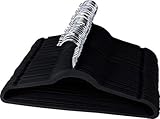
Do the whole closet in one afternoon, not gradually. A closet that's half velvet and half everything else still looks messy — the visual win comes from every hanger matching, which only happens once you've committed to the swap. Budget an hour: pull everything off the rod, transfer piece by piece, and bag up the old hangers for donation (most dry cleaners and thrift stores will take wire and plastic hangers back).
Once the rod is sorted, look up
A velvet hanger swap almost always reveals extra vertical space you didn't know you had — clothes are compressed tighter, which opens up wall space above or beside the rod that used to just be dead air. That's exactly where floating shelves earn their keep. A set of three gives you a place for folded sweaters, shoe boxes, or bins, without eating an inch of floor space or closet footprint.

The obvious spot is above the hanging rod, but don't overlook the side walls either — a narrow closet often has a foot or two of unused wall on either end that a single shelf can claim for folded items, bags, or off-season shoes.
Don't forget what's underneath
If your closet has a dresser or a low shelving unit sitting on the floor, there's almost always dead space underneath it that never gets used — not because it's not there, but because most dressers sit flush to the ground. Furniture risers solve this in about ten minutes. Lift a dresser 3 inches and you've created a shallow but genuinely useful strip for flat storage bins, out-of-rotation shoes, or a couple of the vacuum bags below.
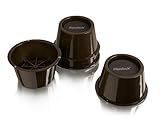
This is a five-minute win that a lot of closet overhauls skip entirely, because it's not visible the way a new hanger set is. But if you're already pulling everything out of a closet to redo it, it costs almost nothing extra to slide risers under the dresser while you're in there.
The drawer-side half of the same problem
Hangers fix the rod. They don't fix the drawer underneath it, which is usually a separate kind of chaos — folded shirts that unfold themselves, a junk-drawer situation for belts and accessories, socks that migrate into every corner. The same logic that makes velvet hangers work applies here: a system with defined, configurable sections beats loose piles every time. OXO's interlocking drawer organizers have no fixed slots, so they reconfigure to fit whatever drawer you're working with, and they don't slide around every time you open it.
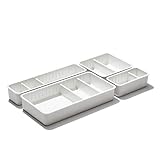
Pair it with a basic folding method — even something as simple as filing shirts vertically instead of stacking them flat — and the drawer stops being the thing that undoes all the work you just did on the rod above it.
What to actually do with the clothes you're not wearing
A real closet reset usually surfaces a category of clothes that don't need to live on a hanger or in a drawer at all: off-season coats, extra bedding that got shoved in there, the sweaters you're not touching until October. This is exactly what vacuum storage bags are built for. Compressed down to a fraction of their original bulk, they free up the closet space you just organized for the things you're actually wearing right now.
The one rule that keeps this from backfiring: only vacuum-seal things you're not reaching for regularly. Anything in weekly or monthly rotation should stay on a hanger or in a drawer where it's actually accessible. Vacuum bags are for storage, not for things you're going to need to dig out every few weeks — that defeats the entire point.
The order that actually works
If you're doing this as a full project rather than piecemeal, the order matters more than people think. Start with the hangers — it's the cheapest step, it takes an afternoon, and it immediately reveals how much space you actually have once everything is uniform and thin. From there, add the floating shelves for the vertical space the hanger swap exposes, slide risers under any furniture that's sitting flush to the floor, sort the drawers with actual dividers, and finally vacuum-seal anything that's genuinely off-season. Do it in that order and each step makes the next one easier, instead of trying to solve everything in your head at once before you've even started pulling clothes off the rod.
What to skip
Skip the "decorative" hanger sets in specialty colors or with padded fabric covers — they're wider than plain velvet, cost more, and don't actually outperform a plain matching set for everyday use. Skip novelty closet gadgets that promise to double your space with gimmicks like tiered cascading hooks; most of them just concentrate weight on a single point and sag within a few months. And skip buying new storage bins or containers before you've done the hanger swap — you'll usually find you need fewer of them than you think once the rod itself isn't the bottleneck.
Frequently asked questions
Are velvet hangers actually worth switching to, or is it just a trend?
It's one of the rare organizing trends backed by simple math. Velvet hangers run about 4mm thick at the shoulder versus 1.5–2 inches for standard plastic, so replacing a full closet's worth genuinely frees up a large amount of rod space — often enough to fit 30–50% more clothing in the same closet. The non-slip surface is a real functional upgrade too, not just cosmetic.
Do velvet hangers work for heavy items like coats and suits?
For everyday coats and structured jackets, yes — the Utopia hangers are rated to hold up to 10 lbs and have a sturdy swivel hook. For your heaviest winter coats or anything you want to preserve the shape of for years, a small number of wood hangers is still worth keeping as a dedicated category, just not as your default hanger for the whole closet.
How many velvet hangers do I actually need?
Count what's currently hanging, then round up slightly since you'll likely consolidate items that were folded onto hangers during the reorganization. A 50-pack covers a single-person closet with room to spare in most cases; larger or shared closets may need two packs.
What should I do with my old wire and plastic hangers?
Most dry cleaners will take wire hangers back for reuse. Plastic hangers in good condition can go to a thrift store or donation center — many won't take wire hangers, so it's worth separating the two before you drop them off. Avoid just trashing large quantities of plastic if a donation option exists nearby.
Is it worth adding floating shelves if my closet is already small?
Often yes, precisely because it's small. Floating shelves use vertical wall space that a hanging rod and dresser don't touch, which is usually the most underused real estate in a tight closet. A compact 3-shelf set adds meaningful storage without reducing floor space or rod length at all.
Are vacuum storage bags safe for delicate fabrics?
They're fine for sturdy off-season items like winter coats, wool sweaters, and extra bedding, but compression isn't ideal for anything structured or delicate — down jackets can lose loft over time, and anything with rigid shoulders or embellishments should stay on a hanger instead. When in doubt, keep delicate or structured pieces out of the vacuum bag rotation.