Every duty-free shop between gate B12 and the jet bridge sells the same promise: a device, a patch, a tiny vial of pills that will let you touch down in Tokyo and walk off the plane like you slept nine hours in your own bed. Almost none of it works the way the packaging implies. The frustrating part is that a handful of genuinely boring, cheap, well-studied things do work — they're just less fun to sell than a glowing wearable that claims to "reset your circadian rhythm" in a single evening. This is the honest version: what has real evidence behind it, what's mostly marketing wrapped around a kernel of truth, and what to actually put in your carry-on.
- Top pickSony WH-1000XM5 Wireless Noise-Canceling Headphones~$280
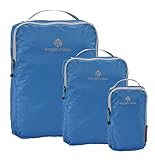
- Best budgetTravel Bottle Set TSA~$15
What jet lag actually is (and why gadgets can't shortcut it)
Jet lag isn't tiredness. It's your circadian clock — the internal timer that governs when you're sleepy, hungry, and alert — still running on the time zone you left. Your body has to physically shift that internal clock to match your new location, and the clock can only move by roughly 45–60 minutes per day on its own, even with help. That's the part no product can skip. A pill or a mask can make the transition more comfortable or slightly faster; nothing makes an 8-hour time difference disappear overnight. Anything that implies otherwise — "resets your body clock instantly," "beats jet lag in one dose" — is making a promise your own biology won't let it keep.
That framing matters because it changes what you should be shopping for. You're not looking for a fix. You're looking for the small number of tools that speed up or smooth out a process your body was always going to have to do anyway.
What actually helps, backed by real evidence
The research on jet lag is more settled than the marketing around it suggests. Sleep scientists and circadian researchers largely agree on a short list of things that move the needle. Everything else is optional at best.
| Category | Verdict | Why |
|---|---|---|
| Strategic light exposure | Real evidence | Light is the strongest signal your circadian clock responds to. Seeking bright light at the right time (and avoiding it at the wrong time) shifts your internal clock faster than almost anything else. |
| Low-dose melatonin, correctly timed | Real evidence | Multiple clinical reviews support 0.5mg taken near destination bedtime. High doses (5–10mg) don't work better — they just cause grogginess. |
| Hydration | Real, modest effect | Cabin air is drier than most deserts. Dehydration amplifies fatigue and headache symptoms that get blamed on jet lag but are really just dehydration. |
| Compression socks | Real, but for a different problem | Genuinely reduces leg swelling and DVT risk on long flights. Doesn't touch your circadian clock, but less swelling and discomfort means you actually sleep better in the seat — which helps indirectly. |
| Pre-flight sleep schedule shifting | Real evidence | Shifting bedtime 30–60 minutes toward your destination time for a few days before you fly gives your clock a head start. Boring, free, and it works. |
| "Jet lag" supplement blends | Mostly placebo | Proprietary blends of B vitamins, ginger, and "adaptogens" with no dosing transparency. Any real ingredient (like melatonin) is usually under-dosed or buried in a mix. |
| Blue-light-blocking glasses (all day) | Mostly placebo | Blocking blue light matters for a specific window before sleep, not as an all-day accessory. Wearing them on the plane at 2pm destination time does close to nothing. |
| Magnetic patches / bracelets | Placebo | No mechanism by which a magnet would influence a circadian clock governed by light and hormones. Zero controlled evidence. |
| "Precision" jet lag apps and wearables | Half-useful | The underlying math (light/dark timing schedules) is legitimate circadian science. The problem is precision theater — a free printable chart gives you the same schedule a $15/month app does. |
Notice what's missing from the "real evidence" column: almost nothing you'd find on an airport gadget wall. The things that actually work are a timing strategy, a cheap hormone at the right dose, water, and mildly compressive socks. That's it. That's the whole list.
Sleep environment gear that's worth the suitcase space
Since light and sleep quality are the two levers that actually move your circadian clock, the gear that earns its spot in your bag is whatever protects your ability to sleep on your own schedule — not gadgets that claim to do the shifting for you. Cabin noise sits around 85 decibels for hours at a time, which is loud enough to fragment sleep even if you don't consciously wake up. If you're trying to sleep at the "wrong" time for your body to help nudge your clock toward your destination, fighting through engine noise on top of that is working against yourself.
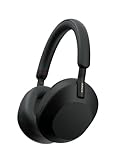
The other half of the sleep-environment equation is what happens after you land. The first night in a new time zone is often the hardest — you're exhausted but your body may still think it's the middle of the afternoon. A weighted blanket won't touch your circadian rhythm, but there's real (if modest) evidence that deep pressure stimulation lowers physiological arousal and helps some people fall asleep faster when they're overtired and wired at the same time — exactly the state most people land in after a long-haul flight.
The supplements and gadgets that are mostly marketing
This is the category where the duty-free shop earns its markup. "Jet lag support" supplements are almost always a proprietary blend — a legal category that lets a company list ingredients without disclosing how much of each one is actually in the capsule. If a bottle claims to fight jet lag with a mix of B12, ginger root, L-theanine, and "adaptogenic herbs" but doesn't give you a milligram count for any of them, there's no way to know if you're getting a meaningful dose of anything, including the one ingredient (melatonin, if it's even in there) that has real research behind it. Buy plain, labeled, low-dose melatonin instead. You'll know exactly what you're taking and how much.
Light-therapy glasses and lamps aren't nonsense in theory — timed bright-light exposure is genuinely one of the most effective circadian tools that exists. The issue is that most consumer products marketed for jet lag skip the actual science, which requires exposure at a specific time relative to your body clock, not just "wear these on the flight." A device that doesn't tell you exactly when to use it relative to your origin and destination time zones is selling you the accessory without the instructions that make it work.
Then there's the pure theater: magnetic bracelets, "anti-jet-lag" wristbands with acupressure points, and tablets that promise to "detoxify" travel fatigue. None of these have a plausible mechanism, let alone controlled evidence. If a product can't explain, in one sentence, how it would interact with light exposure, melatonin, or your sleep-wake cycle — the three things that actually govern circadian rhythm — it's not doing anything measurable. It might feel like it's working because you also hydrated, slept when you could, and expected to feel better. That's the placebo effect doing legitimate, if uncredited, work.
How to actually pack for it
The unglamorous truth is that jet lag management is mostly about logistics: having your melatonin and electrolyte packets accessible instead of buried at the bottom of a checked bag, and getting your liquids through security without a meltdown at the TSA line. None of that is exciting to shop for, but it's the difference between actually following through on a plan and giving up by hour three of a layover.
The realistic timeline (so you stop blaming your neck pillow)
The rule of thumb circadian researchers actually use: expect roughly one day of adjustment per time zone crossed, a little faster traveling west than east because it's biologically easier to delay your clock than advance it. Cross six time zones and a realistic recovery window is four to six days, gear or no gear. Light timing and low-dose melatonin can shave that down modestly — usually not dramatically — and hydration and decent sleep just make the process less miserable while it happens.
None of that is the promise on the gadget-wall packaging, but it's the honest one. If you want the highest-leverage jet lag kit for the money: shift your sleep schedule a little before you fly, get low-dose melatonin timed to your destination bedtime, drink more water than feels necessary, and protect your ability to actually sleep on the plane with decent noise cancellation. Skip the proprietary blends and the magnets. Your circadian clock doesn't know they exist.
Frequently asked questions
What's the single most effective thing for jet lag, if I only do one?
Timed light exposure — seeking bright light when your destination needs you awake, avoiding it when your destination needs you asleep. It's free, has the strongest research behind it, and most people skip it entirely in favor of pills and gadgets.
How much melatonin should I actually take?
0.5mg, not the 5–10mg tablets most drugstores sell. Higher doses don't shift your clock faster — they mostly just make you groggier the next morning. Take it about 30 minutes before your intended bedtime at your destination, not your origin time zone.
Do compression socks actually help with jet lag specifically?
Not directly — they don't touch your circadian rhythm. What they do is reduce leg swelling and DVT risk on long flights, which means less discomfort and better in-seat sleep, which indirectly helps you arrive less wrecked. Worth wearing for the circulation benefit alone.
Are "jet lag" supplement blends worth buying?
Usually not. Proprietary blends don't have to disclose dosages for individual ingredients, so you can't tell if you're getting a meaningful amount of anything — including melatonin, if it's even in there. Buy plain, labeled, low-dose melatonin instead and know exactly what you're taking.
Does adjusting my sleep schedule before a trip actually work?
Yes — this is one of the better-supported strategies. Shifting bedtime 30–60 minutes per day toward your destination's schedule for a few days before you fly gives your circadian clock a head start, so there's less distance left to travel once you land.
How long does jet lag actually last?
Roughly one day of adjustment per time zone crossed, a bit faster going west than east. Cross six time zones and expect four to six days to feel fully normal, even with good gear and timing. Nothing eliminates that window — the goal is making it shorter and more tolerable, not instant.