The Sunday reset used to mean two hours of low-grade dread: staring into a fridge with three mystery containers, digging through a junk drawer for a working pen, and untangling a nest of chargers behind the TV before you even got to the part where you plan the week. None of that is "cleaning." It's friction — the tax you pay every single week because nothing in the house has a system. The good news is that almost all of it is fixable with a handful of specific, boring, extremely effective tools. Not a Pinterest-board pantry makeover. Not a $400 organizing consultant. Just the right containers, the right drawer setup, and one appliance that does the actual cooking while you do everything else.
- Top pickOXO Good Grips POP Container (3.4qt)~$16
- Worth the splurgeInstant Pot Duo 7-in-1 (6qt)~$79
This is the list of what's genuinely worth owning if you want your Sunday reset to take 45 minutes instead of three hours — plus the stuff that gets marketed hard at reset-obsessed people that isn't actually worth your money or your Sunday.
What the Sunday reset is actually for
A Sunday reset isn't a chore list. It's a weekly checkpoint where you convert chaos back into a usable system: food prepped, surfaces cleared, laundry put away, and tomorrow-you set up to not have to think as hard. The households that keep doing this long-term aren't the ones with the most elaborate systems — they're the ones whose systems require the least willpower to maintain. That's the whole design principle behind every product on this list. If a tool makes the reset feel like one more task, it gets abandoned by week three. If it makes the reset faster, it survives past January.
The food prep system that actually saves you time all week
Meal prep containers get recommended constantly and most of them fail for the same reason: they're not actually airtight, so food goes soggy or dries out by Wednesday and you end up ordering takeout anyway. OXO's POP containers solve the real problem — a genuine airtight seal with a one-touch button lid, so dry goods stay dry and prepped ingredients stay fresh for the length of an actual work week. They also stack, which matters more than people expect once your fridge has six of them in it instead of one.

Where these actually earn their keep isn't leftovers — it's pre-portioning the ingredients you'll cook with Tuesday and Thursday, so a weeknight dinner becomes assembly instead of a full cooking session from scratch.
Pair the containers with something that cooks while you're doing the rest of the reset, and Sunday stops being "the day I stand at the stove for three hours." An Instant Pot handles a full pot of chili, a batch of shredded chicken, or a pot of grains in the background while you're folding laundry or resetting the closet. Set it, walk away, come back to food. That's the whole value proposition, and it's arguably the biggest time-saver on this entire list because it doesn't need your attention at all.

The 15-minute drawer and pantry reset
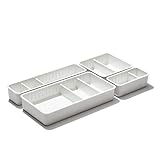
Every kitchen has a drawer that becomes the place where things go to be lost — spare batteries, twist ties, the one working pen. An interlocking drawer organizer fixes this permanently, not because it looks nice, but because it gives everything a slot, and a slot is the difference between "put it away" taking two seconds and taking thirty. The OXO version doesn't have fixed compartments — the pieces interlock in whatever configuration your specific drawer needs, which matters because kitchen drawers are never a standard size.
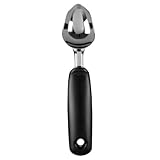
The can opener deserves a mention here too, and it sounds almost too small to include — except a dull or wobbly one is exactly the kind of tiny friction that quietly derails a pantry restock every single week. One that actually works on the first try, every try, removes one more obstacle between you and getting groceries put away instead of left in bags on the counter.
If your pantry or entryway has any wall space going unused, floating shelves solve a problem drawers can't — a landing zone. A shelf near the kitchen door for mail, keys, and the bag you're packing for tomorrow means those items have a home that isn't "wherever you set them down." It's a five-minute daily habit that only works once the shelf actually exists.

The 10-minute closet and laundry reset
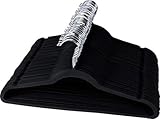
Laundry is the part of the reset most people put off, and a lot of that avoidance is about how annoying it is to actually put clothes away, not the washing itself. Bulky plastic hangers take up more rod space than you have and clothes slide right off them, so folded laundry ends up back on a chair "for now." Thin velvet hangers fix both problems at once — clothes stay put, and you can fit close to twice as much on the same closet rod, which makes the put-away step fast enough that it actually happens on a Sunday instead of getting postponed to next weekend.
The charging station nobody thinks to reset
Here's the one people skip: the tangle of cords behind the TV or on the kitchen counter that's been building for months. It doesn't feel urgent the way a messy fridge does, so it never makes the reset list — but it's exactly the kind of low-grade visual clutter that makes a "reset" space feel unfinished even after everything else is done. A cable management box hides the power strip and the excess cord in one closed, ventilated container, and it takes about ten minutes to set up once. After that, it's not part of the weekly reset at all — it's just quietly fixed for good.
What to skip
Skip the elaborate labeled-bin systems you see in every "get organized" video — the ones with matching acrylic bins for every single food category. They look incredible in a photo and they're genuinely more maintenance than most households can sustain long-term; restocking and relabeling a dozen bins every week is its own chore, and the return rarely beats just using a few good airtight containers and a shelf. Also skip buying a second, "nicer" version of something you already own that works fine — a new set of matching mixing bowls doesn't make your Sunday reset faster, it just makes your kitchen photograph better. If a purchase doesn't remove a specific friction point you actually experience every week, it's decor, not a system.
Vacuum-sealed storage bags are another one to leave off a weekly routine, at least. They're genuinely useful for seasonal closet swaps — packing away winter coats in the spring — but they're the wrong tool for a weekly reset because the seal-and-reseal process takes real time. Save them for the twice-a-year projects, not Sunday night.
A baking mat earns a spot here, mostly because it turns "I should roast something for the week" from cleanup dread into a five-minute task. A reusable silicone mat means no foil, no parchment, no scrubbing a sheet pan at 8pm — you roast a tray of vegetables or bake a batch of muffins for the week, wipe the mat, and you're done. It's a small tool with a disproportionate effect on whether the "cook something for the week" task actually happens instead of getting pushed to Wednesday.
The honest math on why this works
None of these tools are exciting. That's sort of the point. A Sunday reset that depends on motivation fails within a month, because motivation is not a renewable resource on a Sunday evening. A Sunday reset built around removing friction — the drawer has a slot, the container seals, the appliance cooks itself, the hanger doesn't fight you — keeps running even on the weeks you have zero energy for it. Buy the boring tools. They're the ones still doing their job a year from now.
Frequently asked questions
How long should a Sunday reset actually take?
With the right tools, 45–60 minutes for most households — food prepped or started in an appliance that cooks itself, a quick drawer and surface reset, and laundry put away. Without a system, the same tasks can eat half a day because every step involves searching for something or fighting a container that doesn't seal.
What's the single highest-impact purchase on this list?
The Instant Pot, by a wide margin. It's the only item that actively saves you hands-on time rather than just organizing what you already have — it cooks a full meal's worth of food unattended while you handle the rest of the reset.
Do I need all of these to make a Sunday reset stick?
No. Start with whichever single friction point bothers you most — usually the food storage or the junk drawer — and add the rest over a few weeks. A reset system built all at once tends to feel like a project; one built gradually feels like it was always just how things worked.
Are expensive airtight containers actually better than cheap ones?
The seal is what matters, not the price. A genuinely airtight lid — the kind that clicks or locks rather than just presses on — keeps food fresh for a full week. Cheap containers with a simple snap lid often aren't actually airtight, which is why food goes stale by Wednesday regardless of how organized the fridge looks.
Is meal prepping actually worth the Sunday time investment?
For most households, yes, but only if the prep is genuinely low-effort — pre-portioning and one pot that cooks itself, not a full day of cooking eight separate meals. The version of meal prep that survives long-term is the one that takes under an hour, not the elaborate version from a "what I eat in a week" video.
What's the most commonly skipped step in a Sunday reset?
Resetting cords and charging stations. It's not visually dramatic the way a clean fridge is, so it rarely makes anyone's list — but a cluttered charging area is one of the most common sources of low-grade daily annoyance in a home, and it's usually a one-time, ten-minute fix rather than a recurring chore.