There is a very specific kind of tech gift that ruins the moment: the light-up gadget from a mall kiosk, the charging cable that frays by February, the speaker that sounded fine in the store and tinny on a real desk. Under $50 is genuinely good gift territory — you can surprise someone without a group-chat budget negotiation first — but it is also the price band most flooded with stuff that photographs well and feels cheap the second it is in someone's hand. This list is the filter. Every pick below either solves a daily annoyance or upgrades something the person already touches ten times a day, and none of them need a manual to set up.
- Top pickTile Mate Bluetooth Tracker~$25
- Worth the splurgeBenQ ScreenBar Monitor Light~$120
The $50 tech gift problem: why cheap gadgets feel cheap
Here is the thing nobody says out loud about budget tech: it is rarely the price tag that gives a gift away as cheap. It is the plastic. A $45 pair of earbuds and a $12 pair of earbuds can sit next to each other on a shelf and look nearly identical in a thumbnail photo, but pick them both up and the difference is instant — one has weight and a satisfying click to the charging case, the other rattles. Same with trackers, same with cables, same with literally every category on this list. The tell is almost never the number on the price tag. It is whether the thing was engineered to be used for three years or built to survive one unboxing video.
That is the standard this roundup holds every pick to. Nothing here is included because it is the cheapest option in its category — several of these have a slightly pricier sibling that would also work. They are included because they clear a bar: real materials, a battery that still holds a charge in year two, and a use case that is obvious the moment someone opens the box, no explanation needed.
Trackers: the gift that gets used the same week you give it
A Bluetooth tracker is one of the only gifts in this price range where the person will use it within 48 hours of opening it, because the anxiety it solves — where did I put my keys, is my bag still on the carousel, did my kid leave their backpack on the bus again — is immediate and universal. The pick below is the budget-smart entry point: it does one job, does it well, and does not ask anyone to buy into an ecosystem they are not already in.

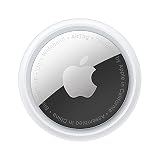
The honest math on the AirTag below: at roughly $99 for a four-pack, a single tag effectively runs about $25 — genuinely inside this list's spirit if you are tagging one thing, or a real splurge if you are outfitting an entire keychain, backpack, and suitcase collection for someone. It earns its spot here for one reason: if the person you are shopping for is deep in the Apple ecosystem, the Find My integration is simply better than anything a third-party tracker can offer, and a gift that quietly ends someone's most repeated daily panic is worth the stretch.
Earbuds that do not sound like $45 earbuds
Wireless earbuds are the single most requested item on every "cheap tech that looks expensive" list for a reason — they are visible, they are used daily, and the gap between a good $45 pair and a bad $45 pair is enormous in a way that is hard to tell from a product photo.
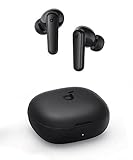
What actually separates a pair like this from the sea of near-identical earbuds at this price is boring in the best way: a case that snaps shut with a real magnet instead of a loose hinge, a charge that genuinely lasts a full workday, and sound that does not go thin the second you leave a quiet room. None of that is flashy. All of it is the difference between a gift that gets used and one that gets left in a drawer by February.
The quiet-hero pick: cable management as a gift, not a chore
This is the pick people do not ask for and then cannot stop talking about once they have it. Nobody puts "tame the nest of cables behind my desk" on a wish list, but almost everyone has that nest, and almost nobody fixes it themselves because it feels like a project rather than a purchase.
Give this to the person whose desk, TV console, or nightstand looks like a plate of spaghetti with a power strip underneath. It is not exciting to unwrap. It is, genuinely, one of the highest-satisfaction gifts on this entire list once it is installed, because the improvement is visible every single day rather than a one-time novelty.
What to skip: the tech gifts that feel cheap the moment they are opened
A few categories are worth naming specifically, because they show up on every "stocking stuffer" end cap and almost never earn their keep. Generic phone grip stands with no brand name. The adhesive fails within a month and takes a chunk of the phone case with it. Unbranded "fast charging" cables sold in three-packs for $8. They work for about six weeks, then the connection gets finicky right at the exact moment someone is late for something. Novelty Bluetooth speakers shaped like something else — a rock, a can, a disco ball. The gimmick is the entire product; the sound quality is an afterthought and it shows the first time it is used somewhere with real ambient noise. Mystery-brand power banks with no listed cell capacity. If a power bank does not clearly state its mAh rating and its actual output wattage, assume it is a repackaged cell that will charge a phone to 40% once and then need to be charged itself for six hours. Cheap tech gifts do not fail because they are inexpensive. They fail because they are built down to a price instead of up to a use case, and that shortcut always shows.
Two picks worth stretching a little past $50
Most of this list stays comfortably under the line. These two go over it, and they are here anyway because the honest answer to "is it worth the extra money" is yes, for the right person.
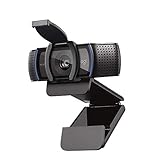
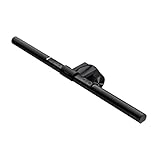
Both of these are aimed at the same recipient: someone who works from a desk and is quietly annoyed by their current setup but has not gotten around to fixing it themselves. That is a very specific and very giftable kind of person, and either of these lands better than a generic desk gadget because it solves a problem they already have rather than introducing a new one. If you only have room in the budget for one gift and want the safest bet, go with the earbuds — nearly everyone uses wireless earbuds daily. If you know the person's specific daily friction point — always losing their keys, a desk that looks like a cable graveyard, a laptop camera that makes them look like they're calling from a submarine — match the gift to that friction point instead; a gift that solves a named problem reads as far more thoughtful than a generic one, even at the same price.
FAQs
What's the single best tech gift under $50 for someone who's hard to shop for?
Wireless earbuds. Nearly everyone uses them daily, and a pair like the Soundcore P3i clears the "feels premium" bar reliably even for people who already own a pair — a genuinely better pair is a welcome upgrade, not a redundant one.
Are AirTags worth it if the person has an Android phone?
Not really — AirTags rely on Apple's Find My network and lose almost all their convenience without an iPhone. For Android users, go with the Tile Mate instead; it works across both platforms and doesn't ask them to buy into an ecosystem they're not in.
How do I know if a cheap charger or cable is actually going to hold up?
Check for a stated wattage and certification (USB-IF or MFi for Apple cables), and skip anything sold as a generic unbranded multi-pack. That's usually the first sign it was built down to a price instead of up to a use case.
Is a $70 webcam actually a meaningfully better gift than a $30 one?
Yes, for the right person — someone on video calls regularly will notice image quality and the privacy shutter immediately, and cheaper webcams frequently struggle in low light or require driver installs that create a bad unboxing experience.
What if the person already has good earbuds and a tidy desk?
Go with a tracker (AirTag if they're on iPhone, Tile Mate if not) or the cable management box. The best gifts for people who've already solved the basics are the ones that fix a problem they haven't gotten around to yet.
Do any of these need batteries replaced constantly?
No — the AirTag's battery lasts about a year and is a simple coin-cell swap, the Tile Mate's battery lasts about three years, and both the earbuds and the webcam charge via USB-C like everything else in a normal bag.