Somewhere between "I'll just toss it in the drawer" and "I need a labeled system with a laminated key," there's a version of your silverware drawer that actually works — one where you can grab a fork without a spoon avalanche, where the drawer glides shut instead of catching on a rogue butter knife, and where nobody has performed the ritual of digging past three whisks to find a teaspoon. That drawer is not a fantasy. It's mostly a sizing problem and a habits problem, and both are fixable for less than the cost of a nice dinner out.
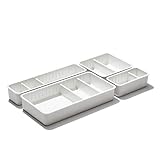
- Top pickOXO Good Grips Drawer Organizer 4pc~$30
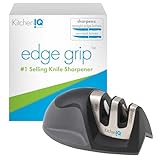
- Best budgetKitchenIQ Edge Grip Knife Sharpener~$8
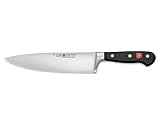
- Worth the splurgeVictorinox Fibrox Pro 8" Chef Knife~$45
Why the flatware drawer never stays fixed
Most people buy exactly one flatware tray in their adult life, put it in whatever drawer is closest to the dishwasher, and never think about it again — right up until it stops working. The tray was sized for a starter set of cheap flatware and a junk drawer's worth of takeout chopsticks. Then life happens: a wedding registry doubles your fork count, you inherit grandma's serving spoons, someone buys chopsticks that actually match nothing, and suddenly the tray that used to have room to breathe is a jammed-together mess where the compartments no longer match what's actually living in them.
This is the part nobody tells you: a flatware tray isn't a one-time purchase, it's a system that needs to flex as your kitchen changes. The households with genuinely calm drawers aren't the ones with the fanciest tray. They're the ones who treat the tray as adjustable infrastructure and periodically re-sort it, the same way you'd reorganize a closet after a season of impulse purchases.
Measure first — the tray that doesn't fit is worse than no tray
The single most common reason a flatware tray fails is that nobody measured the drawer before buying it. Kitchen drawers are not standardized. A drawer built in 2015 is not the same depth as one built in 1985, and the drawer under your stove is almost never the same size as the one next to the sink. Pull the drawer all the way out, measure the interior width, depth, and — critically, the step people skip — the interior height from the drawer floor to the top edge of the side wall. A tray that's a half-inch too tall will bind against the drawer glide every single time you open it, and you'll blame the tray when the real problem was skipping a tape measure.
Once you have real numbers, modular beats fixed almost every time. A single molded tray forces your flatware to match its compartments. A modular set of separate bins lets you rearrange the layout around what you actually own — more compartments for a big set of everyday flatware, fewer and bigger for serving pieces. If you already read our guide to drawer organizers that actually fit your drawer, you know the OXO Good Grips modular bin set is the reference point here for a reason — it's dishwasher safe, has non-slip feet, and the individual pieces work in almost any drawer once you measure and arrange them intentionally.
Adjustable trays vs. fixed trays vs. bin-style: what actually holds up
There are three real categories of flatware storage, and they age very differently. Fixed molded trays (the ones that come free with a flatware set) are cheap and rigid — they work until your set changes size, and then they're landfill. Expandable bamboo trays with a spring-loaded telescoping mechanism look gorgeous in the listing photo and are, in my experience, the most over-promised product in this whole category: the expanding rails work smoothly for about six months, then they start to bind, slip out of position when you slam the drawer, and the bamboo itself swells and warps the first time it sits near a wet dish rack or a steamy dishwasher-adjacent drawer. Humidity is bamboo's enemy, and a kitchen drawer is basically a humidity delivery system.
The third category, bin-style modular storage, is the one that actually holds up long-term because there's no mechanism to fail and no wood to warp. A set of stackable, airtight bins isn't marketed as "flatware storage," but it solves a real problem the trays don't: overflow. Serving spoons, oversized salad tongs, and the extra steak knife set that doesn't fit your daily tray's slots need somewhere to live that isn't loose in the back of the drawer. A container like OXO's POP line, normally sold for pantry staples, works surprisingly well as a dedicated bin for oversized or overflow flatware sitting inside a deeper drawer.

The honest verdict: skip expandable bamboo unless your drawer sees zero humidity and you're willing to sand and re-oil it occasionally. A modular plastic bin set plus a dedicated overflow container beats a single "premium" bamboo tray in every real kitchen I've seen this tested in.
The two-drawer system: everyday flatware vs. the "special occasion" stuff
Here's the upgrade that changes more than any tray purchase: stop trying to store everything in one drawer. The reason flatware drawers get crowded isn't usually that you own too much — it's that you're storing the fork you use every day in the same six inches as the fish knives you use twice a year. Pull anything you use less than monthly out of the primary drawer entirely. Special-occasion serving pieces, the extra set for guests, the weird little butter curler nobody remembers buying — none of that needs to compete for prime real estate next to your everyday forks.
A small floating shelf near (not necessarily in) the kitchen is the release valve for this. Store the occasional-use pieces in a labeled bin or a shallow basket up on a shelf, and your primary flatware drawer instantly has room to breathe, because it's only doing one job instead of two.
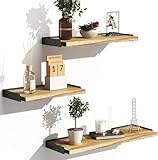
This is also the fix if you've ever bought "a bigger tray" and been disappointed. A bigger tray doesn't solve a two-purposes-in-one-drawer problem. Splitting the purposes does.
Drawer zen is a psychology problem, not a storage problem
Every kitchen has at least one drawer that creeps back toward chaos no matter how good the organizer is. This isn't a product failure — it's a friction problem. If putting something away correctly takes more effort than tossing it in loose, most people will toss it in loose most of the time, especially at the end of a long day with a sink full of dishes. The fix isn't a better tray. It's designing the drawer so the easy motion and the correct motion are the same motion.
This matters even more in the drawers that double as junk drawers — the ones where flatware shares real estate with takeout chopsticks, rubber bands, and the twist ties from bread bags. A dedicated small container for the miscellaneous stuff, sitting right next to the flatware tray instead of loose on top of it, is the difference between a drawer that stays calm and one that slowly turns into an archaeological site. A compact cable or cord box, originally meant for a desk, works surprisingly well corralling the loose odds and ends that migrate into kitchen drawers — twist ties, rubber bands, the random binder clip.
The other half of drawer zen is decluttering the drawers that aren't flatware at all but sit right next to it, competing for the same square footage. A deep linen or table-linen drawer stuffed with placemats and extra napkins takes up space that would otherwise let your flatware drawer expand. Vacuum storage bags compress bulky linens down to a fraction of their size, freeing up a full drawer's worth of room elsewhere in the kitchen — which, indirectly, is one of the fastest ways to give your flatware drawer more breathing room without buying it a single new bin.
What actually belongs in the tray (and what to banish immediately)
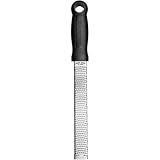
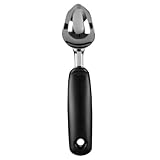
Not everything that ends up in a flatware drawer should live there, and this is where most drawers quietly go wrong. Small kitchen tools with an odd, non-fork shape — a zester, a can opener, a bottle opener — get shoved into whatever slot is closest instead of getting an intentional spot, and they're usually the reason one compartment never quite closes flat. Give the genuinely useful small tools their own slot instead of wedging them wherever they fit; a good zester and a good can opener earn drawer real estate, they just need a slot sized for their actual shape, not a fork-shaped one.
Knife sharpeners are the other repeat offender. They're flat, they're small, and they seem like a natural fit for a flatware tray — but a pull-through sharpener with exposed carbide slots doesn't belong loose next to forks people reach into by feel. Give it its own slot, blade-side contained, or better yet, a spot just outside the tray entirely.
And the one item that should never be loose in a flatware tray at all, no matter how tempting the space: real kitchen knives. A chef's knife rattling around next to forks and spoons is how a good knife goes dull fast — the blade knocks against harder metal every time the drawer opens — and it's a genuine cut risk for anyone reaching in by feel. Real knives belong in a block, on a magnetic strip, or in a dedicated in-drawer knife tray with blade guards. If you're shopping for a first good chef's knife anyway, the Victorinox Fibrox is the one that shows up on nearly every professional and home-cook recommendation list, and it deserves a home that isn't your silverware drawer.
Frequently asked questions
What size flatware tray do I actually need?
Measure your drawer's interior width, depth, and height before buying anything — height is the one people forget, and a tray that's even a half-inch too tall will bind on the drawer glide every time you open it. Once you have real numbers, modular bins beat a single fixed tray almost every time, because you can reconfigure them as your set of flatware changes.
Are expandable bamboo flatware trays worth buying?
Generally no, especially in a kitchen. The telescoping mechanism tends to bind or slip within the first year, and bamboo swells and warps with the humidity that's just normal in a kitchen drawer near a dishwasher or sink. A modular plastic bin set holds up longer and costs less.
How do I stop my flatware drawer from getting crowded again?
Split it into two purposes: keep only daily-use flatware in the primary drawer, and move special-occasion or serving pieces to a labeled bin on a nearby shelf. Most crowding isn't from owning too much flatware — it's from storing everyday and occasional pieces in the same six inches of drawer space.
What's the best way to organize a combined flatware and junk drawer?
Give the miscellaneous stuff — twist ties, rubber bands, loose odds and ends — its own small contained box sitting next to the flatware tray rather than loose on top of it. The goal isn't to eliminate the junk drawer, it's to keep the two categories from bleeding into each other every time the drawer opens.
Should knives go in the flatware tray?
No. A knife loose in a flatware tray dulls faster from knocking against harder metal, and it's a real cut risk for anyone reaching in by feel. Knives belong in a block, on a magnetic strip, or in a dedicated in-drawer knife tray with blade guards — never loose next to forks and spoons.
What should I do with awkwardly-shaped tools like zesters and can openers?
Give them a dedicated slot sized for their actual shape instead of wedging them into whatever fork-shaped compartment is closest. A good zester or can opener earns drawer real estate — it just needs an intentional spot, not a leftover one.
How often should I actually re-sort my flatware drawer?
Whenever your set of flatware changes meaningfully — a registry haul, an inherited set, a new gadget that needs a home — rather than on a fixed schedule. Treat the tray as adjustable infrastructure you revisit occasionally, not a one-time purchase you set and forget.