Somewhere around year eight or nine, your dog quietly renegotiates the terms of the relationship. The stairs get a beat of hesitation before them. The floor greeting turns into more of a slow rise. They sleep more, and when they do get up from a nap, there's a stiffness that wasn't there last year. None of this means your dog is in crisis — it means they're aging, the same way you would if you'd spent a decade doing everything at a full sprint. This is not medical advice, and if your dog is showing real pain, sudden mobility loss, or appetite changes, that's a vet visit, not a shopping list. But there is a real, honest category of comfort upgrades that make an older dog's daily life measurably easier, and most of them are boring, unglamorous, and completely worth it.
- Top pickKOPEKS Orthopedic Cooling Dog Pad~$60
- Best budgetKONG Classic Dog Toy~$13
The sleep surface matters more than you think
A younger dog can sleep on a hardwood floor, a threadbare towel, or nothing at all and bounce up fine. An older dog with any joint stiffness is spending 14-18 hours a day lying down, and every one of those hours on a hard or overly warm surface is doing something to their hips, elbows, and shoulders. This is the single highest-leverage upgrade on this whole list, and it's also the one people skip because "he's always slept on the floor and he's fine." He might genuinely be more comfortable than you'd guess — but there's an easy way to find out, and it costs less than a vet copay.
What you actually want is support plus temperature regulation. Older dogs run warmer at night than you'd expect — arthritic joints in particular seem to get more uncomfortable, not less, when they overheat, which is part of why you'll see an aging dog restlessly get up, resettle, and get up again on a hot night. A cooling, orthopedic-adjacent surface addresses both problems at once: it keeps pressure off the joints and keeps them from cooking themselves at 2am.
You don't need all three. Pick one for the primary sleeping spot — the KOPEKS if your dog has visible joint stiffness and you want real cushioning under the cooling, the Arf Pets or Green Pet Shop mat if your dog already has a supportive bed and you just want to layer in temperature control. A lot of senior dogs end up with a "day spot" near a cool floor vent or the back door and a "night spot" in the bedroom, and honestly, having a cooling surface in both isn't overkill — it's just meeting the dog where they already choose to lie down.
Raising the food and water bowls
This one gets debated online more than it should. There was a period where elevated feeders got blamed for bloat risk in deep-chested breeds, and that scare stuck around long after the research got murkier and more breed-specific. Set the bloat question aside for a second and think about the actual mechanics: a senior dog with neck arthritis or shoulder stiffness has to drop their head, extend their neck, and hold that position while eating and drinking multiple times a day. If that's uncomfortable, they eat less, drink less, and you may not even clock why.
The simplest fix isn't buying a whole new elevated feeding station — it's raising what you already have. A set of sturdy furniture risers under the existing bowls (or under a small side table you set the bowls on) gets you an adjustable, low-cost height boost without committing to a single fixed elevation.
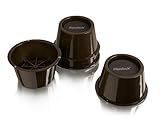
Set your dog's regular bowls on a low, stable side table or a scrap of plywood, put a riser under each leg, and you've built a custom-height feeding station for a fraction of what a dedicated elevated feeder costs — and you can adjust or remove it in five seconds if your vet ever tells you otherwise for your particular dog.
A calmer, darker place to actually sleep
Older dogs sleep more overall, but a lot of owners notice their senior dog's sleep gets more fragmented — more waking at odd hours, more sensitivity to light and street noise, sometimes more anxiety around dusk (the "sundowning" pattern some vets describe in aging dogs is a real, if not fully understood, phenomenon). Whatever the exact mechanism, a darker, quieter sleeping environment tends to help, the same way it helps humans who are already prone to lighter, more easily interrupted sleep.
If your dog's bed is anywhere near a window, streetlight, or a room that gets bright early-morning sun, blackout curtains are a bigger deal than they sound.
Pair this with keeping the sleeping area away from a noisy hallway or the base of the stairs, and you've made a real dent in the disrupted-sleep problem without any pharmaceutical intervention — which is exactly where you want to start.
Joint support and mobility — the stuff without shortcuts
This is the category where I can't hand you a verified Amazon link and call it a day, because the products that actually matter here — ramps, joint supplements, traction aids — don't have a reliable ASIN I can vouch for in this format. That doesn't mean skip them. It means name the real ones and go do your own comparison shopping, ideally with your vet weighing in on the supplement question specifically.
Ramps and stairs. If your dog used to leap onto the bed or the couch and now hesitates, a ramp is not babying them — it's removing a jump that's genuinely hard on aging joints, especially the landing. The PetSafe CozyUp Ramp is a solid, widely-used option for beds and cars alike, and the Solvit PupSTEP Wood Frame Pet Stairs are a sturdier, furniture-grade alternative if your dog does better with steps than an incline. Both are worth cross-shopping based on your dog's size and which surface (bed height vs. couch height vs. car trunk) you're solving for.
Joint supplements. This is squarely a "talk to your vet" category rather than a "buy whatever has the best reviews" category, but the names that come up constantly and have real research behind their core ingredients (glucosamine, chondroitin, MSM) are Nutramax Cosequin and Nutramax Dasuquin with MSM, along with VetriScience GlycoFlex 3. None of these are a substitute for an actual diagnosis if your dog is showing pain — they're a maintenance layer, and your vet can tell you whether your dog's specific joint issue would benefit.
Traction for slippery floors. A lot of senior dog "clumsiness" is actually just a hardwood or tile floor problem — nails that used to grip fine now slide on aging paw pads and weaker leg muscles. Dr. Buzby's ToeGrips (rubber nail grips, not a boot) are the best-known fix for this specific problem, and Woodrow Wear Power Paws traction socks are the go-to if you want a sock-style option instead. Either genuinely changes how confidently an older dog moves around a slick kitchen.
Keeping medications and supplements from taking over the counter
Nobody warns you about this part: once a dog is on a joint supplement, maybe a prescription for something else, maybe eye drops, maybe a probiotic, your kitchen counter turns into a small pharmacy. It's a genuinely underrated source of household stress — hunting for the right pill bottle at dinnertime, or trying to remember if the evening dose already happened.
Hang it inside a pantry or cabinet door near where you feed your dog, load it with whatever's in current rotation, and you've turned a recurring low-grade annoyance into a five-second grab. It's a small thing, but it's the kind of small thing that actually gets used every day, which is more than you can say for most organizational purchases.
Gentle enrichment that doesn't overdo it
A senior dog still wants a job to do — mental boredom doesn't retire when the joints get stiff — but a rock-hard kibble-stuffed KONG that used to take twenty minutes of enthusiastic gnawing can be genuinely tough on aging teeth and jaws. The fix isn't retiring the KONG, it's changing what goes inside it.
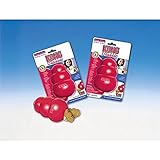
Filled soft, it turns into low-effort, low-impact enrichment — the mental engagement of a puzzle without the jaw workout of chewing through frozen peanut butter. A lot of senior dogs get noticeably calmer for the rest of the afternoon after fifteen minutes with one of these.
What to skip
A few things in this category that sound helpful and mostly aren't. Heated beds and heating pads: unless your vet has specifically recommended one for a diagnosed circulation issue, most senior dogs do better with cooling support than added heat, and a heating element under an arthritic dog who can't easily reposition themselves is a real burn risk. "Miracle" joint supplements sold with dramatic before-and-after marketing and no listed active ingredient dosages: if a product won't tell you how much glucosamine or MSM is actually in it, it's not worth your money regardless of the reviews. And ramps with a steep incline or a narrow, wobbly walking surface: a poorly designed ramp is arguably worse than no ramp at all, because a dog who takes one scary slip off one will refuse to use any ramp again. Test the ramp yourself with your own weight leaning on it before you trust your dog on it.
Frequently asked questions
How do I know if my dog's slowing down is normal aging or something that needs a vet?
Gradual, symmetric slowing — a little more hesitation on stairs, sleeping more, a slower rise from lying down — is typical aging. Sudden onset, limping on one specific leg, yelping when touched, appetite loss, or any change that happens over days rather than months is not something to wait out. When in doubt, a vet visit costs you an afternoon; waiting on something serious costs you more.
Are cooling mats actually helpful for a dog with joint pain, or is that a stretch?
It's a reasonable, not overstated, connection. Inflamed joints tend to feel worse with added heat, and older dogs generally run warmer overnight and are more prone to overheating discomfort than younger dogs. A cooling mat doesn't treat arthritis, but it removes one variable — an overheated, restless dog who can't settle — that makes joint discomfort feel worse than it needs to.
Is a ramp really necessary, or am I babying my dog?
Think of it the way you'd think about a handrail on stairs for an aging parent — it's not babying, it's removing an unnecessary strain on joints that are already working harder than they used to. Repeated jumping on and off furniture is hard on any dog's joints over years; for a senior dog with existing stiffness, it's one of the more avoidable sources of daily wear.
Should I switch my senior dog to a "senior formula" food along with these comfort changes?
That's a conversation for your vet, not a blanket yes. Senior formulas vary a lot in what they actually change — some just reduce calories, some add joint-support ingredients, some adjust protein levels for kidney considerations. What's right depends on your individual dog's bloodwork and body condition, which is exactly the kind of thing a vet visit settles better than a bag label.
My dog seems anxious at night more than she used to be. Is that connected to aging?
It can be. Some vets describe an aging-related pattern of increased anxiety, pacing, or disorientation, particularly around dusk or in the middle of the night, sometimes associated with canine cognitive changes. A darker, quieter, more consistent sleep environment genuinely helps some dogs with this. If it's severe, frequent, or paired with other behavior changes, mention it to your vet — there are things that can help beyond just the environment.
Do elevated food bowls cause bloat in older dogs?
The research on this is mixed and mostly focused on large, deep-chested breeds rather than dogs in general, and it hasn't produced a clean consensus. Rather than committing to a fixed elevated feeder, a more flexible approach — like raising your dog's existing bowls a modest amount with furniture risers — lets you adjust or remove the height change easily if you or your vet decide it's not right for your specific dog.
How often should I actually replace or wash a senior dog's bed and sleeping mats?
More often than you'd think. A dog spending 16+ hours a day on one surface is shedding, drooling, and sometimes having accidents on it at a higher rate than a younger, more active dog who's only on the bed at night. Wash removable covers weekly, and plan to replace the bed itself when it's visibly compressed and no longer springing back — a flattened bed has lost the support it was bought for in the first place.