Yes, the exact same air fryer can be listed at several different prices at the same moment, because the identical model number is sold by many retailers and third-party sellers who each set their own price. The fix is to confirm the model number matches, then compare every listing for that one SKU, shipping included, before you buy.
This is the least glamorous shopping skill there is, and probably the most profitable one. We've watched friends agonize for an hour over Ninja versus Cosori, pick a winner, and then click the first "Buy" button they saw without ever asking whether that was the cheapest place to buy it. Choosing the product is half the job. Choosing where to buy it is the other half, and almost nobody does it.
Let a free extension do the price-checking
Capital One Shopping is a free browser extension that compares the item you're viewing against other retailers, tests coupon codes at checkout, and lets you add products to a watchlist so you hear when the price drops. You don't need a Capital One card to use it.
Add Capital One Shopping free →Why one air fryer has so many prices
A "SKU" is just a retailer's internal label for one specific sellable item. A "model number" is the manufacturer's label, printed on the box and the bottom of the machine. When a manufacturer ships thousands of one model to the market, that same model number ends up for sale in a lot of places: the brand's own site, Amazon, big-box stores, warehouse clubs, department stores, and marketplace sellers who bought a pallet and are reselling it.
Each of those sellers has different costs, different promotions, and different ideas about how much margin they need. A big retailer might run a doorbuster to pull you into the store. A marketplace seller might undercut everyone to win the "buy box" on a product page. Another listing might be priced high because it's out of stock everywhere else and a reseller is hoping you're impatient. None of this means the product is different. It means the pricing is a negotiation you're not invited to unless you go looking.
Small kitchen appliances are especially prone to this. They're popular, they're sold everywhere, they have clear model numbers, and they get discounted on a rolling basis through the year. Air fryers are the textbook case, which is why we're using them as the worked example here.
The catch: not every "same" air fryer is the same
Here is where careful shoppers separate from hopeful ones. A cheaper listing is only a deal if it's the identical item. There are a few ways it quietly isn't.
Retailer-exclusive variants. Manufacturers sometimes make slightly different versions of a popular product for specific stores: a different color, a different accessory bundle, a different capacity, or a tweaked model number with an extra letter or digit on the end. They look the same in a thumbnail. They aren't always the same machine. This is the single most common reason two "identical" air fryers have different prices, and it's perfectly legitimate, but you should know which one you're comparing.
Bundles. One listing includes a cookbook, a rack, a set of silicone liners. Another is the bare unit. The bundle price looks higher until you realize you'd have paid for the accessories separately. The reverse also happens: a "bundle" padded with throwaway extras to make a normal price look like a deal.
Condition. Open-box, refurbished, renewed, and "used, like new" listings often share a product page or search result with the new unit. The price gap is real, and so is the difference in warranty and return terms.
Who's actually selling it. On a marketplace, "sold by" and "shipped by" can be two different parties. A lower price from an unfamiliar third-party seller with thin ratings is a bigger gamble than a slightly higher price from the manufacturer or an established retailer. Warranty claims, returns, and recalls are all simpler when you buy from someone who is accountable.
How to verify it's the identical model
This takes about two minutes and it's the whole game. Do it in this order.
- Find the exact model number on the manufacturer's own site. Not the marketing name, the model number. It's usually in the specs or the "details" section.
- Match it character for character on every listing you're considering. A trailing letter or extra digit can mean a different version. If a listing doesn't show a model number at all, treat that as a yellow flag.
- Compare capacity and included accessories. Quart size, number of baskets or racks, and what's in the box should line up exactly.
- Check condition. New, in the manufacturer's sealed packaging, unless you've deliberately decided otherwise.
- Check the seller and the return policy. The cheapest listing with a 30-day return window beats a rock-bottom one with no returns.
- Compare the total. Price plus shipping plus tax, and whether there's a membership required for the advertised price.
If every one of those lines up, you're comparing apples to apples and the cheapest total wins. If any of them doesn't, you've just saved yourself a headache.
Two air fryers we'd happily buy, and what to check on each
We're not telling you which seller will be cheapest on any given day, because that changes constantly and anyone who claims otherwise is guessing. What we can do is name two machines worth shopping for and tell you what to match on each.
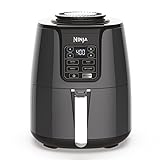
The Ninja AF101 is the one we recommend to people who want a good air fryer without thinking about it much. It's a compact 4-quart basket model with simple dials, a quick preheat, and a basket that's easy to clean. It's the right size for one to three people, and it's the kind of product that's sold nearly everywhere, which makes it a perfect candidate for comparison shopping. The model number "AF101" is right there in the name, so matching it across listings is easy. Just confirm the capacity and color you're after, and that it's sold new.
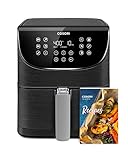
The Cosori Pro II is the step up when you cook for more people or want a bit more room to spread food out. It's a 5.8-quart model with a roomier basket and a quieter, more polished feel than most budget machines. Because Cosori sells a number of similar-looking models with near-identical names, this is a product where model-number matching matters more, not less. Read the full name and any model code on the listing and compare it to Cosori's own product page before you assume two listings are the same machine.
What to skip when you comparison shop
Skip the lowest price from a seller you can't vouch for. A savings of a few dollars isn't worth a warranty headache on a heated appliance. Stick with the manufacturer, established retailers, or marketplace sellers with a long, strong track record.
Skip "renewed" and "open-box" unless you're deliberately choosing them. They can be perfectly fine, but they should be a decision, not a surprise on the packing slip.
Skip fake urgency. "Only 3 left" and "deal ends tonight" banners are a feature of retail, not a law of physics. If you're not sure a price is good, that's exactly when a price-history watch is useful.
Skip the comparison spreadsheet. You do not need a 14-tab workbook to buy a $70 appliance. Verify the model number, check three or four listings, and be done. Diminishing returns arrive fast.
Let software do the legwork
Everything above can be done by hand, and for a one-time purchase you probably should. But if you buy things online regularly, automating the tedious parts is worth it. A price-comparison extension runs in the background while you browse, notices when the same item is available for less elsewhere, and surfaces it without you opening six tabs. The same tool can test coupon codes at checkout, so you're not hunting through coupon sites that mostly list expired codes.
The feature we find most useful for appliances is the watchlist. Add the air fryer you've decided on, then wait. Rather than buying on the first day you get the urge, you'll hear when the price drops, which is how you separate a real discount from a "sale" that's just the usual price in a costume. It's also a helpful brake on impulse buying: if you still want it in two weeks, it's probably a real want.
One caveat, because we like to be straight with you. An extension still can't tell you whether two listings are truly the same model; that judgment is yours. Use it to find candidates quickly, then run the model-number check from earlier before you click buy. Used together, the two habits are hard to beat.
Compare before you buy, for free
Add the free Capital One Shopping extension and let it surface cross-retailer prices, try coupons at checkout, and watch the items you care about. Then run the model-number check and buy with confidence.
Get the free extension →Frequently asked questions
Can the same air fryer really cost different amounts at different stores?
Yes. When the same model number is sold by the manufacturer, big retailers, and third-party marketplace sellers, each sets its own price based on its own costs and promotions. The product can be identical while the price is not.
How do I know two listings are the identical air fryer?
Match the manufacturer's model number character for character, then confirm capacity, color, included accessories, and that both are new. If a listing doesn't show a model number, compare it against the manufacturer's own product page before trusting it.
Is a cheaper marketplace seller safe to buy from?
It depends on the seller. Look at who actually sells and ships the item, how long they've been selling, and their return policy. For a heated appliance, an accountable seller with a clear return window is usually worth a slightly higher price.
What is a retailer-exclusive model?
It's a version of a popular product made for one store, often with a slightly different model number, color, capacity, or accessory set. It can look the same as the standard version, which is why checking the exact model code matters.
Does Capital One Shopping cost anything?
No. It's a free browser extension, and you don't need a Capital One credit card or account relationship to use it. It compares prices, tests coupon codes at checkout, and supports a watchlist for price-drop alerts.
Is a price-drop alert better than just buying now?
If you aren't in a rush, usually yes. A watchlist shows you when an item actually gets cheaper, which helps you tell a real discount from a routine "sale" price and keeps you from buying on impulse.
Should I always buy the cheapest listing?
No. Compare the total after shipping and tax, make sure the model and condition match, and weigh the seller and return policy. The best deal is the lowest total for the exact item with terms you can live with.