Yes, you can hit a real reading goal by listening, and for most busy people it is the easiest way to do it. Audiobooks count as reading for every purpose that matters, and they turn the dead time in your day (the commute, the dishes, the dog walk) into finished books without asking you to find a single extra hour on the couch.
Books on your commute
Audible's free trial gets you your first audiobook on the house — cancel anytime and keep it.
Start your free Audible trial →Every January we promise ourselves fifty books, or twenty-four, or "just more than last year," and by March the stack on the nightstand has become furniture. The problem is rarely willpower. It is that reading with your eyes needs a free hand, good light, and a quiet minute, and adult life hands those out sparingly. Listening only needs your ears. Here is how to set a goal that fits your actual week, do the pacing math without a spreadsheet, and build the habit so it survives past the first of February.
Start with your hours, not your book count
The most common mistake in a reading resolution is picking the number first. "Fifty books" sounds like a goal, but it is really a wish with a number on it. The better move is to work backwards from the time you already spend doing things that leave your ears free. Take a normal week and write down the pockets: the drive or train ride to work, the twenty minutes of dishes and laundry, the walk after dinner, the gym, the school pickup line, the stretch of getting ready in the morning.
Most people find thirty to ninety minutes a day that is already half-wasted on autopilot. That is your reading budget.
The pacing math, in plain English
You do not need to be good at numbers here. Many audiobooks land somewhere around ten hours, with plenty running shorter and plenty running much longer. Use ten as your working average and the rest is arithmetic you can do on a napkin.
- Thirty minutes a day adds up to roughly three and a half hours a week, which is a little over a third of a ten-hour book. Over a year, that is roughly eighteen books.
- An hour a day roughly doubles that, which puts you in the mid-thirties.
- Bump the speed to 1.25x (nearly every app lets you) and each of those numbers grows by about a quarter, with no extra time spent.
Notice what this means. A goal of "a book every two weeks" is not an ambitious reading year, it is about forty minutes a day at normal speed, and a decent chunk of that can be a single commute. Treat the numbers as a ceiling, not a promise. Life will eat some weeks. If you plan for eighty percent of your theoretical pace, you will still feel like you are winning in December.
Pick the goal that matches your life
Here are three goals we would actually stand behind, depending on how your week looks.
The gentle goal: one book a month. Twelve books, about twenty minutes a day. If you are coming off a year of reading nothing, this is the one. It is hard to fail and it builds the habit, which is the point.
The steady goal: two books a month. Twenty-four books, a daily commute or a daily walk. This is the sweet spot for most working adults, and the one we would pick for ourselves.
The stretch goal: a book a week. Fifty-two books is real, but it is a lifestyle, not a resolution. It works if you have a long commute, a physical job, or a habit of listening at faster speeds. It does not work as a guilt trip. Skip it unless you already know you are that person.
Whatever you choose, set it in hours per week, not just books per year. "Three and a half hours a week" is something you can check on a Thursday. "Twenty-four books" is something you only find out about in December.
Habit stacking: bolt listening onto things you already do
The reason most reading habits die is that they require a decision every single day. The fix is to attach listening to a routine that already happens without thinking. Habit stacking just means "after I do X, I do Y," and audiobooks are almost unfairly good at it, because the X can be nearly anything.
- After I start the car, I press play. No radio, no scrolling for a podcast, just the book where it left off.
- When I put on my shoes for a walk, the earbuds go in first.
- When I start the dishes, the book starts. The dishes become the timer.
- While the coffee brews, one chapter, then the day begins.
Two more tricks that help. First, reserve audiobooks for the boring tasks only, so the book becomes the reward for the chore rather than competing with something fun. Second, make the first step tiny. Your goal on a bad day is one chapter, not a heroic hour. The streak is what matters, and a one-chapter day keeps it alive.

What to skip: audiobooks that will wreck a reading goal
A goal lives or dies on what you choose to listen to. A few honest warnings, because nobody tells you this in January.
Skip the doorstopper as your first pick. A forty-hour epic is a wonderful thing, but if it is your first book of the year, it eats a third of your goal and a good deal of your motivation. Start with something you can finish in a week or two and build momentum.
Skip "should" books at the start. The dense classic you feel guilty about not having read is not a January book. Put it in July. Early in a streak, pick something you are looking forward to, like a thriller, a warm memoir, or a funny novel. A page-turner such as Project Hail Mary by Andy Weir, narrated by Ray Porter, is the kind of book that makes you take the long way home just to keep listening.
Skip books you would not enjoy as audio. Heavily visual books, anything built on charts, recipes you need to follow step by step, and dense reference material are better in print. Listening is not a lesser way to read, it just suits some books better than others.
Skip the guilt about quitting. If a book has not grabbed you after a couple of hours, put it down. A goal about finishing books you dislike is a goal about suffering. Swap it for something better and keep your streak intact.
Gear and tools worth having (and what to skip)
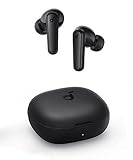
You can listen with the earbuds that came with your phone, so do not let anyone convince you the gear comes first. That said, comfortable, reliable earbuds do remove friction, and friction is the enemy of a daily habit. If yours fall out on a walk or die by lunchtime, you will listen less. A sweat-resistant pair with decent battery life is plenty. Noise-cancelling over-ear headphones are lovely for a loud commute, but they are a luxury, not a requirement.
A simple plan for your first month
If you want a concrete starting point, here it is. In week one, pick one anchor (the commute, the dishes, or the evening walk) and listen to just that, every day. Choose a book you are excited about, at normal speed. In week two, add a second anchor. In week three, check your hours against your target and adjust the target, not your self-esteem. In week four, finish your first book and pick the next one immediately. Starting the next book the same day you finish the last is the single best trick we know for keeping a reading year alive.
To make that first month cheap and low-pressure, try a membership on a free trial before you commit. You get a real feel for how listening fits into your day, which is more useful than any plan we can write for you.
Frequently asked questions
Does listening to an audiobook count as reading?
For the purpose of a reading goal, yes. You are taking in the same story, the same ideas, and the same author's words. Some people retain more by listening, some less, and that depends on the person and the book. If you can tell a friend what happened, you read it.
How many audiobooks can I realistically finish in a year?
It depends on your daily listening time. Using ten hours as a typical length, thirty minutes a day works out to roughly eighteen books a year, and an hour a day roughly doubles that. Faster playback speeds push those numbers up further.
What is the best time of day to listen?
The one you already have. Commutes, chores, walks and workouts all work because they require no extra scheduling. Pick one anchor and stick to it before adding another.
Is it okay to listen at faster speeds?
Yes. Most people settle somewhere a little above normal speed within a few days of trying it. Start at 1.1x or 1.25x and see if it still feels natural. If you notice you are missing things, slow back down. The goal is enjoyment, not a speed record.
What should I do if I fall behind on my goal?
Do not try to cram. Adjust the target to match your real pace, or lean on a long drive or a quiet weekend to catch up. A goal you can still reach is worth more than a perfect plan you have abandoned. Weekly hours are a more forgiving measure than a yearly book count.
Do I need to pay anything to try audiobooks?
You can start with a free trial of a new Audible membership and see whether listening suits you. Terms, length and what is included can change, so check the Audible page for the current offer before you sign up.