Every state thinks it has a literature. Texas actually does, and the annoying part is that it deserves the reputation — not because of cowboy hats and oil derricks, but because the place is genuinely strange enough, and genuinely large enough, to produce writers who couldn't have come from anywhere else. I grew up here, I've read most of what gets handed to you as "the Texas canon" by well-meaning aunts and high school English teachers, and I can tell you that maybe half of it holds up. The other half is exactly as good as people say, and a couple of these books are better than their reputation, which is saying something when the reputation is already "one of the great American novels."
- Top pickLonesome Dove by Larry McMurtry~$20
- Best budgetNews of the World by Paulette Jiles~$15
This isn't a list of everything ever set within the state line — nobody needs forty entries of increasingly obscure ranch fiction. It's eight books, grouped by what they're actually doing, plus a section on what to skip if someone hands it to you at a used bookstore in Marfa. No Texas Ranger pulp, no self-published "authentic cowboy poetry," no Where the Crawdads Sing — that one's the North Carolina coast, not Texas, despite what half the internet seems to believe when they're building a "Southern reads" list.
The classic Western you're actually supposed to read
Most people own a copy of Lonesome Dove the way they own a copy of War and Peace — as furniture, as an aspiration, as something they'll "get to." Don't be that person. This is an 850-page cattle drive from the Rio Grande to Montana, and it moves faster than books a third its length. Larry McMurtry won the Pulitzer for it in 1986 and then reportedly got tired of people calling it his best work, because he thought it romanticized a West he'd spent his whole career trying to de-romanticize. He's wrong about that, for what it's worth. Augustus McCrae and Woodrow Call are two of the best-drawn characters in American fiction, the humor is sharper than anything the "sweeping epic" label suggests, and the ending will wreck you in a way a book about a cattle drive has no business doing. If you read one book on this list, make it this one.
If Lonesome Dove is the epic, True Grit by Charles Portis is the sharp little counter-argument that you don't need 850 pages to say something true about the frontier — you need 224 and a fourteen-year-old narrator with an unbeatable voice. Mattie Ross rides into Indian Territory with a one-eyed federal marshal to avenge her father's murder, and the entire book is her deadpan, Bible-quoting, absolutely relentless first-person account of it. It's funnier than either film adaptation lets on, and it's the rare Western where the toughest person in the room is a teenage girl doing arithmetic on a stranger while he tries to intimidate her. Set partly in Texas and partly across the border into what's now Oklahoma, but the voice is pure Arkansas-by-way-of-Texas frontier, and it earns its spot on every serious Western shelf.
Cormac McCarthy's Texas is not the postcard version
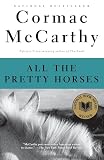
If Lonesome Dove is the Texas you picture, Cormac McCarthy wrote the Texas that actually keeps you up at night. All the Pretty Horses opens the Border Trilogy with sixteen-year-old John Grady Cole leaving a dying ranch in San Angelo and riding into Mexico looking for a version of cowboy life that no longer exists anywhere, including where he started. The prose is famously unpunctuated in places — no quotation marks, sentences that run for a page — and it should be exhausting and instead it's hypnotic. This is the most purely beautiful book on this list, and also the most brutal, sometimes in the same paragraph. It won the National Book Award for a reason.
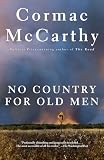
No Country for Old Men is the McCarthy book most people know from the movie, and the book is somehow even more unsettling, because you don't get the Coen brothers' precise editing to soften the dread — you get McCarthy's flat, relentless sentences doing it instead. A hunter stumbles onto a drug deal gone wrong near the Rio Grande, takes the cash, and spends the rest of the book being hunted by one of the coldest villains in American fiction while an aging sheriff narrates his own growing sense that the world has outpaced his ability to make sense of it. It's set in the empty stretch of West Texas border country that doesn't show up much in fiction, and it captures something true about that landscape: how much silence there is, and how far help is when you need it.
The nonfiction that reads faster than most novels
H.G. Bissinger spent a year embedded with the Permian High School Panthers in Odessa in the late 1980s expecting to write about high school football, and instead wrote one of the sharpest books about American class, race, and small-town obsession that anyone's managed since. Friday Night Lights gets remembered as a football book because that's the easiest way to sell it, but the football is really just the lens — this is a book about what a town does to teenage boys when it decides their worth is measured on Friday nights, and what happens to that town when the boys age out and the next crop steps in. It's uncomfortable in exactly the ways a good piece of journalism should be, and it holds up better than the TV show ever managed to.
S.C. Gwynne's Empire of the Summer Moon is the nonfiction pick I hand to people who think they don't like nonfiction. It's the story of the Comanche — the most militarily dominant Native nation in American history, who held off Spanish, Mexican, and American expansion across the Texas plains for nearly two centuries — told partly through Quanah Parker, the last Comanche chief, whose mother was a white woman captured as a child and who grew up entirely Comanche before eventually leading his people into a world that no longer had room for them. It reads like a novel, it's meticulously sourced, and it completely rearranges how you think about Texas frontier history, which is usually told from exactly one side.
Historical fiction that actually earns its research
Paulette Jiles's News of the World is quieter than everything else on this list, and it's the one I recommend most often to people who say Westerns aren't for them. A 71-year-old widower who makes his living reading newspapers aloud to paying audiences across post-Civil War Texas agrees to transport a ten-year-old girl — recovered after four years living with the Kiowa, who no longer speaks English or remembers her white family — across hundreds of miles of dangerous, unreconstructed Texas back to relatives she doesn't want. Almost nothing happens, in the sense of plot, and everything happens, in the sense of two strangers slowly becoming family. It's short, it's devastating, and it never once raises its voice to earn the emotion it's after.
Philipp Meyer's The Son takes the opposite approach — 200 years of one Texas family, the McCulloughs, told across three timelines, starting with a boy kidnapped by Comanches in the 1850s who grows up to become the patriarch of a cattle-and-oil dynasty. It's ambitious in a way that shouldn't work and mostly does: Meyer is trying to compress the entire arc of how Texas wealth actually got built — land taken, land ranched, land drilled — into one family's bloodline, and he doesn't flinch from how violent that arc really was on every side. It's the closest thing on this list to a modern Lonesome Dove, minus the humor, plus a body count.
What to skip (and the one honorable mention)
Skip anything shelved as "Texas Ranger romance" with a cover featuring a shirtless man on horseback — it's a real genre, it sells fine, and it has nothing to do with why the books above are actually good. Skip the coffee-table "Legends of Texas" photo books that show up in every airport gift shop; they're fine as gifts, but they're not reading, they're decor. And if someone tells you Where the Crawdads Sing belongs on a Texas list because it's "Southern and swampy," gently correct them — that book is set on the North Carolina marsh coast, a thousand miles from anything in this article, and the confusion says more about how vague "the South" gets treated in publishing than it does about either book.
The honorable mention that almost made the main list: The Last Picture Show, McMurtry's earlier, meaner, funnier-and-sadder novel about a dying small town in the 1950s Panhandle, watching its last picture show close for good. If you love Lonesome Dove and want to see what McMurtry was doing before he went epic, that's the next stop — smaller, sharper, and just as much of a gut punch in a fraction of the pages.
And if you're not sure where to start with any of this: skip Lonesome Dove for now if you're not sure you like long books. Start with True Grit or News of the World instead — both short enough for a weekend — and let them tell you fast whether the voice and the landscape are working for you before you commit to the 850-page version.
Frequently asked questions
What's the single best Texas book to start with if I've never read any of these?
True Grit. It's short, funny, fast-moving, and the voice of Mattie Ross will tell you within twenty pages whether frontier-Texas fiction is for you. If you finish it wanting more, Lonesome Dove is the natural next step.
Is Lonesome Dove really worth 850 pages?
Yes, and it reads faster than its page count suggests — the chapters are short, the dialogue carries most of the weight, and the plot never stalls the way long epics sometimes do. Most readers who commit to the first hundred pages finish the whole thing.
Are Cormac McCarthy's books hard to read?
The prose style takes some adjusting to — minimal punctuation, no quotation marks around dialogue — but the sentences themselves are usually short and direct once you're used to the rhythm. All the Pretty Horses is the gentler entry point; No Country for Old Men is closer to a thriller and moves fast.
Is Friday Night Lights just about football?
No. Football is the frame, but the book is really about class, race, and what a struggling town asks of teenage boys when their Friday night performance becomes the whole town's identity. It holds up whether or not you care about the sport.
Where is Where the Crawdads Sing actually set, since it's not Texas?
The North Carolina coastal marshland, not Texas. It's a wonderful book, but it gets miscategorized into "Southern gothic" or "swampy" reading lists so often that people assume it belongs on a Texas list — it doesn't.
What's the most historically accurate book on this list?
Empire of the Summer Moon, since it's rigorously sourced nonfiction rather than fiction. Among the novels, News of the World and The Son both did substantial historical research into Comanche captivity narratives and post-Civil War Texas, and it shows in the texture of both books.
Do I need to read these in any particular order?
No, they're not connected. But if you want a natural arc, read chronologically by setting: Empire of the Summer Moon (1830s–1870s Comanche era), News of the World (1870s), True Grit (1870s Indian Territory), The Son (1850s–1980s span), Lonesome Dove (1870s cattle drive), All the Pretty Horses (1940s), No Country for Old Men (1980s), Friday Night Lights (1988 season).