Somewhere along the way, "horror" started meaning "how much can we show you before you put the book down." Which is a shame, because the scariest fiction I've ever read barely describes a single drop of blood. It works on you differently — a cold draft under a door, a house that seems to be listening, a narrator whose story doesn't quite add up. You close the book and the lights stay on a little longer than usual. That's the good stuff, and it's a completely different skill than describing a body coming apart in loving detail.
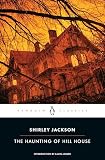
- Top pickThe Haunting of Hill House by Shirley Jackson~$16
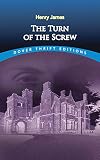
- Best budgetThe Turn of the Screw by Henry James~$4
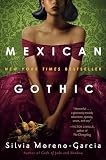
- Worth the splurgeMexican Gothic by Silvia Moreno-Garcia~$28
I say this as someone who has read plenty of both. Splatter horror has its place and its die-hard fans, and I'm not here to yuck anyone's yum. But if gore is the reason you've written off horror as "not for me," I'd argue you've just been reading the wrong shelf. The books below are the ones I hand to people who say "I like being unsettled, I just don't want to read about intestines." Every one of them is a genuine classic or modern acclaimed pick — nothing here is a deep cut nobody's heard of, and nothing here needs a strong stomach, just a willingness to sit in the dark with your own thoughts for a while.
Why dread beats dismemberment
Gore is a special effect. It's loud, it's immediate, and honestly, it's not that hard to pull off on the page — describe the wound, move on. Dread is a slow build. It requires a writer who trusts you to fill in the blanks yourself, because the thing your brain invents in the silence is always scarier than anything they could spell out. Shirley Jackson never shows you a ghost in The Haunting of Hill House. Henry James never confirms whether the ghosts in The Turn of the Screw are even real. That ambiguity is the whole engine. Your imagination does the actual haunting.
There's also just a craft difference. Atmospheric horror lives or dies on sentence-level control — pacing, restraint, what's withheld versus what's revealed. It's the horror equivalent of a director who lets a scene sit in silence instead of cutting to a jump scare. When it's done well, it gets under your skin in a way that lingers for days, not just the length of the paragraph.
Start here: the writer who basically invented the modern haunted house
If you read one thing off this list, make it Shirley Jackson. She wrote two books that quietly rewired what a haunted house story could be, and neither one needs so much as a stain of blood to be genuinely disturbing.
The Haunting of Hill House follows four people who spend a summer in a notoriously "not sane" house as part of a paranormal study. Nothing gruesome happens. What happens is worse — the house starts working on the most fragile member of the group, Eleanor, and you watch her grip on reality loosen sentence by sentence. The opening paragraph alone ("No live organism can continue for long to exist sanely under conditions of absolute reality...") is one of the most quoted in horror for a reason.
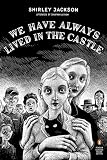
Then there's We Have Always Lived in the Castle, Jackson's last novel and, in my opinion, her best. Merricat Blackwood lives in an isolated house with her sister and uncle, the rest of the family having died of arsenic poisoning years earlier. The village hates them. Something is clearly wrong with Merricat's narration from page one, and figuring out exactly what — and how far she'll go to protect her tiny, strange little world — is the whole unsettling pleasure of the book. It's darkly funny, deeply sad, and creepy in a way that has nothing to do with violence on the page.
Houses with something wrong in them
The haunted house is the oldest trick in horror because it works on a primal level — the one place you're supposed to be safe turns out not to be. These three take that idea and do genuinely different things with it, none of which require gore to land.
Mexican Gothic by Silvia Moreno-Garcia is the most recent book on this list and one of the best gothic horror novels of the last decade. Noemí Taboada travels to a decaying estate in the Mexican countryside to check on her newly married cousin, who's sent a letter that reads like the start of a breakdown. What she finds is a family with a rot at its center, both literal and otherwise, and a house that seems to be breathing. It's lush, atmospheric, unmistakably gothic, and it earns its scares through mood and slow reveal rather than anything splattery.
Sarah Waters' The Little Stranger is quieter and even more restrained — a post-WWII English manor, a family in decline, and a doctor who becomes entangled with them as something seems to be attacking the house from within. Waters never confirms whether the haunting is supernatural or psychological, and that ambiguity is the point. It's a slow burn in the best sense: patient, literary, and deeply eerie by the last third.
And then there's the one that started this whole subgenre of "is it a ghost or is it grief": Henry James's The Turn of the Screw, from 1898. A governess is sent to a remote estate to care for two children and becomes convinced the ghosts of two former staff members are trying to corrupt them. It's short, it's Victorian, and more than a century of critics still argue over whether the ghosts are real or the governess is losing her mind. Either reading is terrifying. This is the book that proves ambiguity is scarier than answers.
The book that rearranges how you read
House of Leaves by Mark Z. Danielewski is the strangest book on this list and, for a lot of readers, the scariest — without a single graphic scene. The premise: a family moves into a house that turns out to be larger on the inside than the outside, with a hallway that appears out of nowhere and leads into a space that defies physics. The novel is told through nested layers — a film that may not exist, an academic's footnotes on the film, a young man's increasingly unhinged annotations on the academic's manuscript — and the typography itself starts to break down as the story does. Text runs sideways, pages have single words on them, whole sections are printed in blue. It's disorienting on purpose, and that disorientation is the horror. You're not scared of a monster. You're scared of the house, the format, and eventually, the act of reading itself.
History has its own monsters
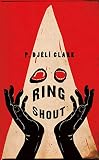
Not all atmospheric horror is gothic manors and English fog. Ring Shout by P. Djèlí Clark takes place in 1922 Georgia, where a group of women hunt Ku Klux Klan members who have been transformed into literal demons — feeding on hate, wearing human faces as costumes. It's a novella, so it moves fast, and it's genuinely frightening in a way that's rooted in real historical horror rather than shock value. Clark uses supernatural horror to say something true about the actual monstrousness of American racism, and the result is smart, propulsive, and dread-soaked without ever leaning on gore to make its point.
What to skip if you want scared, not queasy
If gore is the thing you're avoiding, there's a specific corner of horror publishing you'll want to steer clear of, generally shelved as "extreme horror" or "splatterpunk." Writers like Richard Laymon and Edward Lee built careers on graphic, sustained violence as the entire point of the book — not atmosphere with occasional violence, but violence as the main course, often with a level of detail that's genuinely closer to torture-porn film than a ghost story. Jack Ketchum's The Girl Next Door gets recommended constantly as "important horror," and it is well-written, but it's also based on a real crime and is relentlessly, deliberately brutal — not a book to pick up by accident looking for something spooky.
A decent rule of thumb: if the back-cover copy brags about how "extreme" or "not for the faint of heart" a book is, or if reviews use words like "visceral" and "graphic" as selling points rather than warnings, that's your sign to skip it. The books on this list get their reputation from being unsettling, not from being hard to stomach. That's a meaningfully different kind of scary, and it's the kind that actually stays with you.
There's no required order. If you want the gentlest entry point, start with The Turn of the Screw — it's short, it's a classic, and you can read it in one sitting. If you want the book most likely to make you sleep with a light on, that's The Haunting of Hill House, no contest. If you're the type who wants something more ambitious and modern, start with Mexican Gothic or Ring Shout — both move fast and reward a reader who wants plot along with atmosphere. Save House of Leaves for when you have some uninterrupted time; it's not a book you skim on a commute.
What all seven have in common is patience. They ask you to sit with a slow-building wrongness instead of handing you a shock and moving on. If you give them that patience back, they pay it off completely.
Frequently asked questions
What's the least scary way to start if I'm new to horror entirely?
The Turn of the Screw. It's short, it's a certified classic that shows up on high school reading lists, and its scares come from ambiguity rather than intensity. If you finish it wanting more, move on to Hill House.
Is Mexican Gothic too intense for someone who avoids gore?
It has a few unsettling body-horror-adjacent moments toward the end, rooted more in fungal/decay imagery than violence, but nothing close to splatter horror. Most gore-averse readers handle it fine — it's atmosphere and dread for at least 80% of the book.
Is House of Leaves actually readable, or is it just a gimmick?
It's a real, absorbing story underneath the experimental formatting — a family's unraveling, a doomed academic's obsession, a son's spiral. The unusual typography is disorienting on purpose, but you do not need to be a literary scholar to follow it or be unsettled by it.
Are any of these actually ghost stories, or is it all ambiguous?
It's a mix. Ring Shout has confirmed, literal monsters. The Little Stranger and The Turn of the Screw keep the question open on purpose. Hill House leans supernatural but is really a psychological unraveling. Ambiguity is a feature in most of these, not a cop-out.
What should I read next if I like this list?
Try Susan Hill's The Woman in Black, Daphne du Maurier's Rebecca, or anything by Carmen Maria Machado. All lean on mood and dread over description, and none require a strong stomach to enjoy.
Are these books appropriate for teens?
The Turn of the Screw and The Haunting of Hill House are both frequently assigned in high school English classes. We Have Always Lived in the Castle and Mexican Gothic deal with darker themes (poisoning, family death, isolation) but contain no graphic content. Ring Shout has more direct violence tied to its historical subject matter and is better suited to older teens and adults.