Every escape-artist owner has the same origin story. A gap under the fence that seemed too small to matter. A gate latch that was "probably fine." A collar that a determined dog backed out of in four seconds flat while you were reaching for the leash. If you're here, you've likely already lived through the panic that follows, looking for the thing that makes it never happen again. The honest answer is that no single gadget does that. But there's a real, sensible stack of gear that makes an escape shorter and a lot less likely to end badly — and it starts with being clear-eyed about what these trackers actually do.
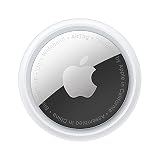
- Top pickApple AirTag (4-Pack)~$99
- Best budgetKONG Classic Dog Toy~$13
- Worth the splurgeFurbo 360° Dog Camera (No Subscription)~$147
"GPS tracker" is doing a lot of marketing work it hasn't earned
Here's the thing nobody puts on the box: most of the affordable, popular pet trackers people recommend — Apple AirTag, Tile — are not GPS devices. They're Bluetooth trackers, and that distinction matters the moment your dog is actually missing. A true GPS collar uses satellite positioning plus a cellular connection to show a live, updating map, anywhere, for a monthly subscription. A Bluetooth tracker has no cellular radio and no subscription — it quietly broadcasts a signal that nearby devices on a crowdsourced network pick up and relay back to you as an approximate last-seen location: iPhones for AirTag, the Tile app's user base for Tile.
In a dense suburb or city, that's often good enough to feel like magic — a passing iPhone pings your dog's location within minutes. In a rural area or anywhere device density is thin, the same tracker can go quiet for hours, simply because no phone passed by. That's not a flaw. It's the mechanism working exactly as designed, just outside the conditions it was built for.

AirTag vs. Tile vs. a real GPS collar: what you're actually choosing between
If you're an iPhone household, AirTag wins on network size — Apple's Find My network is enormous, meaning more passing phones to relay your dog's location. If your household mixes Android and iPhone, Tile is the more neutral pick, and cheaper if you want to outfit multiple pets. Neither has a subscription fee — you pay once, as long as you accept relying on nearby devices rather than a live satellite feed.
Now, the category we're not recommending anything from, on purpose: dedicated GPS pet collars with a built-in cellular chip — Tractive, Fi, and Whistle are the names you'll see — give you a live map, real-time movement, and geofence alerts the second your dog crosses a boundary, rural dead zones and all. They're genuinely the better tool if you live somewhere remote or have a dog with a serious flight history. They also run $50-$150 upfront plus a monthly subscription that adds up over a dog's lifetime, which is why we're not stocking one here — if that's the level of certainty you need, it's worth researching that category directly with the ongoing cost in mind. For most owners, a Bluetooth tracker plus the habits and gear below covers the realistic, everyday version of this problem — the "slipped out for twenty minutes" scenario, not the "vanished into the backcountry" one.
The layer that actually stops the escape before it happens: watching for it
A tracker tells you where your dog went after they're already gone. That's useful, but it's reactive. The more effective — and honestly more satisfying — layer is catching the escape attempt in progress, or better, catching the behavior that precedes it. Dogs who bolt out doors are almost always doing something recognizable in the seconds before: hovering by the entry, fixating on it when it opens, pacing a specific stretch of fence line. A home camera with two-way audio and motion alerts turns that pattern from something you find out about later into something you can interrupt in real time, even from another room or another building entirely.
None of these cameras physically stop a dog. What they do is turn "I have no idea how he got out" into "he's been testing that side gate every afternoon around 4pm" — information you can act on: reinforce that spot, adjust the schedule, or catch him mid-attempt and redirect before it becomes a breakout. That's a more useful kind of tracking than a location ping after the fact.
What to skip
Skip any no-name Bluetooth tracker that isn't on an established network like Apple's Find My or Tile's — a tracker's usefulness is entirely a function of how many nearby devices can relay its signal, and a tiny user network is just an expensive collar tag. Skip anything marketed as "no subscription, real-time GPS" — live GPS tracking requires a cellular connection, and cellular connections require a paid plan somewhere; if the marketing claims otherwise, it's a Bluetooth tracker wearing GPS language. And skip treating any tracker as a substitute for actually fixing the escape route. A tracker tells you your dog is three streets over — it does nothing to stop the next attempt. Walk your fence line, check gate latches under real pressure, and reinforce whatever gap is being exploited. That's the fix a tracker can never be.
Don't ignore why they're escaping in the first place
A lot of chronic escape behavior — the digging, the door-bolting, the fence-testing — traces back to boredom or anxiety rather than a genuine desire to leave. A dog who's under-stimulated during the day will manufacture their own entertainment, and "see what's on the other side of this fence" is a classic version of that. It's worth pairing any tracking or monitoring setup with something that actually addresses the itch. A stuffed, frozen enrichment toy that takes real effort to empty out gives a bored or anxious dog a job to do during the exact hours — mid-morning, mid-afternoon — when a lot of escape attempts happen.

None of this replaces a real conversation with a trainer if the escaping is frequent, frantic, or tied to something specific like thunderstorms or separation anxiety — that's a behavioral issue that gear alone won't solve. But for the garden-variety bored, curious, or opportunistic escape artist, a tired, mentally occupied dog tests the fence a lot less often than a restless one.
Frequently asked questions
Is an AirTag actually a good GPS tracker for a dog that runs off?
It's a good Bluetooth tracker, which is a related but different thing. An AirTag doesn't broadcast a live location the way a true GPS collar does — it relies on nearby iPhones to anonymously relay a last-seen location back to you. In a populated area that often works well and fast. In a rural or low-traffic area, it can go quiet for a long stretch simply because no iPhone passed nearby.
What's the real difference between a Bluetooth tracker and a GPS collar?
A Bluetooth tracker (AirTag, Tile) has no cellular connection and no subscription — it depends on a crowdsourced network of nearby phones to relay location pings, free but inconsistent in low-device-density areas. A true GPS collar has its own cellular chip and reports a live, updating location wherever there's cell coverage, but requires a monthly subscription.
Do I need a subscription for AirTag or Tile to work?
No. Both work as advertised — passive Bluetooth broadcasting picked up by a shared device network — without any monthly fee. That's the core appeal of this category and the main tradeoff against a true GPS collar, which almost always requires a subscription for live tracking to function.
Can a home camera actually stop my dog from escaping?
Not by itself — a camera doesn't physically block anything. What it does is show you the behavior pattern leading up to an escape attempt (pacing by a door, fixating on a gate) in real time, so you can intervene, redirect, or reinforce that specific spot before it becomes a habit. Paired with two-way audio, some owners use it to verbally interrupt a dog mid-attempt from another room.
Should I just get a real GPS collar instead of a Bluetooth tracker?
If you live somewhere rural, your dog has a serious flight history, or you want zero reliance on nearby phones, a dedicated GPS collar (a pricier, subscription-based category we're not stocking here) is genuinely the better tool. For the more common suburban "slipped out for twenty minutes" scenario, a Bluetooth tracker plus securing the actual escape route covers most owners' needs for a fraction of the cost.
My dog only tries to escape when left alone. Will a tracker fix that?
A tracker only tells you where your dog ended up — it doesn't address why they left. Escaping that's specifically tied to being left alone is often a separation anxiety issue, which is a behavioral problem worth discussing with a trainer or vet. Enrichment toys and a camera to monitor the pattern can help in the meantime, but they're a supplement to that conversation, not a replacement for it.
How many trackers do I actually need for one dog?
One is enough for the collar. Some owners add a second as a backup clipped to a harness or a travel bag in case the collar one is removed or the battery dies, but that's a redundancy choice, not a requirement. What matters more than the number of trackers is making sure whichever one you use is actually attached securely — a tracker still on the collar your dog backed out of doesn't help you.