Every capsule wardrobe article online has the same problem: it recommends twelve pieces that cost $900 and calls it "minimalist." That's not a capsule, that's an expensive closet with fewer hangers. A real starter capsule — the kind you build when you're rebuilding from scratch, coming off a season of buying whatever was cheapest, or just tired of owning forty things and wearing six — has to work inside an actual budget. $300 is that budget. Tight enough to force real decisions, loose enough that you're not buying garbage that falls apart in eight washes.
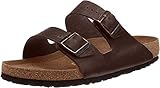
- Top pickBirkenstock Arizona Sandals~$110
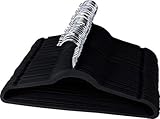
- Best budgetUtopia Home Velvet Hangers (50-pack)~$18 for 50
This isn't a list of aspirational brands you'll get to "someday." It's the specific math of how $300 splits across a wardrobe that functions, which pieces are worth the biggest chunk of that number, and which categories you can solve for $20 without anyone noticing the difference.
What a capsule wardrobe actually is (and why $300 is the honest number)
A capsule wardrobe is a small, deliberately chosen set of pieces that all work with each other — any top pairs with any bottom, any bottom pairs with either pair of shoes, and you build a full week of outfits from a dozen or so items instead of eighty. The appeal isn't just tidiness. Decision fatigue is real, and a closet where everything works together removes a decision you're otherwise making every single morning.
Most capsule wardrobe content skips the money question entirely, or treats $80 jeans and $200 sneakers as the baseline. For a lot of people rebuilding a wardrobe, $300 total is the real number — what you can spend without putting it on a card you're paying off for six months. It goes further than people think if you spend it on the right five or six things instead of spreading it thin across fifteen mediocre ones.
One thing worth saying up front: a starter capsule isn't your whole wardrobe forever. It's the foundation you build on. You're not buying every piece of clothing you'll ever need for $300 — you're buying the handful of pieces that make everything else, the stuff you already own and the stuff you'll add later, work harder.
The budget breakdown: where your $300 actually goes
Here's the honest split. This isn't proportional to how many items you're buying — it's proportional to how much wear each category takes and how much a bad version of it costs you in replacement.
| Category | Budget allocation | What you're buying |
|---|---|---|
| Tops | ~$45–60 | 2–3 basics (white tee, neutral long-sleeve, one layering piece) |
| Bottoms | ~$60–80 | 1 good pair of jeans, 1 neutral trouser or skirt |
| Shoes | ~$100–110 | 1 pair that works dressed up and dressed down |
| Bag | ~$35–40 | 1 crossbody or everyday bag |
| Finishing touches | ~$15–35 | Wallet, one beauty basic, wardrobe care |
Add it up and you land somewhere between $255 and $325 depending on exact picks — close enough to $300 that the small overage (or savings) is yours to route into whichever category matters most to your actual life. If you're on your feet all day, put the overage into shoes. If you're mostly a desk person, put it into a better bag.
The three foundation pieces to buy before anything else
Before shoes, before bags, before anything with a logo — buy these three things first, because everything else in the capsule is built to work around them.
A white tee that isn't see-through. This sounds small until you own one at the right fabric weight (look for 180+ gsm, Supima or combed cotton) and realize how much it changes what you reach for. Budget $18–25 for one that holds up — Uniqlo's U crew neck and Everlane's Organic Cotton Crew both clear the fifteen-wash mark, which is where cheaper tees start going translucent at the shoulders.
One pair of jeans in the $60–100 range. The single highest-leverage purchase in the capsule. Under $60 you're buying high-elastane stretch denim that loses its shape in a year. In the $60–100 range — Levi's 501 or Made in USA line, Madewell's core straight leg, Uniqlo's selvedge when it's on sale — you get honest fabric weight and construction that lasts five-plus years with basic care: cold wash, hang dry, don't overwash. Size up slightly in rigid denim; it relaxes with wear.
One neutral trouser or midi skirt. The piece that makes the capsule feel like it has range instead of just "jeans and a tee every day." A wide-leg trouser or a simple midi skirt in black, olive, or camel does more outfit-building work per dollar than almost anything else here, because it instantly creates a dressed-up option out of the same tee you already own.
None of these three need to be fancy. They need honest fabric weight and a fit you'd wear on a bad day, not just a good one. Spend your money on the fabric, not the label.
The shoe and bag that carry the whole system
This is where the biggest chunk of the $300 goes, and it's worth it — a shoe or bag that fights your outfits undoes the work of everything else you bought.
The Birkenstock Arizona earns its spot on almost every capsule list for a reason that isn't just trend-driven: it works with jeans, trousers, skirts, and dresses, it's genuinely comfortable all day, and the cork footbed molds to your foot and gets better with age. At $110 it's the single biggest line item here, and the piece most likely to still be in rotation five years from now.
For the bag, the Baggu Nylon Crescent is the right budget-capsule answer: ripstop nylon that wipes clean instead of staining, a crescent shape that sits flat against the body, and enough room for a phone, wallet, and sunglasses without becoming a catch-all. At $38 it does the job of a $150 leather bag for a fraction of the cost and doesn't look like a substitute.
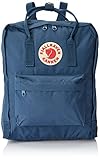
If the capsule needs to double as a work bag — laptop, the whole desk-to-dinner situation — swap the crescent bag for the Fjallraven Kanken instead. It's a bigger chunk of budget at $80, but it replaces a work bag and a weekend bag, so you're not buying two things later.
The under-$50 finishing touches that make it look done
This is the category people skip, and it's what makes a capsule read as intentional instead of accidental. These aren't optional add-ons — they're the twenty-dollar decisions that make the two-hundred-dollar decisions look good.
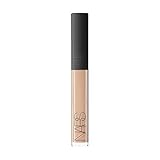
A concealer that actually matches and doesn't crease does more for how "put together" you look than another piece of clothing would. NARS Radiant Creamy keeps showing up on every recommended list for a reason — buildable, doesn't settle into fine lines, a little goes a long way.
A slim wallet matters more than people give it credit for — a fat, overstuffed wallet ruins the line of a clean outfit the same way a bad shoe does. The Herschel Charlie Bifold is the budget-friendly pick: slim profile, hidden coin pocket, no back-pocket printing.
Last, the two cheapest and most overlooked purchases here: velvet hangers and vacuum storage bags. Neither is glamorous. Both directly extend the life of everything you just bought. Wire hangers let clothes slide and stretch at the shoulders; velvet grips fabric and keeps shape. Vacuum bags handle off-season pieces so a small closet doesn't feel cramped year-round.
What to skip when you're building on a budget
The fastest way to blow a $300 budget is buying the wrong things confidently. Here's what not to spend on, and why.
- Skip trend pieces entirely. A capsule and a trend purchase are opposite goals. If you're only picturing wearing something for one season, that money belongs in a foundation piece instead.
- Skip a second bag. One good bag beats two mediocre ones. Buy the crescent bag or the backpack, not both, until the rest of the capsule is solid.
- Skip "statement" shoes. A colorful or heavily branded shoe limits what it pairs with by design — the opposite of what a starter-capsule shoe needs to do.
- Skip buying multiples before you've worn the single version. It's tempting to buy three white tees immediately. Buy one, wear it ten times, confirm the fit and fabric hold up, then buy the rest.
- Skip dry-clean-only pieces. Dry cleaning costs add up fast and defeat the low-maintenance point of a capsule. Machine-washable fabric weights exist at every price point — find those first.
The whole point of a $300 capsule isn't deprivation. Spending deliberately on six or seven honest pieces beats spreading the same $300 across fifteen things you half like. Once the foundation is in place, everything you add later — a blazer, a second pair of shoes, a better coat — has something solid to build onto.
Frequently asked questions
Is $300 actually realistic for a full capsule wardrobe?
It's realistic for a starter capsule — the foundation pieces (2–3 tops, 2 bottoms, one pair of shoes, one bag) everything else gets added to later. It's not realistic for your entire wardrobe, including coats and formalwear, in one pass. Treat it as phase one, not the finish line.
Should I buy the shoes or the jeans first if I can't do both right away?
Jeans first, almost always. A good pair of jeans works with tops you already own today. A good pair of shoes needs the rest of the outfit dialed in to really show its value. Build from the bottom of the outfit math up: bottoms, then tops, then shoes, then bag.
What if my budget is closer to $150, not $300?
Cut the shoe and bag budgets in half and lean harder on the tee-and-jeans foundation, since that's the highest-leverage spending. Think: one tee ($20), one pair of jeans ($70), one neutral top ($25), and the hangers-and-storage combo ($35) to protect what you bought. Add shoes and a bag in a second pass.
How many outfits should a starter capsule actually produce?
Three tops, two bottoms, and one pair of shoes gets you six base outfit combinations before a bag or accessories change the look. Add a second pair of shoes or a layering piece later and that number roughly doubles. Small piece count, high combination count — that's the whole math.
Is it worth spending more than $300 if I have the money?
Put the extra toward the jeans and shoes specifically — the two categories where "cheap" to "good" buys the most extra years of wear per dollar. A tee is a tee above the $18–25 range; jeans and shoes are where quality differences compound over time.
How long should a $300 starter capsule actually last?
With cold wash, hang dry, velvet hangers instead of wire, and vacuum storage for off-season pieces, jeans and shoes should be good for 3–5 years, the bag about the same, tops 1–2 years before rotating out. The care pieces aren't optional extras — they're the reason the rest of the math works.