Essay collections have a marketing problem. The back cover always says "searing," "vital," "a must-read for our moment" — language built for a shelf display, not for the actual experience of reading the thing on your couch at 11pm. Half the collections that get that treatment are genuinely great. The other half are a magazine's worth of good pieces padded with filler you'll skim past on the way to the next one. This list is only the first kind — the collections people actually finish, dog-ear, and hand to a friend a year later, not the ones that just looked good on a "best of the year" list.
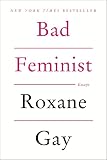
- Top pickBad Feminist by Roxane Gay~$16
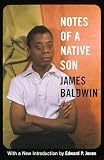
- Best budgetNotes of a Native Son by James Baldwin~$15
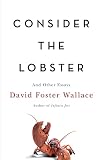
- Worth the splurgeConsider the Lobster by David Foster Wallace~$17
Eight collections below, all real, all still in print, all things I've watched non-essay-readers finish and then immediately ask "wait, what else did this person write." No academic theory books disguised as essays, no single-topic manifestos stretched to 300 pages. Just the ones that hit.
What actually makes an essay collection hit
It's not the topic and it's not the prose style, though both help. It's whether the writer trusts a single idea enough to follow it somewhere surprising instead of just restating the premise for twelve pages. The best essay collections read like someone thinking in real time, changing their mind mid-paragraph, admitting the thing that complicates their own argument. The worst ones read like a thesis statement wearing a nice coat — confident, polished, and completely predictable by page three. If you can guess the ending of an essay from its opening paragraph, it's homework. If you can't, it's the good stuff.
The other thing the good ones share: they work as individual pieces. You should be able to read one essay on a lunch break, put the book down for two weeks, and come back without having lost the thread. That's actually the whole appeal of the format over a novel — no continuity homework, no "wait, who was this again." Every entry below rewards that kind of stop-and-start reading.
The one that starts every conversation about the genre
If you ask anyone under 40 which essay collection got them into essay collections, a huge number say Bad Feminist. Roxane Gay writes about Scrabble tournaments, Sweet Valley High, competitive trivia, and rape culture in the same voice — funny, self-implicating, never lecturing — and the effect is a book that feels like your smartest friend talking you through her contradictions instead of resolving them for you. The title essay alone, where she admits to loving pink and bad reality TV while still calling herself a feminist, did more to make the word feel human than a decade of op-eds did.
The two writers everyone else is still trying to copy
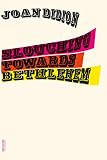
Before you get to the current generation, it's worth going back to the two people who basically invented the modern personal essay's engine. Joan Didion's Slouching Towards Bethlehem is cold, precise, and observational in a way that somehow makes California in the late 1960s feel like it's happening to you right now — the title essay about Haight-Ashbury is still the best piece of reporting on that era, full stop. James Baldwin's Notes of a Native Son does something different and, honestly, harder: it turns a writer's own rage and grief into arguments so tightly built you can't find a seam. Both books are short. Neither wastes a sentence. If you've never read either, start here before anything newer — you'll see where half of what's currently getting praised actually came from.
The one that will ruin cruise ships and lobsters for you
David Foster Wallace's Consider the Lobster is proof that an essay collection can be genuinely fun without lowering its ambitions an inch. The title piece is ostensibly a magazine assignment about the Maine Lobster Festival that turns, mid-essay, into a serious and very funny investigation of whether lobsters feel pain, and by extension whether any of us should be allowed to enjoy dinner without thinking about it. The essay on talk radio is one of the sharpest pieces of media criticism written this century. This is the collection to hand someone who says they "don't really read essays" — the footnotes alone will convert them.
The funny one, and the ones that argue instead of just observing
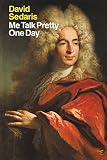
Not every great essay collection is trying to wreck you emotionally. David Sedaris's Me Talk Pretty One Day is the reliable answer to "I want something that will actually make me laugh out loud on a plane" — the essays about learning French in Paris as an adult are some of the funniest things ever put in a book, and underneath the jokes there's real tenderness about family and being an outsider.
On the other end, three collections that aren't interested in being charming — they're building an argument, one essay at a time, and they land because the writing is as sharp as the thinking. Audre Lorde's Sister Outsider is the foundational text a huge amount of contemporary feminist and queer writing is quietly built on top of — dense in places, but never inaccessible, and it rewards being read slowly. Brittney Cooper's Eloquent Rage takes Black feminist theory and makes it as funny and personal as a conversation with your smartest, most unfiltered friend. Lindy West's Shrill turns fatphobia, internet harassment, and abortion into essays that are somehow both devastating and laugh-out-loud, sometimes in the same paragraph.


What to skip (and how to actually read the ones you keep)
Skip anything marketed almost entirely on the strength of its blurbs rather than its actual sentences — a wall of "searing" and "essential" on the back cover is sometimes a real signal and sometimes a sign the publisher couldn't find a better pull quote. Skip essay collections that are secretly a single dissertation chapter cut into twelve pieces; you'll feel the seams by essay four, because the same three ideas keep getting restated in new outfits instead of actually moving anywhere. And skip anything where every essay ends on the exact same triumphant, resolved note — real thinking doesn't wrap up that neatly that consistently, and a collection that always lands the same way starts to feel like a formula instead of a mind at work.
As for how to read the ones worth keeping: don't read an essay collection front to back in one sitting the way you'd binge a novel. Read one, sit with it, read something else, come back in a few days. The best essays are built to be re-read once you've changed your mind about something in them — that second read is often where the book actually earns its reputation. Keep a pencil nearby. The good ones want to be argued with in the margins, not just consumed.
Frequently asked questions
What's the best essay collection to start with if I've never read one?
Bad Feminist by Roxane Gay. The essays are short, the voice is warm and funny even when the subject isn't, and it doesn't assume you've read anything else first. Consider the Lobster is the second-best starting point if you want something a little more literary.
Do I need to read the essays in order?
No. Every collection on this list is built so each essay stands alone. Skip around based on the title or first line that catches your eye. There's no continuity to lose, which is most of the appeal of the format over a novel.
Are essay collections harder to read than memoirs or novels?
Not really, though they ask for a different kind of attention — short, dense bursts instead of a long sustained plot. If anything, they're easier to pick up and put down, which makes them good for commutes, waiting rooms, or the ten minutes before bed when a novel would just make you anxious about not finishing the chapter.
Which of these is funniest?
Me Talk Pretty One Day by David Sedaris, by a wide margin. Bad Feminist has real humor woven through serious subjects, but Sedaris is the pick if you specifically want to laugh out loud on public transit.
Which one should I buy as a gift for someone who says they "don't really read nonfiction"?
Consider the Lobster or Bad Feminist. Both read more like really good magazine writing than a homework assignment, and both have converted plenty of self-described non-nonfiction-readers. Avoid gifting Sister Outsider as a first essay collection — it's essential, but it rewards readers who already have some footing in the genre.
Is it worth buying these in hardcover or is paperback fine?
Paperback is fine for all eight, and often cheaper without losing anything — these aren't books people are collecting for the object, they're books people are annotating and lending to friends, which paperbacks are honestly better suited for.