We've already covered how to season and clean cast iron — the soap myth, the rust fix, why a $24 Lodge beats most $150 skillets. This is the other half of cast iron ownership: the physical stuff you buy alongside the pan. Some of it earns a permanent spot in your kitchen drawer. A lot of it is a $25 solution to a problem a dish towel already solved. Here's how to tell the difference.
- Top pickKnapp Made CM Scrubber — Chain Mail Cast Iron Cleaner~$30
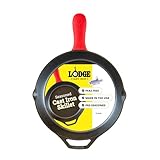
- Best budgetLodge Silicone Hot Handle Holder~$8
- Worth the splurgeBayka Floating Shelves (Set of 3)~$36
The chainmail scrubber isn't a gimmick — it's the one accessory that actually earns its price
Of everything on this list, the chainmail scrubber is the accessory most likely to change how you feel about owning cast iron day to day. The problem it solves is real: stuck-on food after a sear or a cornbread bake, the kind that makes people reach for steel wool and accidentally scrub through months of seasoning. A chainmail scrubber — literally a woven mesh of small stainless steel rings — knocks loose stuck bits through mechanical action instead of abrasive grinding. It won't strip seasoning the way steel wool can, it doesn't hold onto food or bacteria the way a sponge does, it doesn't wear out, and it doesn't need to be replaced every few weeks like a brush. You rinse it, hang it, and it's ready for the next pan.
It's also genuinely satisfying to use, which matters more than it sounds like it should for whether a cleaning habit actually sticks.
Handle covers: because 500°F doesn't care about your oven mitt collection
A cast iron handle gets exactly as hot as the pan, which means anywhere from 350°F if it went in the oven to genuinely dangerous if it's been sitting over a burner for 15 minutes. The reflex to grab it bare-handed because "it doesn't look that hot" is how kitchen burns happen. A dedicated handle cover solves this better than a bunched-up dish towel, which slips, or a standard oven mitt, which is bulky and usually sitting in a drawer three steps away when you need it in the next two seconds.
Silicone sleeves are the simplest version — they slide on, stay put, and are heat-rated well past anything a home stove produces. Leather handle covers are the other common option; they're more durable over years of use and look better hanging on a hook, but they run $20–30 versus $8–12 for silicone and need occasional conditioning of their own. For most people, silicone is the right call. Buy two if you cook with more than one skillet at a time — the number-one reason people still grab a bare handle is that the cover is on the other pan.
Conditioning wax vs. the bottle of oil you already own
Dedicated cast iron conditioning products — Crisbee is the best-known — are a blend of oils and beeswax solidified into a puck or stick you rub directly onto a warm pan. Compared to plain vegetable oil or flaxseed oil (which work fine, as covered in the care guide), the wax version is easier to apply in a thin, controlled layer, doesn't drip or pool the way liquid oil can, and builds a slightly slicker surface faster. It's not magic and it's not required — plenty of perfectly seasoned pans have never touched anything but grocery-store vegetable oil. But if you've ever over-oiled a pan and ended up with a sticky, gummy seasoning layer, the built-in portion control of a solid wax stick is worth the $12.
Splatter screens and trivets: why cast iron plays by different rules
A splatter screen isn't cast-iron-specific, but it matters more with cast iron than with any other pan you own. Cast iron retains heat aggressively and searing in it — the exact thing it's best at — throws oil further and longer than a nonstick pan at the same temperature. A mesh splatter screen set over the pan mid-cook cuts down on the grease film that ends up on your stovetop, backsplash, and occasionally your forearm, without trapping steam the way a solid lid does (which would ruin the sear you're trying to get). Look for stainless mesh over aluminum or plastic — the cheap ones warp from heat within a season.
Trivets are the other half of this. A cast iron skillet coming off a burner or out of a 450°F oven is dramatically hotter, for dramatically longer, than a stainless saucepan or a glass casserole dish. Thin cork trivets and the flimsy woven bamboo ones sold in three-packs will scorch, warp, or leave a permanent brown ring the first time you set a real cast iron skillet on them straight off the heat. What you actually want is a thick, solid wood trivet or a metal trivet with rubber feet rated for genuinely high sustained heat — not just "heat resistant" on the label, but a stated temperature rating that covers cast-iron-off-the-stove conditions, not oven-mitt-adjacent conditions.
Pan racks, lid organizers, and where cast iron actually likes to live
Cast iron doesn't play well with a crowded cabinet. Stack it directly against another pan or a lid and the friction from sliding them in and out scuffs seasoning over time — not ruining it, but working against the smooth surface you're trying to build. Two fixes work well. The first is going vertical: open shelving or floating shelves near the stove let you store cast iron in single layers instead of stacked, keep it accessible enough that you'll actually reach for it instead of the nonstick pan buried behind it, and double as a place to display a pan that, let's be honest, looks good sitting out. The second is a dedicated lid organizer — a simple rack with slotted dividers — which keeps lids upright and separated instead of rattling loose in a drawer or balanced precariously on top of the pan they belong to.
Are lid organizers worth it specifically? If you own more than two lidded pans, yes — the alternative is almost always a drawer where lids get scratched against each other and the one you need is on the bottom. If you own one cast iron skillet and no lid at all, skip it; there's nothing to organize yet.


The gimmicks worth skipping
Cast iron is popular enough now that it's grown its own aisle of unnecessary accessories. A few to pass on: "cast iron cleaning kits" bundling a mediocre brush, a bar of soap, and a cloth for triple what those items cost separately — buy the chainmail scrubber and a bar of any soap on its own. Seasoning sprays in aerosol cans, which apply an inconsistent, often too-thick layer compared to wiping on oil or wax by hand. Multi-tool "cast iron accessory kits" that throw in a silicone trivet, a mini scraper, and a handle cover as one bundle — the trivet and scraper in these kits are almost always the weakest piece, sized for a photo rather than a real kitchen. And decorative cast iron trivets sold as a matching set to a specific skillet brand — cute, but a plain solid wood trivet from any hardware store does the actual job for less.
If you're just getting into cast iron and don't own a pan yet, start with the pan itself and skip the accessory bundle entirely — you can add the scrubber, handle cover, and wax individually for less than most starter kits charge for all three plus a pan you may not even want.
Frequently asked questions
Do you actually need a chainmail scrubber, or will a regular brush work?
A stiff nylon brush works fine for light, everyday cleanup and is the cheaper option if your cooking rarely leaves stuck-on food behind. A chainmail scrubber earns its price for anything crusted on — seared meat, cornbread, cheese — since the metal rings break up stuck food mechanically without the scrubbing force needed with a brush, and it never wears out or needs replacing the way bristles do.
Can I use soap with a chainmail scrubber, or does that strip the seasoning?
Yes. As covered in the care guide, modern dish soap doesn't strip well-built seasoning — it's surfactants, not lye. A drop of soap plus a chainmail scrubber, followed by immediate drying and a light oil wipe, is a completely safe combination and actually the most effective way to clean a pan with stubborn residue.
Why does cast iron need different trivets than my other cookware?
Cast iron holds and radiates heat far longer than stainless, glass, or nonstick pans at the same temperature. A thin cork or bamboo trivet rated for a quick-cooling saucepan will scorch or warp under a cast iron skillet straight off the burner or out of the oven. Cast iron needs a thick solid-wood or metal trivet with a genuine high-heat rating, not just a "heat resistant" label.
Are cast iron lid organizers or pan racks actually worth buying?
If you own more than a couple of lidded pans, yes — it stops lids from scratching against each other in a drawer and keeps the one you need from being buried under the rest. Open shelving or a wall rack for the pans themselves is worth it mainly for accessibility: cast iron gets used more often when it's not stacked behind something else in a cabinet.
Is conditioning wax like Crisbee actually better than plain vegetable oil?
Not dramatically, but it is easier to use well. A solid wax stick applies a thin, controlled layer by design, which is harder to mess up than eyeballing liquid oil on a paper towel. If you've ever ended up with sticky, gummy seasoning from over-oiling, the wax format solves that specific problem. Plain oil, applied thinly and wiped off well, gets you the same result for free.
What's the one cast iron accessory worth buying first?
The chainmail scrubber. It has the biggest day-to-day impact on how easy cast iron is to live with, it doesn't wear out, and at around $30 it's a one-time purchase rather than a recurring cost. After that, a silicone handle cover at $8 is the next best dollar-for-dollar upgrade.