Somewhere between the $45 earbuds in the Amazon "you might also like" carousel and the $398 pair your coworker won't stop talking about, there's a real answer to what your money buys. Most articles either tell you the budget pick is "surprisingly good" (true, but vague) or that the flagship is "worth every penny" (also true, for a specific kind of person). Neither tells you where the dollars actually go once you're past the first $45.
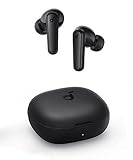
- Top pickSoundcore P3i Earbuds~$45
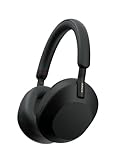
- Worth the splurgeSony WH-1000XM5 Wireless Headphones~$398
So that's what this is: a teardown of the price gap, not another ranked list. We're using three real, currently available products as anchors — the Soundcore P3i earbuds at ~$45, the Bose QuietComfort 45 at ~$329, and the Sony WH-1000XM5 at ~$398. Worth flagging: the two flagships are over-ear headphones, not true wireless earbuds, on purpose. Flagship earbuds like AirPods Pro or Sony's own WF-1000XM5 run the same silicon and cost logic — the ANC chips, codecs, and app ecosystems are shared across a brand's lineup. Headphones just make the build-quality gap easier to see and feel.
The premise: $350 doesn't buy 8x the sound
Let's kill the obvious myth first. The Sony WH-1000XM5 does not sound nine times better than the Soundcore P3i, because sound quality on well-engineered drivers plateaus fast — most people, in a blind test, struggle to reliably rank $45 earbuds against $150 earbuds on music alone. What you're actually paying for as price climbs is a cluster of things that are real and measurable, but that only matter if you use them: noise cancellation in specific environments, codec support that requires a specific phone to unlock, materials that survive years instead of one, and software that either disappears into the background or actively helps you.
None of that is marketing fluff. But almost none of it is universally useful either. That's the whole story of budget vs. flagship audio: the premium buys real capability, gated behind conditions a lot of buyers never trigger.
Active noise cancellation: the one place the money is genuinely visible
This is the category where flagship pricing earns its keep most honestly. Budget ANC, including the Soundcore P3i's, feeds a single microphone's read of ambient noise into a basic filter that cancels steady, low-frequency sound — engine hum, HVAC drone, a plane cabin. Genuinely useful, and better than no ANC. What it can't do is adapt in real time to changing noise or isolate a voice from chaotic chatter.
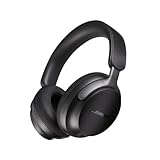
Flagship ANC is a different animal. The Sony WH-1000XM5 runs eight microphones and a dedicated processor that continuously analyzes noise dozens of times per second and adjusts cancellation independently across frequency bands — which is why it handles a chaotic open office or a crying toddler on a flight noticeably better than a budget pair. Bose takes a slightly different approach with the QC45: fewer adjustable modes, but a noise-cancellation tuning Bose has refined for over a decade specifically for comfort over long stretches, which is part of why frequent flyers still reach for Bose by reflex.
The honest caveat: if your noisy environment is "the bus twice a day," budget ANC solves that completely. If it's "open-plan office chatter, international flights, or a toddler," the gap between $45 and $350 ANC becomes real, fast.
Codec support: the spec sheet everyone misreads
Codecs are the most over-explained, under-understood line item on any wireless audio box. Budget earbuds like the P3i typically support SBC and AAC — the baseline Bluetooth codecs every phone supports, fine for casual listening but more compressed than a wired connection. Flagship gear adds higher-bitrate options: Sony's LDAC (up to 990kbps) and, on some pairs, aptX Adaptive. Bose sticks closer to AAC/SBC even on flagship hardware, prioritizing connection consistency — proof "flagship" doesn't automatically mean every spec is maxed out.
Here's the part that gets skipped: LDAC only activates on Android phones that support it — iPhones cap out at AAC regardless of what headphones you buy — and you need a lossless or high-bitrate source plus reasonably trained ears in a quiet room to reliably hear the difference over AAC. If you're streaming Spotify's standard tier on an iPhone, you're functionally getting AAC audio no matter which of these three pairs you own. Codec support is real capability — it's just capability with a lot of asterisks attached.
Build materials: where the price gap stops being subtle
This is the category where flagship pricing is least debatable. The Soundcore P3i is molded plastic, a plastic charging case, and silicone ear tips — perfectly fine, but built to a $45 price point, and it shows in small ways: a slightly hollow-feeling case, fewer tip sizes, hinges that feel like exactly what they cost.
The Bose QC45 and Sony WH-1000XM5 use memory-foam ear cushions wrapped in protein leather that holds its shape after months of wear, metal-reinforced headbands and hinges rated for thousands of fold cycles, and physical buttons instead of touch panels alone. This part of "flagship" isn't conditional the way ANC or codecs are: a $329–$398 pair will simply still look new in three years in a way a $45 pair usually won't.
App features: the software tax nobody puts on the box
The companion app is the most underrated line item in the whole price gap. Budget earbuds either skip the app entirely or ship a bare-bones one with a firmware updater and maybe a 3-band EQ. Flagship apps are a genuinely different product layer: Sony's Headphones Connect app offers a detailed parametric EQ, adaptive sound control that changes ANC behavior based on your detected activity, speak-to-chat that auto-pauses audio when you start talking, and a find-my-headphones locator. Bose's app is simpler by design — fewer menus, faster to set up — which some people genuinely prefer over Sony's deeper, slightly fiddlier customization.
Multipoint Bluetooth — pairing to your laptop and phone simultaneously and switching seamlessly — is another flagship-tier feature that's quietly become one of the most-used, least-marketed perks of spending more. It's the kind of thing you don't know you want until you've lived with a pair that switches from a Zoom call to a podcast without touching a settings menu.
Battery life: closer than the price tag suggests
This is the one category where budget genuinely competes. The Soundcore P3i rates up to 10 hours per charge with ANC on and roughly 30 hours combined with its case — comparable to headphones costing 8x more. The Sony WH-1000XM5 rates around 30 hours in one continuous charge; the Bose QC45 comes in lower, around 24 hours.
Form factor changes what "battery life" means in practice. Earbuds recharge in short bursts throughout the day via their case, so you're rarely starting from empty. Headphones run one long charge and need a real charging session — less convenient day-to-day, but competitive on paper with what a lot of people assume premium buys you. Battery life is proof that price and quality don't move in lockstep on every spec.
The verdict: who should actually spend the extra $300
Buy budget — the Soundcore P3i or something in its tier — if you mostly listen at home, on a calm commute, or during workouts where you're not precious about the hardware. Buy budget if you're on iPhone and were never going to unlock LDAC anyway, and if losing a $45 pair doesn't sting the way losing a $350 pair would.
Spend up on a flagship pair if you fly regularly and need ANC that handles genuinely chaotic noise, if you're on video calls for hours most days and want speak-to-chat and multipoint to save real time, if you're an Android user who streams lossless audio and wants LDAC to matter, or if you keep headphones for years and the cost-per-year math favors something built to last. The extra money is real — it just pays off hardest for people who actually trigger the conditions it's built for.
Budget vs. flagship, side by side
| Category | Budget (~$45) | Flagship (~$329–$398) |
|---|---|---|
| Price | ~$45 (Soundcore P3i) | ~$329–$398 (Bose QC45 / Sony WH-1000XM5) |
| ANC quality | Good for steady noise (engines, HVAC); struggles with chaotic or shifting sound | Multi-mic, adaptive, handles chaotic and shifting noise environments |
| Codec support | SBC, AAC (baseline Bluetooth) | LDAC / aptX Adaptive on some models — requires a compatible phone and source |
| Build materials | Molded plastic, silicone tips, basic hinges | Memory foam + protein leather cushions, metal-reinforced hinges, physical controls |
| App features | Minimal or none — basic EQ at best | Deep EQ, adaptive sound modes, speak-to-chat, multipoint, find-my-headphones |
| Battery life | ~10 hrs per charge, ~30 hrs combined with case | ~24–30 hrs per single continuous charge |
Frequently asked questions
Is the Sony WH-1000XM5 really worth almost 9x the price of budget earbuds?
For a specific buyer, yes: frequent flyers, people on hours of daily video calls, and Android users who want LDAC-quality streaming get real, daily-use value out of the extra cost. For someone who listens mostly at home or on a quiet commute, the gap is much harder to justify — you're paying for capability you'll rarely trigger.
Do budget earbuds like the Soundcore P3i actually have noise cancellation?
Yes, and it's genuinely useful for steady, low-frequency noise like engine hum or HVAC drone. What it can't do is adapt in real time to sudden or chaotic noise the way multi-mic flagship ANC can, since budget ANC typically relies on a single microphone and a simpler filter.
Does codec support (LDAC, aptX) actually matter for most people?
Less than the spec sheets suggest. LDAC only activates on supporting Android phones — iPhones cap out at AAC regardless of the headphones — and you need a high-bitrate or lossless source to hear a real difference. If you stream standard-tier audio on an iPhone, you're getting AAC no matter which pair you buy.
Bose QuietComfort 45 or Sony WH-1000XM5 — which flagship should I pick?
Sony wins on raw ANC performance, codec support, and app depth. Bose wins on simplicity and a comfort tuning frequent flyers have trusted for over a decade. Neither is a wrong choice — it comes down to whether you want maximum customization (Sony) or a simpler, comfort-first experience (Bose).
Will flagship headphones actually last longer than budget earbuds?
Generally yes, and this is one of the least conditional parts of the price gap. Memory-foam cushions, metal-reinforced hinges, and tighter manufacturing tolerances mean flagship headphones typically still look and perform well after 2–3 years, while budget plastic builds show wear faster.
What's the single best budget earbud upgrade if I only have $45 to spend?
The Soundcore P3i is the strongest all-around pick at that price — real ANC, a usable mic for calls, and battery life that's genuinely competitive with headphones costing several times more. It won't match flagship ANC or app depth, but for casual daily use it closes the gap more than the price suggests.