Here's the situation: you've just landed after a six-hour flight, your linen blazer looks like it was slept in by someone else, and the hotel iron is a 1998 Rowenta bolted to the wall that will absolutely leave a brown stripe across the back of your shirt. This is why portable steamers exist, and why I now travel with one even for long weekends. A good travel steamer weighs less than a paperback novel, fits in your toiletry bag or a corner of your carry-on, and turns a wrecked garment into a presentable one in about three minutes flat.
This guide covers the steamers worth buying, the ones that look useful but aren't, and — because most portable steamers aren't on standard affiliate product lists — the travel companions that make the whole system actually work.
Steamer vs. wrinkle spray vs. iron: honest comparison
There are three ways to deal with wrinkled clothes on the road, and they're not interchangeable. Here's the real breakdown:
Travel irons are the most powerful but the most annoying. You need an ironing board or a hard flat surface, they take time to heat up, and a cheap travel iron can scorch delicate fabrics instantly. They're genuinely useful for dress shirts with stiff collars and for tailored trousers that need a sharp crease — steaming alone won't give you a crease. For business travel with formal wear, pack one. For everyone else, they're overkill.
Wrinkle-release sprays (like Downy Wrinkle Releaser) are not steamers. They work on light wrinkles in knits and soft fabrics — you spray, shake, smooth, and hang for five minutes. The catch: they're liquid and count against your TSA 3-1-1 bag, they smell vaguely chemical for the first hour, and on heavily wrinkled linen or structured blazers they do approximately nothing. Worth $5 as a backup; not a steamer replacement.
Portable steamers are the sweet spot for most travelers. No ironing board required. Works on almost every fabric including delicate silk and structured blazers that you can't iron. Fast (most heat up in 20–45 seconds). Doubles as a clothes refresher to kill odors. The downside is they don't set creases, they need distilled water (tap water clogs the tank over time), and the cheap ones have tanks so small you get two minutes of steam before refilling. Buy a good one and this downside disappears.
The steamers worth buying (honest picks by category)
I want to be upfront: portable travel steamers are not in our standard affiliate catalog, so I'm covering them editorially without product cards. Buy direct, read the reviews, and check the return policy on whatever you choose. Here's what I'd actually consider:
Conair Travel Steamer (~$25–$35): The most widely available travel steamer in the US. Heats up in about 40 seconds, holds enough water for 8–10 minutes of continuous steaming, which is plenty for one outfit. The design is basic — a handle, a water tank, a steam head — and that's not a criticism. Simple means fewer things to break. Find it at most drugstores and Target so you can also just buy one when you arrive at your destination if packing space is tight. Not the most powerful steamer, but it's reliable and genuinely portable.
Hilife Steamer (~$30–$40): The Amazon best-seller in this category and for good reason. Larger water tank than the Conair (180ml vs. the standard 100–120ml), heats up in 30 seconds, and the steam output is meaningfully stronger. The design is a little bulkier — it's closer to a large coffee mug shape than a compact travel tool — but it packs flat. This is the one I'd buy if you travel more than six times a year and want something that handles heavy linen and denim.
PurSteam Travel Steamer (~$20–$30): The best budget pick. Lighter and more compact than the Hilife, acceptable steam output for cotton and polyester blends, heats up in about 45 seconds. The tank is small (90–100ml) so you'll refill for a full wardrobe refresh, but for one or two items before a dinner, it's completely fine. Great for anyone who just wants a low-stakes travel steamer without overthinking it.
One universal note: use distilled water. Every travel steamer will eventually clog with mineral buildup from tap water. A small bottle of distilled water (available at any pharmacy) lasts months. This single habit doubles the lifespan of any steamer.
How to actually steam clothes (the part the manual doesn't explain)
Hang the garment. Don't lay it flat — steam rises and pooled condensation leaves water marks. Let the steamer reach full temperature before touching it to fabric (the first 10 seconds of steam is often wet condensation, not dry steam). Work the steam head slowly downward in one-inch sections, keeping the nozzle about a half inch from the fabric. For stubborn wrinkles, hold the fabric taut with your other hand while steaming — the tension helps the steam reset the fibers.
For structured blazers and suit jackets, steam the back panel first (which has the most surface area), then the sleeves, then the front panels. Finish by hanging the item for five minutes before wearing — steam-relaxed fabric is pliable and will re-wrinkle if you fold or pack it immediately.
Things you should not steam: leather, suede, anything with a wax or resin finish, embellishments that are glued rather than sewn. When in doubt, test on an inside seam first.
The travel kit that makes a steamer make sense
A steamer is a $30 item. Its effectiveness depends a lot on the rest of your packing setup — specifically, whether your clothes arrive in a condition that's steamable vs. a condition that requires a miracle. There are a few things that make the difference:
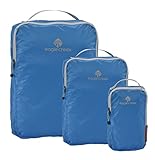
Packing cubes compress and contain clothes so they wrinkle in consistent, steam-friendly ways instead of random creases from being jammed in with shoes and chargers. The Eagle Creek Pack-It cubes are the benchmark — compression zipper plus mesh top, actual build quality, holds up after years of use.
The right toiletry bag matters because your steamer is roughly the size of a large bottle of shampoo and it lives in the same packing zone. A hanging toiletry bag keeps your steamer, distilled water, and other travel essentials accessible without unpacking your entire bag in a hotel bathroom. The Bagsmart bag has a flat-fold-open design that shows everything at once and a hook for small hotel bathrooms.


Power and voltage: the thing nobody mentions until you fry your steamer in Paris
This is the most boring section of this article and also the most important one for international travelers. Most US-manufactured travel steamers (Conair, PurSteam, some Hilife models) run on 110–120V and will not work correctly — or at all — on European 220–240V outlets. They may technically turn on with a plug adapter, but they'll either overheat or produce half the steam output. Some are dual-voltage (100–240V), which is marked on the plug or near the power rating. Check before you pack.
If you travel internationally more than once a year, buy a steamer rated 100–240V. Conair makes a dual-voltage travel steamer specifically for this. If you buy a single-voltage unit and travel abroad, you'll also need a voltage converter (not just a plug adapter) — and at that point the converter plus the steamer weighs more and costs more than a dual-voltage steamer would have in the first place.
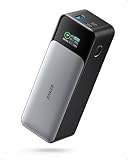
For powering other travel gear abroad, a quality power bank sidesteps the voltage issue entirely for USB-charged devices. The Anker 737 PowerCore is the go-to for travelers who need serious capacity — 24,000mAh, charges a laptop, works globally on any outlet.
The "actually worth it" companion: a crossbody for travel days
One thing a good steamer trip has taught me: packing lighter is the real wrinkle solution. The less you cram into your bag, the less your clothes arrive looking like origami. A compact crossbody or day bag that keeps your in-transit essentials (passport, cards, phone, snacks) separate from your main luggage means you're not digging through clothes at security or at the gate. The Baggu nylon crescent bag is compact, fits under a plane seat, and doesn't look like you're trying too hard.


Who actually needs a travel steamer (and who doesn't)
You should pack a travel steamer if: you're attending a wedding, conference, or any event where your clothes need to look intentional. If you regularly pack linen (which wrinkles at rest), wool blazers, or silk blouses. If you travel for more than three nights and care about not looking like you slept on a plane (you did). If you check a bag — checked bags wrinkle more than carry-ons.
You probably don't need one if: you travel exclusively in activewear and casualwear. If every hotel you stay at has a reliable iron (some do — check reviews). If your entire wardrobe is wrinkle-resistant performance fabric. If you're packing for two days and can shake out your clothes and wear them anyway.
The honest take: for under $35, a travel steamer is one of the highest-ROI travel purchases you can make if you wear anything other than athleisure on your trips. The annoyance-to-result ratio is completely in your favor.
FAQs
Can I bring a travel steamer in my carry-on?
Yes. TSA does not restrict travel steamers in carry-on luggage. The water tank must be empty when you go through security (liquid rules apply), but you can fill it once you're through. Pack it in an accessible spot since it may be flagged for a closer look due to its shape on the X-ray — it's unusual enough to catch the eye.
Do I need distilled water or can I use tap?
You can use tap water, but mineral deposits will gradually clog the steam nozzle over months of use. Distilled water extends the steamer's life significantly. A 1-gallon jug costs about $1 at any pharmacy and lasts for many trips. If you're traveling and can't find distilled water, filtered water is a reasonable compromise.
How long does a travel steamer take to heat up?
The best models (Hilife, Conair) heat up in 25–40 seconds. Budget models can take up to a minute. The first few seconds of output is often wet condensation rather than dry steam — point the steamer away from the garment for the first 5–10 seconds after it starts producing steam to avoid water-spotting the fabric.
Is a steamer better than a travel iron?
For most travelers, yes. Steamers are faster, safer for delicate fabrics, require no ironing board, and refresh odors along with wrinkles. Travel irons are better for two specific things: setting sharp trouser creases and dealing with stiff dress shirt collars and cuffs. If you're a frequent business traveler with formal wear, pack both. For everyone else, the steamer wins.
Can you steam all fabric types?
Almost all — but not all. Steam works on cotton, linen, silk, wool, polyester, rayon, and most blends. Do not steam leather, suede, velvet (it can crush the pile), anything with glued embellishments, or wax-coated fabrics. When trying a new fabric type, always test on an inside seam or hidden area first and keep the nozzle a little further from the fabric until you know how it responds.
What's the difference between a 120V and dual-voltage steamer?
A 120V steamer works only in North America and a few other 110–120V countries. In Europe, the UK, Asia, and most of the world, wall current is 220–240V. Plugging a 120V steamer into 220V (even with an adapter) can burn it out or produce incorrect steam output. Dual-voltage steamers (marked 100–240V on the plug) work anywhere with just a plug adapter. If you travel internationally, dual-voltage is non-negotiable.
Why does my steamer leave water spots on fabric?
Two causes. One: the steamer wasn't at full temperature before you touched it to fabric — the first output is wet condensation. Always heat fully before applying to clothes. Two: you're holding the nozzle too close to the surface. Keep about a half inch of clearance. For delicate fabrics, hold slightly further away and increase your passes rather than getting closer.