Packing cubes are one of those travel items where the difference between using them and not using them is bigger than the difference between any two brands. If you've never tried them, the first trip with cubes is genuinely a small revelation. If you have tried them and bought a cheap set that fell apart in three trips, you already know the brand actually does matter, just not as much as the internet wants you to believe. This is a ranked, lived-in take after years of weekend trips, two-week vacations, and one truly unhinged carry-on-only month in Europe.
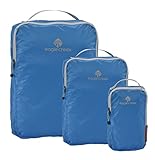
- Top pickEagle Creek Pack-It Cubes (Set)~$45
- Best budgetMaster Lock TSA Combination~$10
The honest quick answer
If you want to stop reading right now and just buy the right thing: get the Eagle Creek Pack-It set. They are the standard for a reason. They are not the cheapest, they are not the most colorful, but they are the ones that will still be intact when your suitcase is not. Everything else in this article is nuance on top of that recommendation.
Compression vs regular: which actually saves space
Compression cubes have a second zipper that, once everything is inside, you zip around the perimeter to flatten the cube down. The marketing claim is usually something like 30 percent more space. The real answer is closer to 15 to 20 percent on average, and it depends entirely on what you are packing. Bulky items like sweaters, fleeces, and packable jackets compress dramatically. Tightly rolled t-shirts and underwear barely compress at all because there is no air left to squeeze out.
The verdict after a lot of trips: compression cubes are worth it for the largest cube only, the one holding outerwear or bulky knits. For everything else, regular cubes are lighter, cheaper, and easier to repack on the road. Mixing types in one set is the move.
Sets vs individual cubes
Sets are cheaper per cube and they nest together for storage at home. Individual cubes let you mix sizes to match how you actually pack. The right answer depends on whether you have done this before. First-time buyer: get the set. You do not yet know which sizes you reach for. After two or three trips you will know exactly which size is your workhorse, and at that point you can buy individual replacements or expansions.
One small warning on cheap sets: avoid anything sold as a 6-piece or 8-piece bundle on the discount end of the spectrum. Those bundles include shoe bags, laundry pouches, and one tiny cube nobody uses, and the cubes themselves are usually undersized compared to brand-name versions of the same name.
Sizing strategy: what goes in what
This is the part most articles skip. The sizing system that actually works after a lot of trial and error:
Small cubes are for socks, underwear, and bras. Nothing else. Resist the urge to put a folded shirt in there to fill it out. The whole point is that one zip and you have your entire underwear drawer accessible without rifling.
Medium cubes are for tops. T-shirts, blouses, lightweight knits. Roll them, do not fold them. A medium cube holds about 6 to 8 rolled tops depending on fabric weight. If you pack two mediums and divide by category (work tops, casual tops), getting dressed in a hotel room becomes radically faster.
Large cubes are for outerwear, sweaters, jeans, or anything bulky. This is the cube that benefits from compression. One large at the bottom of the suitcase, packed flat, is the foundation everything else stacks on.
The ratio that works for a one-week trip: 2 small, 2 medium, 1 large. For two weeks: 2 small, 3 medium, 1 large. Resist the urge to add a second large. You will overpack into it.
What NOT to use packing cubes for
Cubes are great. They are not the answer to every packing problem. Three things should never go in one:
Toiletries. Use a real toiletry bag with a hanging hook and a wipeable lining. When your shampoo bottle decides to leak at 35,000 feet, you want it contained in vinyl, not soaking through nylon mesh into your t-shirts. The Bagsmart hanging bag is the one that has survived the most flights without complaint.
Shoes. Use dedicated shoe bags or, in a pinch, the hotel laundry bag. Putting shoes in a packing cube means the next time you open that cube you are getting hotel-sidewalk residue on whatever was in there last. Even clean shoes shed dust and rubber.
Electronics. Cables, chargers, adapters, and small electronics belong in a structured tech pouch with elastic loops, not loose in a cube where they will tangle into one impossible knot. A separate tech organizer pays for itself the first time you do not have to reset a folded cable at airport security.
The two non-cube items that actually belong in this article
If you are buying packing cubes, you are also probably traveling enough to care about these two items. The first is a TSA-approved travel bottle set. Hotel toiletries are a coin flip and the trial sizes at drugstores are a rip-off. A set of refillable silicone bottles in your toiletry bag is one-time spending for years of trips.
The second is a TSA-approved combination lock. Not for the suitcase zipper itself most of the time, but for hostel lockers, gym lockers at the hotel, and the occasional moment when you want to lock the cube of valuables in your carry-on while you nap on a layover.
The packing method that makes cubes worth it
Cubes do nothing for you if you pack them like a regular suitcase. The method that turns them from a nice idea into a real time-saver: pack each cube as if it is a drawer, by category, and unpack the cubes themselves into the hotel dresser. You do not unzip them and pull items out. You stack the cubes themselves into the drawer. When it is time to leave, you stack the cubes back into the suitcase. Total repack time is about 90 seconds.
The other small habit that matters: pack one empty small cube. On the way home it becomes the dirty laundry cube. You do not want a hotel laundry bag full of damp swimsuits sharing a suitcase with clean clothes. A dedicated zipped cube solves it.
The ranked verdict
If you are buying one set of cubes for the rest of your travel life, buy Eagle Creek. If you are willing to mix, buy a regular Eagle Creek small and medium and add one compression large from a cheaper brand for outerwear. If you have never used cubes and you want to test the concept, do not buy the $15 8-piece bundle, you will hate them and decide cubes do not work. Buy a small set of decent cubes and try them on a real trip first.
FAQs
Are packing cubes actually worth it?
Yes, but not for the reason most people think. They do not save much space on their own. What they save is time and friction every single morning of the trip. Getting dressed without rifling through a suitcase is the real value.
Compression or regular cubes?
Mix. Compression for the largest cube holding bulky items, regular for everything else. Compression cubes weigh more and cost more, and the compression does very little for already-dense items like rolled t-shirts.
How many cubes do I actually need?
For a one-week trip, five cubes is the sweet spot: two small, two medium, one large. Two weeks adds one more medium. Anything beyond that and you are overpacking into the cubes rather than packing efficiently.
Can I put toiletries in a packing cube?
No. Use a real toiletry bag with a wipeable interior and a hanging hook. Cubes are mesh-and-nylon construction that will absorb anything that leaks, and something always leaks eventually.
Do packing cubes fit in a carry-on?
Standard small, medium, and large cubes from major brands are designed around carry-on dimensions and stack into them well. Avoid extra-large or jumbo cubes for carry-on travel — they fit, but they force you into one massive lump rather than stackable layers.
What is the difference between packing cubes and compression bags?
Compression bags use rolling or vacuum-style air removal and are flat plastic. They compress more aggressively but offer zero organization. Cubes organize and lightly compress. Most travelers want cubes. Compression bags are for very specific use cases like packing a winter coat into a summer bag.
Should I buy a matching set or mix brands?
Start with a matched set so the sizes nest properly for home storage. Once you know your habits, mix in individual cubes from other brands as needed. There is no functional penalty for mixing, only an aesthetic one.