"I don't have time to read" is usually a pacing problem, not a time problem. Most people picture reading as a 400-page commitment that has to be finished in long, uninterrupted stretches or it doesn't count. It doesn't have to be that. There's an entire shelf of genuinely great books that run under 200 pages — books that get taught, quoted, rebought, and reread precisely because they don't waste a sentence. This isn't a list of "quick reads" in the beach-novel sense. It's a list of books that happen to be short because they were written with almost nothing extra left in them.
- Top pickThe Old Man and the Sea by Ernest Hemingway~$9
- Best budgetThe Metamorphosis by Franz Kafka~$4
- Worth the splurgeBonjour Tristesse by Françoise Sagan~$14
Short doesn't mean slight
There's a lazy assumption that page count and depth move together — that a 150-page book must be doing less than a 500-page one. Hemingway built an entire theory of fiction around the opposite idea. He called it the iceberg theory: you write the story so tightly that seven-eighths of it stays under the surface, implied rather than stated, and the reader feels the weight of what isn't written as much as what is. The Old Man and the Sea is 127 pages long and it won the Pulitzer Prize and got cited by name in his Nobel citation. Length was never the thing standing between that book and being major.
The tell for a genuinely short-but-dense book is that you can't skim it. A 500-page thriller can survive you skipping a paragraph of scenery — the plot machinery keeps running. A 120-page novel usually can't. Every scene is load-bearing, because the writer cut anything that wasn't. That's a different reading experience than "fast," even though it happens to also be fast. It's closer to concentrated.
Fiction you can finish in one sitting
These are the classics that show up on "books everyone should read" lists for a reason that has nothing to do with their length — they'd be on those lists at any page count. The fact that you can read any of them in an afternoon is a bonus, not the point.


More short fiction worth clearing your evening for
Once you've got the first four under your belt, these round out the case that "short" spans a lot more ground than grim classroom classics — there's satire, romance, fable, and Jazz Age glamour all doing the same trick of saying a lot in very few pages.


When short means memoir, not padding
Fiction isn't the only place a short page count signals density instead of thinness. Testimony and memoir can do the same thing — sometimes more, because the writer is working from lived material and still chooses to leave most of it out. The best short nonfiction reads like someone who has earned the right to say less, not someone who ran out of things to say.
What to skip: books that are short because they're empty
Not every short book earns its length the way the ones above do, and it's worth knowing the difference before you buy. A lot of modern nonfiction — especially the business-book and self-help shelves — hits "short" by inflating the font, widening the margins, and stretching a single blog-post-sized idea across 180 pages of repeated anecdotes and restated bullet points. You can usually tell before you buy: check if the table of contents lists ten-plus chapters for a book under 200 pages, which almost always means each chapter is padding one idea out to justify its own header.
The real test is density, not brevity. The Old Man and the Sea is short because Hemingway cut everything that wasn't essential. A padded business book is short because the author had roughly 4,000 words of actual idea and a publishing deal that required 40,000. Both fit on the same shelf. Only one of them rewards a second read.
How a book this short can still hit hard
The books above share one trick, whether they're 96 pages or 180: they trust the reader to fill in what's left unsaid. That's genuinely a craft choice, not an accident of brevity — it's harder to write a paragraph that implies a feeling than to write three pages explaining it. When it works, you get the specific, slightly disoriented feeling of finishing a book in one sitting and immediately wanting to start it again, because you know there's more sitting under the surface than you caught the first time.
That's also the best argument for starting here if you've fallen out of the habit of reading, or never really got into it. None of these ask for a month of commitment. Most ask for an evening. And unlike a lot of what gets marketed as a "quick read," finishing one of these doesn't feel like you took a shortcut — it feels like you read an actual, complete book that simply didn't need to be any longer than it was.
FAQs
Are short books actually easier to read, or just shorter?
Often harder, not easier, in the sense that they demand more attention per page. A long thriller can absorb a skimmed paragraph without losing you; a tightly written 120-page novel usually can't, because every scene is doing real work. They're faster to finish, but not necessarily lighter reading — that's exactly what separates them from padded "quick reads."
What's the difference between a short book and a padded one?
Density. A short book that earns its length cuts everything non-essential and leaves the reader to fill in the rest — that's Hemingway's whole iceberg theory. A padded book hits a low page count by inflating font size, widening margins, and restating one idea across many short chapters. Check the table of contents before buying: ten-plus chapters in under 200 pages is a common tell.
Is it okay to start with short classics if I don't usually read fiction?
It's one of the best places to start. The Old Man and the Sea, Of Mice and Men, and The Little Prince are all short enough to finish in a single sitting, which makes them a low-risk way to find out whether a particular kind of story or voice works for you before committing to something longer.
Do these books actually finish satisfyingly, or do they feel incomplete?
Every book on this list is a complete, finished work — none of them are excerpts or novellas cut short to hit a marketing category. Some endings are quiet and some are devastating, but none of them leave you feeling like you were shortchanged on story for the sake of a shorter page count.
What short nonfiction is worth reading, not just short fiction?
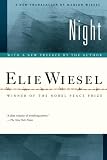
Night by Elie Wiesel is the standout example — 120 pages of restrained, precise testimony that carries more weight than a much longer account might. Look for memoir and testimony over the "one idea, ten chapters" business-book format, which tends to be short because it's thin rather than because it's edited tightly.
Can I realistically read one of these in a single sitting?
Yes, for most readers. At roughly 100–180 pages and a normal adult reading pace, each of these lands somewhere between ninety minutes and three hours cover to cover — genuinely a single evening, a long flight, or a lazy Sunday.