Kindle Unlimited beats buying books once you finish more ebooks per month than your monthly KU price divided by what you typically pay per ebook. That is the whole formula, and it means the answer is different for a light reader, a series binger, and someone who mostly listens. Below, the math with blanks you fill in yourself, a verdict for six kinds of reader, and an honest word on the free option nobody wants to talk about when there is a subscription to sell.
Read everything in this list for free
Most of these picks are on Kindle Unlimited. The free trial covers a month of unlimited reading.
Try Kindle Unlimited free →One housekeeping note before we start: Kindle Unlimited pricing, trial terms, and catalog all change, so this article never states them as fact. Check the KU page for current pricing and trial terms, then plug your own numbers in.
Open the Kindle Unlimited page to see the current monthly price and whatever trial terms are being offered right now. That price is your Y. Everything below runs on it.
Check Kindle Unlimited pricing and trial terms →The break-even formula (with blanks for your numbers)
Every Kindle Unlimited versus buying comparison collapses into one division problem. Define two variables:
- X = what you typically pay for an ebook you would actually buy. Not the list price of a hardcover bestseller. The real number on your last ten purchases, including the ones you grabbed on sale.
- Y = the monthly KU price, from the KU page.
Break-even books per month = Y / X. If a typical ebook you buy costs $X and KU costs $Y a month, you need to read Y/X KU-eligible books a month for the subscription to tie with buying. Read more than that and KU wins. Read fewer and buying wins.
Worked example with made-up numbers, purely to show the mechanics: say X is 6 and Y is 12. Break-even is 12 / 6 = 2 books a month. Say instead your habit is pricier, X is 10 and Y is 12: break-even drops to 1.2 books a month, so almost any real reader wins. Or say you only buy deep-discount ebooks and X is 3: break-even jumps to 4 books a month, and KU gets a lot harder to justify. Same Y, three different answers, which is exactly why a flat "KU is worth it" claim is useless without your X.
Notice what is hiding in that formula. Your X is the price of books you would have bought. If you would never have paid for half of what you read on KU, those books do not count as savings. They count as extra reading. That is a fine reason to subscribe, but be honest that it is a different reason.
The three adjustments the formula leaves out
Y / X is clean, but real life has friction. Three corrections move the break-even point.
1. Eligible books only. The formula counts books you can actually borrow. KU's catalog rotates, and it tends to skew toward indie and self-published authors and certain genres rather than every new release. So the real question is not how many books you read, it is how many of the books you want are borrowable. Browse your genres in the catalog before you trust any math. Do not assume a specific title is included, because titles come and go.
2. Your hit rate. Call the share of your reading that is KU-eligible H, a number between 0 and 1. Your effective break-even is Y / (X × H). If the break-even was 2 books and only half of what you read is borrowable (H = 0.5), you now need to read 4 books a month in total for KU to pay off. This is the number that quietly kills the case for people who read mostly big new releases.
3. The free alternative. The library. If a library app can supply a chunk of your reading at zero cost, that chunk should be subtracted before you do any of this. More on that below, because it deserves its own section.
Put it all together and the honest formula is: subscribe only if (books you read per month that are KU-eligible and not available free from the library) is greater than Y / X. Say it out loud once. It is more restrictive than any "KU pays for itself" pitch you have read, and it is the one that matches what actually leaves your bank account.
Kindle Unlimited vs buying books: verdict by reader type
Here is how the math tends to land for six common reader types. These are patterns, not guarantees. Run your own X and Y before you believe the verdict column.
| Reader type | Typical pace | What the math says | Verdict |
|---|---|---|---|
| Light reader | A handful of books a year | Far below Y / X in most months, and a subscription charges you through the dry spells | Buy, or borrow free. Skip KU unless a trial covers a specific vacation or binge. |
| Steady reader | About one to two books a month | Hovers right around break-even, so your hit rate H decides everything | Coin flip. Use the trial to test whether your genres are stocked, then decide. |
| Binge reader | Several books a month, in bursts | Well above break-even in heavy months, below it in quiet ones | Subscribe in binge months, cancel in slow ones. Subscriptions are easier to pause than to defend. |
| Series chaser | Finishes long series back to back | Every extra book in the series is a free win once you are past break-even, if the series is borrowable | Best case for KU. Check that the whole series is in the catalog first. |
| Audiobook-heavy | Mostly listens | Only a portion of titles pair audio with the ebook, so your eligible pool is smaller, so H is low | Verify audio on the exact titles you want before subscribing. Do not assume. |
| Library user | Any pace, patient with holds | The free supply shrinks the number of books KU would need to replace | Library first. Add KU only to fill gaps where the hold list is too long. |
If you want the longer, more personal take on how KU feels to use day to day (catalog texture, the audiobook headphone icon, and the rest), we wrote that up separately in Is Kindle Unlimited Worth It? An Honest Heavy-Reader Review. This piece is the spreadsheet version. That one is the field report.
Why the table lands where it does
Two patterns drive almost every row. First, bursts beat steady trickles: a subscription charges you through dry months, so people who read in waves do best subscribing in waves. Second, the series chaser is the strongest case because every book past break-even is effectively free, though series sometimes lose volumes, so confirm the whole run is in the catalog and read it while it is.
The library alternative, honestly
If you have a library card, you probably have access to a free ebook and audiobook app, most commonly Libby, which hooks into your local library and sends books to a Kindle or reading app. For many readers, this is the actual best deal, and pretending otherwise would be strange for a blog that just spent a thousand words on break-even math. The free option has an effective price of zero, so its break-even is zero.
It also has real costs, just not in dollars: popular releases come with holds, your library's catalog follows local budget rather than your mood, and loans expire. If you read one thing at a time with no deadline, none of that hurts. If you want the sequel at 12:01, it hurts a lot.
So the honest decision tree looks like this. Start with the library. Stack as many holds as you can tolerate. When the waiting is the problem and the books you want are borrowable on KU, that is when a subscription starts to earn its fee. KU buys you immediacy and a deep indie shelf. The library buys you free. They solve different problems, which is why plenty of heavy readers keep both.
When owning beats both
One last wrinkle the math does not capture: you do not keep KU books. Cancel, or watch a title rotate out, and it is gone. If a book is one you will reread, mark up, lend, or want on a shelf in five years, buying it outright is not a failure to optimize. It is the point. Reference books, cookbooks, and the handful of books that changed how you think are better owned than borrowed. A couple of examples of what we mean:

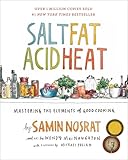
Rent what you read once; own what you return to.
Your five-minute version
Average your last ten ebook purchases for X, grab Y from the KU page, divide, then divide again by your hit rate H and subtract what the library covers. If your honest monthly count clears that number, subscribe. If it is close, use the trial and let a month of your own data decide.
The only way to know your hit rate is to look at what is borrowable in your genres today. Check the KU page for current pricing and trial terms, browse your usual shelves, and cancel before renewal if the math does not work.
See Kindle Unlimited details →Frequently asked questions
How many books do I need to read for Kindle Unlimited to be worth it?
Divide the monthly KU price by what you typically pay per ebook (Y / X). That is the number of borrowable books you need to read each month to break even. Then adjust upward for the share of your reading that is actually in the catalog. Check the KU page for current pricing and trial terms before running it.
Is Kindle Unlimited cheaper than buying ebooks?
Only if you read enough eligible books. For binge readers and series chasers it usually is. For light readers and people who mostly read big new releases, buying is usually cheaper, because you pay per book instead of paying monthly whether you read or not.
Is the library better than Kindle Unlimited?
It is cheaper, since it is free, and for patient readers it is often the better deal. The tradeoffs are hold waits on popular titles, a catalog set by your local library, and loans that expire. Kindle Unlimited trades money for immediacy and a deep indie selection. Many heavy readers use both.
Can I keep books I borrow with Kindle Unlimited?
No. Borrowed titles go away when you cancel or when a book rotates out of the catalog. For books you want to reread, lend, or keep on a shelf, buying is the better route.
Does Kindle Unlimited make sense for audiobook listeners?
Only partly. Not every title pairs audio with the ebook, so your eligible pool is smaller than it looks. Verify audio on the specific titles you want before subscribing.