Somewhere around the first week of December, the sun starts setting at 4:45pm, the thermostat becomes a topic of household negotiation, and your living room — the one that felt perfectly fine in July — suddenly reads as cold, beige, and a little sad under the overhead light. This isn't your imagination and it isn't just the weather. It's that most homes are optimized for daylight and air conditioning, not for the specific job of feeling good when it's dark outside by dinnertime.
- Top pickGovee RGB Corner Floor Lamp~$40
- Best budgetAnker Cable Management Box~$26
- Worth the splurgeBearaby Weighted Blanket~$199
The fix isn't a renovation. It's twelve small, mostly-inexpensive upgrades, tackled in whatever order your budget and your patience allow, that each nudge a room a little further toward "I don't want to leave this couch." Think of it as an advent calendar for your house: you don't need all twelve before December starts feeling cozy, but by the time you've done six or seven, the difference is obvious to anyone who walks in. Here they are, roughly in order of biggest bang for your buck first.
Start with light: the fastest cozy upgrade there is (#12 and #11 on the list)
If you do exactly one thing on this list, make it this one. Overhead lighting is the single biggest reason a room reads as "cold" in winter — most ceiling fixtures throw a flat, bluish-white light that's great for finding your keys and terrible for feeling relaxed. The fix is almost embarrassingly simple: add a warm, low, corner-based light source and actually use it instead of the overhead switch.
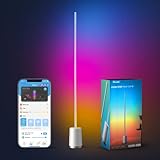
The habit that actually makes this work: turn the overhead light off entirely once the sun goes down, and let the lamp (plus a smaller table lamp if you have one) do all the work. It sounds like it should be dimmer and worse. It's the opposite — warmer, more layered light at a lower level almost always reads as cozier than one bright source from the ceiling, even though it's putting out less total light.
Trap the warmth: curtains, drafts, and the 5pm dark (#10)
December's other lighting problem isn't inside your house — it's the giant black window that used to be a view. Once it's dark by five, an uncovered window does two things at once: it turns your living room into a fishbowl, and it acts as a giant cold radiator, pulling heat out of the room even with decent insulation. Heavy curtains solve both problems for less than the cost of a nice dinner out.
The small but real detail: hang the rod a few inches wider than the window frame and a few inches higher than the top of the window. It looks more finished, lets more daylight in when the curtains are open during the day, and makes the blackout effect more complete when you close them at night. This is a five-minute adjustment that most people skip, and it's the difference between curtains that look like an afterthought and curtains that look intentional.
Softness triage: what to actually upgrade on the bed and the couch (#9 and #8)
Not every soft surface in your house needs an upgrade before December — that's an expensive and slightly delusional goal. But two specific spots do more work than the rest combined: the sheets you're sleeping under for nine hours a night, and the blanket that lives on the couch during every single evening you spend watching something.

If you can only afford one of these two, go with the sheets. They're a fraction of the price, they touch your skin for a third of every day, and "warmer sheets" solves a problem — being cold in bed — that a blanket on the couch doesn't. The Bearaby is the splurge for when the budget-tier stuff is already handled and you want the one item that turns a couch into a genuine destination.
Small storage and styling wins that make a room look finished (#7 and #6)
A cozy room and a cluttered room are not the same thing, even though they can look similar at a glance — piles of blankets, books, and candles everywhere. The difference is that a cozy room has a place for things, so the warm clutter reads as curated rather than chaotic. Two small fixes handle most of this.

The floating shelves are for what you want people to notice. The cable box is for what you don't. Both matter, and most cozy-corner Pinterest photos that look effortless have quietly solved the cable problem just out of frame.
Scent, sound, and ritual: the senses nobody photographs (#5 through #1)
The last five upgrades on the list are the cheapest, and they're also the ones that make a house feel cozy in a way you can't capture in a photo — because they're not visual. Cozy is a full-sense experience, and most home upgrades stop at "how does this look," which leaves real ground uncovered.
Around that same ritual, a few more upgrades cost close to nothing and finish the list:
- #4 — Light one candle with intention, not five randomly. A single well-placed candle, lit at the same time each evening — say, right when you turn off the overhead light — does more for the "this house feels different now" feeling than a shelf cluttered with half-burned ones from three different scent families that are all competing with each other.
- #3 — Build a five-song "settle in" playlist. You don't need a smart speaker system or a soundbar for this to work. The trick is consistency: the same handful of quiet songs, played at the same point in your evening, starts to function as a signal to your own brain that the day is winding down — which is most of what "cozy" actually is, psychologically.
- #2 — Put something soft under your feet where you actually stand. A small rug or bath mat at the exact spot where you get out of bed, or where you stand at the kitchen sink, changes the physical experience of a cold morning more than almost any other single-dollar-per-use item in your house.
- #1 — Do a genuine 15-minute evening reset. Dishes in the dishwasher, one throw blanket refolded, the lamp from #12 turned on before the overhead light goes off. This isn't a product — it's the habit that makes every other item on this list actually pay off night after night instead of once.
Notice that the list ends on a habit, not a purchase. That's on purpose. The products fix the room. The ritual is what makes you actually notice the room is fixed.
The upgrades ranked by cost and payoff — and what to skip
If you're triaging by budget rather than doing all twelve at once, here's the honest ranking of the seven product-based upgrades above, cheapest and most impactful first:
| Upgrade | Price | Payoff | Do this first if... |
|---|---|---|---|
| Amazon Basics Microfiber Sheets | ~$28 | High — felt every night | You're cold in bed specifically |
| NICETOWN Blackout Curtains | ~$30 | High — heat retention + privacy | Your windows are bare or thin-curtained |
| Govee Corner Floor Lamp | ~$40 | Very high — changes the whole room | Your main light source is overhead only |
| Anker Cable Management Box | ~$26 | Medium — invisible but necessary | Your cozy corner has a visible cord pile |
| Bayka Floating Shelves | ~$36 | Medium — organizes existing coziness | You already own candles and books with nowhere to put them |
| Fellow Atmos Vacuum Canister | ~$45 | Medium — daily ritual quality | You already have a coffee or tea habit worth protecting |
| Bearaby Weighted Blanket | ~$199 | High, but priciest | Everything cheaper above is already handled |
What to skip this year: scented plug-in warmers in every outlet (they compete with each other and stop registering as scent within a day), a second space heater bought "just in case" if your first one already covers the room, and any all-in-one "cozy bundle" that pads out a real product with three items you'll never use. Buy the specific thing that solves your specific gap — a cold bed, a bare window, a cluttered corner — rather than a set designed to look good in a marketing photo.
Also skip trying to do all twelve upgrades in one weekend. The whole point of framing this as an advent countdown is that small, spaced-out changes compound — you notice each one because it's the only new thing that week, instead of all twelve blending into one expensive Saturday you can barely remember by January.
If you only do three things from this whole list: a warm corner lamp instead of overhead lighting, blackout curtains on your worst window, and better sheets on your bed. Those three cost under $100 combined and touch the three places you spend the most actual hours in your house during December — the living room in the evening, the bedroom at night, and wherever that window is currently letting the cold in.
Frequently asked questions
What's the single highest-impact upgrade if I can only buy one thing?
The corner lamp. Swapping overhead lighting for a warm, low light source changes how an entire room feels in a way no single textile or scent upgrade can match, and it's one of the cheaper items on this list at around $40.
Do blackout curtains actually help with heat, or is that just marketing?
It's real, though modest — a bare or thin-curtained window is one of the largest sources of heat loss in an otherwise well-insulated room, since glass conducts cold far more efficiently than a wall. Heavy curtains closed at night create an air pocket that meaningfully reduces that effect, on top of the light-blocking and privacy benefits.
Is a weighted blanket worth $199 compared to a regular throw blanket?
Only after the cheaper upgrades on this list are handled. A weighted blanket is a genuine, science-backed comfort upgrade for a lot of people, but it solves a different problem than warmth alone — deep-pressure calm rather than temperature. If your budget is limited, better sheets and curtains do more for less money first.
How many candles or scent sources should one room actually have?
Fewer than you think. One well-placed candle, lit consistently at the same point in your evening, reads as more intentional and is more noticeable than three or four competing scents burning at once, which tend to cancel each other out rather than layering nicely.
Should I start with the living room or the bedroom?
Whichever room you're avoiding right now. If your bedroom feels cold enough that getting into bed is unpleasant, start there with the sheets. If your living room feels stark and uninviting in the evening, start there with the lamp and curtains. Match the upgrade to the room that's actually bothering you, not the one that photographs best.
Can I do this on a very small budget, like under $50 total?
Yes — the sheets (~$28) plus the free or near-free habits (the evening reset, one intentional candle, a settle-in playlist) get you most of the way there for well under $50. The lamp and curtains are worth adding when you can, but they're not required to feel a real difference this December.
Does a "cozy corner" actually need a cable management box?
If there's a lamp, a speaker, or any charging cable involved, yes — it's the cheapest fix on this entire list for the single most common thing that makes an otherwise nice setup look unfinished. A visible tangle of cords undercuts warm lighting and soft textiles faster than almost anything else in the room.
What's a reasonable timeline for doing all twelve upgrades?
Spread them across the weeks of December rather than one weekend. The advent-calendar framing works because each change gets noticed on its own — a new lamp one week, better sheets the next — rather than all twelve blending into a single expensive Saturday that's hard to appreciate item by item.