Hotel coffee is a lie. The little drip machine on the counter — the one with the cardboard sleeve of pre-ground beans from 2019 — produces something that occupies a flavor range somewhere between burned sawdust and warm despair. And yet millions of people start every travel day with it because the alternative seems complicated. It is not complicated. A great cup of coffee in a hotel room takes about $40 of gear and eight minutes of effort, and the difference it makes to your morning — especially on a work trip or a red-eye recovery day — is genuinely disproportionate to how simple it is.
This is a guide to making excellent coffee in a hotel room. Not barista-level nonsense. Actual, drinkable, soul-restoring coffee made with whatever hot water you can get your hands on, from a setup that fits in a toiletry bag.
The hotel room coffee spectrum: total hack to full setup
Before we get into gear, here's the honest spectrum of approaches, from minimal to committed:
- Level 0 — Total hack: Ask the front desk for extra hot water from their coffee station, tear open a Starbucks Via instant packet. Zero gear, zero shame. Works in a pinch.
- Level 1 — Slightly better: Bring a few high-quality instant single-serve packets (Voilà, Mount Hagen) and use the hotel kettle or drip-machine carafe for hot water. Tastes 3× better than the hotel coffee for no real effort.
- Level 2 — The Aeropress setup: One Aeropress, a small hand grinder or pre-ground coffee in a sealed container, and the hotel kettle. This is the sweet spot for 90% of travelers. Compact, foolproof, genuinely excellent coffee.
- Level 3 — Full pour-over at home: You're not bringing a Chemex on a business trip. But for understanding what we're approximating, a home Chemex with a gooseneck kettle produces a reference cup that the travel setup is trying to match. Worth having at home so you know what you're chasing.
For most of this article we're going to live at Level 2 with occasional notes on Level 3 for the home setup context. Let's build the kit.
The centerpiece: Aeropress Original
The Aeropress is the most travel-friendly piece of brewing equipment ever designed, and that's not hyperbole — it was literally invented by the same guy who invented the Aerobie frisbee, which tells you something about the mentality. It weighs almost nothing. It's made of BPA-free plastic that survives being chucked in a bag. It brews a cup in about two minutes. It makes coffee that tastes like actual coffee and not like an apology. It also doesn't break, doesn't require electricity, and doesn't raise any eyebrows at airport security.
The brew method is simple enough that you can do it half-asleep: add ground coffee, add hot water from the hotel kettle, stir for thirty seconds, press slowly for about twenty seconds. That's it. The result is a concentrated, smooth cup — somewhere between espresso and drip — that you can drink straight or add hot water to if you want an Americano-style drink. Filters are paper (included), so cleanup is press-and-toss. The whole thing rinses clean in thirty seconds. It's the right answer for almost every hotel room scenario.

Keeping coffee fresh on the road: Fellow Atmos
The Aeropress is only as good as the coffee you put in it, which means the other half of the hotel-room equation is not letting your beans or pre-ground coffee go stale before you even get to use them. If you're buying whole beans at home and grinding before you leave (smart move), or if you're getting good ground coffee from a local roaster, you need to store it in something airtight. A zip-lock bag is not airtight. A paper bag from the coffee shop is definitely not airtight.
The Fellow Atmos is a vacuum canister — twist the lid and it actively pumps air out of the container, keeping coffee fresh for significantly longer than a standard sealed jar. It's the kind of thing that sounds like a premium-for-premium's-sake gadget until you use it and notice your pre-ground coffee still tastes fresh on day five of a trip instead of flat and cardboardy. It comes in sizes from small to medium, fits in a checked bag easily, and looks like something a thoughtful person owns instead of something a gear-obsessed person bought.

The TSA problem: liquids, bottles, and getting through security
Coffee gear itself clears security easily — the Aeropress and a canister of ground coffee raise zero flags. The thing people get tripped up on is everything around the coffee: the little bottle of half-and-half you wanted to bring, the vanilla syrup you're addicted to, the coconut milk. Anything liquid over 3.4oz goes in checked luggage or gets left at home. The solution is to use small, clearly labeled travel bottles for any liquid condiments you can't live without, and to buy milk or creamer at a convenience store once you land. A good travel bottle set with TSA-compliant sizes handles the 3.4oz rule easily, and the bottles that actually seal properly (no leaking in your bag) are worth the small premium over dollar-store options.

The grind question: pre-ground vs. hand grinder
Here's the honest take on grinding coffee while traveling: for most people, high-quality pre-ground coffee stored in an airtight container is the right call. Hand grinders are great for people who really, truly care about dialing in extraction — and if you're that person, a Timemore or Hario hand grinder is compact enough to travel with and produces genuinely excellent results. But if you're not already grinding at home, adding a grinder to your travel kit is one step too many and the marginal improvement isn't worth it for hotel-room coffee.
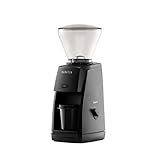
If you do want to grind at home — and you should, it makes a dramatic difference in cup quality — the Baratza Encore ESP is the standard first real burr grinder recommendation. It's consistent, durable, easy to adjust, and produces evenly ground coffee across a range of settings from espresso to coarse drip. For the Aeropress, you want a medium-fine setting. For the Chemex at home, medium-coarse. The grinder stays home; the pre-ground coffee travels.
The home reference: Chemex and gooseneck kettle
Understanding why hotel coffee is terrible requires knowing what good coffee actually tastes like — which is where your home setup matters. The Chemex 6-Cup is the classic for a reason. It's one molded piece of borosilicate glass with no moving parts, uses thicker paper filters that produce an incredibly clean, bright cup, and looks like it belongs on a design museum shelf (it literally does — the MoMA has one in its permanent collection). You don't need to be a coffee nerd to appreciate it. You just brew it once and realize this is what coffee is supposed to taste like.
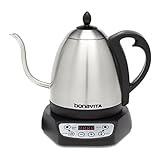
Pair it with a gooseneck kettle. The gooseneck isn't snobbery — it gives you control over where and how fast water hits the grounds, which matters for even extraction. The Bonavita is the reliable workhorse: temperature control, hold function, made for daily use without the premium pricing of Fellow or Breville. If you've been drip-machine people your whole life and want to understand what the pour-over fuss is about, this is the $120 combination that answers the question permanently.

The hotel kettle problem (and how to work around it)
Most hotel kettles don't have temperature control and they boil everything to 212°F, which is slightly too hot for optimal coffee extraction (the ideal range is 195–205°F). The fix for Aeropress is easy: boil the water, then let it sit for 30–45 seconds before pouring. This drops the temperature into the right range without any equipment. If the hotel doesn't have a kettle — this happens more often than it should — the drip machine carafe works fine. Run a plain water cycle, dump the hot water into your Aeropress instead of using the machine's basket. You've just turned a mediocre hotel drip machine into a hot water dispenser for your own coffee. It works.
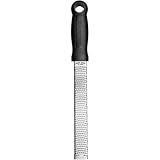
One more hotel hack: bring a Microplane. It sounds absurd but if you're a cinnamon person (or a citrus-zest-in-your-coffee person, which is a real and valid preference), a Microplane fits flat in a bag, clears security with no issue, and does a thing no hotel room provides: fresh-grated spices. It also pulls double duty as a cheese grater, garlic grater, or chocolate grater if you're in an extended-stay situation with a kitchenette.
Packing the kit: what actually fits in a carry-on
The complete Level 2 hotel coffee kit — Aeropress, Fellow Atmos with pre-ground coffee, a few travel bottles — takes up roughly the same space as a hardcover book. The Aeropress and its plunger nest together into an oval about the size of a large grapefruit. The Atmos 0.4L is the size of a short travel mug. The whole kit fits in the outer pocket of most carry-ons or the top of a toiletry bag with room to spare. There is genuinely no packing argument against bringing this setup. The argument is always "is it worth the effort," and the answer is yes, on any trip longer than one night, it's worth it.
A few packing notes: paper filters are flat and go loose in the Aeropress chamber (there's storage space built in for them). Don't pack the Atmos with the vacuum fully engaged — altitude changes in the hold and even carry-on compartments can stress the seal. Just twist it normally, not all the way to vacuum, and let it re-vacuum when you arrive. Lock your checked luggage if you're bringing extra gear in it; a TSA-compliant lock keeps curious baggage handlers out without creating problems at the security checkpoint.

FAQs
Can I bring an Aeropress in carry-on luggage?
Yes, absolutely. It's plastic with no liquids, no sharp edges, and no heating elements. It goes through security the same way a water bottle would. TSA has no issue with coffee brewing equipment of any kind. The filters, the plunger, the chamber — all fine. If you're bringing pre-ground coffee, it's also allowed in carry-on (and checked) without restriction in any amount.
What's the best coffee to bring on a trip?
Pre-ground, medium roast, from a specialty roaster you trust, stored in an airtight container like the Fellow Atmos. Medium roast has more flexibility across different water temperatures and brew times than light roast, which makes it more forgiving when you're working with a hotel kettle you can't dial in precisely. Grind it at home right before you leave for maximum freshness.
The hotel kettle boils at 212°F — does that ruin Aeropress coffee?
It won't ruin it, but it's slightly suboptimal. The fix is easy: let the water sit off-heat for 45–60 seconds after boiling before you pour. This drops the temperature to roughly 200–205°F, which is the sweet spot for Aeropress extraction. The difference is noticeable mostly in the bitterness of darker roasts — over-hot water extracts harsh compounds faster. One minute of resting is all it takes.
Is it worth bringing a hand grinder for travel?
For most people, no — the improvement over high-quality pre-ground coffee stored properly is real but marginal, and the grinder takes up space and time you probably don't have at 7am in a Hampton Inn. If you're a daily specialty-coffee drinker who already grinds at home and travels for more than a week at a time, a compact hand grinder like the Timemore Chestnut C2 is worth the extra quarter-liter of bag space. Otherwise, grind before you leave and store well.
Can I use the hotel drip machine as a hot water source?
Yes, and this is an underused trick. Fill the reservoir with water, don't put coffee in the basket, run a brew cycle. The carafe collects hot water (usually around 185–195°F, which is actually a reasonable brewing temperature) that you can pour directly into your Aeropress. It's slower than a kettle but it works in hotels that only have a drip machine and no separate kettle — which is common in the US.
What's the minimum coffee setup worth bringing on a one-night trip?
One or two single-serve premium instant packets (Voilà by Starbucks or Mount Hagen instant) plus a sealed tin of your preferred creamer or sweetener. Zero equipment, airline-carry-on friendly, and produces something dramatically better than the hotel drip coffee. The Aeropress kit is worth it for two-plus nights; instant is the right answer for a single night where you're not unpacking anyway.
Does the Fellow Atmos actually keep coffee fresh?
Yes, measurably. Standard sealed bags lose freshness noticeably after three to five days of being opened and re-folded. The Atmos, by actively removing air from the container, extends that window to closer to ten to fourteen days for ground coffee. You'll taste the difference on day four or five of a trip compared to the same coffee in a zip-lock bag. For a week-long trip, it's worth the space.