The travel adapter is the most unglamorous purchase in any packing list and also the one most likely to ruin your trip when you get it wrong. You land in London, find a Type G outlet, and realize the $4 adapter you grabbed at the airport fits only loosely and sparks when you plug in your laptop. Or you buy a universal "all-in-one" from a bargain bin and discover it only converts plug shape, not voltage, so it fries your hair dryer in a country that runs on 220V. The good news: once you understand what you actually need, buying the right adapter is a five-minute decision you make exactly once.
The one thing most people get wrong: adapter vs converter
An adapter changes the shape of the plug. It does not change the voltage. Most modern electronics — laptops, phones, tablets, cameras — are dual-voltage, meaning they accept 100–240V automatically. Check the fine print on your charger brick: if it says "INPUT: 100–240V ~ 50/60Hz," you need only an adapter, not a converter. If it says "INPUT: 120V" only, you need a voltage converter as well, or you need to leave that appliance at home. The most common victims: cheap hair dryers, some curling irons, and older electric shavers.
The second most common mistake: buying an adapter for one region when you travel to multiple. A Type C plug works in most of Europe, but not the UK, Ireland, or Malta (Type G), and not Switzerland (Type J), and not South Africa (Type M). A true universal adapter handles all of them from a single puck. That is the category worth spending $25–35 on instead of $5.
What to look for in a universal adapter
Three things separate the adapters worth buying from the landfill fodder that clogs the travel section of every drugstore:
Built-in USB and USB-C ports. The best universal adapters include 2–4 USB-A and USB-C ports so you can charge your phone and tablet directly from the adapter without occupying the outlet with a separate brick. At a European hotel with one outlet per room, this is not a luxury.
A genuine safety fuse and surge protection. The cheap adapters skip this. The better ones — Epicka, BESTEK, Ceptics — include internal fuses and temperature protection. You are plugging your $1,500 laptop into an unknown outlet in a country you do not live in. Spend the $30.
Plug compatibility for 150+ countries. The Big Four plug types cover most travel: Type A/B (North and Central America, Japan), Type C/E/F (Europe, South America, Asia), Type G (UK, Ireland, Hong Kong, Singapore, Malaysia), and Type I (Australia, New Zealand, Argentina). Any adapter that claims "150+ countries" coverage should handle all of these with a sliding or swappable mechanism. Verify by looking at the actual prong options, not just the marketing copy.
The companion tech worth packing with your adapter
An adapter gets your devices plugged in. These solve the problems that come right after that.
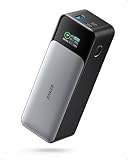
The biggest one: power. If you travel with a laptop, camera, wireless headphones, and a phone, one outlet-worth of adapter capacity is not going to cut it on a long-haul itinerary. A high-capacity portable power bank is the backup your adapter cannot provide — particularly on flights, in transit, at a cafe with one outlet shared by twelve other remote workers. The Anker 737 PowerCore (24,000 mAh, with 140W USB-C output) can charge a modern laptop twice and a phone several more times before it needs a wall. It is heavy and it is worth it on longer trips.
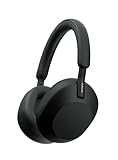
Then there is what you are charging. If you are traveling with noise-canceling headphones — and you should be — the Sony WH-1000XM5s are the benchmark the industry is measured against. Thirty hours of battery life means one charge lasts a transatlantic flight plus a day of walking around a new city. They fold flat, the ANC is genuinely good enough to quiet a crying baby three rows back, and the USB-C charging means your adapter setup does not need a special cable.
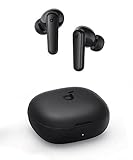
For shorter trips or when pack weight matters, the Soundcore P3i earbuds are the budget-conscious alternative: hybrid ANC, 10 hours per charge (30+ with the case), and they fit in a jacket pocket. They will not replace the Sonys for a 14-hour flight, but for city walking and the gym on a weekend trip, they are more than enough.
What to pack alongside the adapter
The adapter is the foundation, but the full travel tech kit needs a few more pieces to actually work smoothly.
If you are staying in places with limited counter space — which is most of them, everywhere in the world — a hanging toiletry bag eliminates the "where do I put all my stuff" problem in a bathroom with no shelf. It is tangentially related to the adapter conversation, but the first time you unzip a bag that hooks over the back of a door and everything is accessible without unpacking, you understand why experienced travelers are evangelical about it.

Your adapter is useless if your luggage is ransacked looking for it. A TSA-approved lock on the zippers of your carry-on — or on a hostel locker, a gym locker, a beach bag — is cheap insurance. The Master Lock TSA combination is the one that has survived the most checked-bag inspections without drama. TSA agents can open it with their universal key; you set your own combination. It does not fix a slashed bag, but it stops the casual grab.

And packing cubes — because the adapter and its cable, the power bank, the charging cables — all of that needs to live in one place you can grab immediately when you land and your phone is at 4%. An Eagle Creek set keeps your electronics organized and easy to find, no rifling through a suitcase in a cab at midnight.

A refillable toiletry system that survives the carry-on 3-1-1 rule
While you are sorting out your adapter situation, fix the toiletry problem at the same time. The 3-1-1 rule (each liquid under 3.4 oz, all in one quart bag) is not hard once you have a set of silicone refillable bottles that actually work. The travel bottle sets that tend to fail: flip caps that open in the bag, thin silicone that tears, and containers that will not squeeze properly when full. The ones that work have a wide-mouth design for filling, leakproof locking caps, and a clear quart bag that lies flat at security.

Brands worth considering (and what to skip)
On the adapter side specifically, three brand names come up consistently in real traveler reviews after the cheap stuff fails: Epicka, BESTEK, and Ceptics. All three make true universal adapters (covering 150+ countries) with built-in USB ports, surge protection, and safety fuses. Epicka's universal model runs about $25 and includes two USB-A and one USB-C port. BESTEK's surge-protected version runs closer to $40 and adds a UK-specific grounding pin that matters in certain older buildings. Ceptics sells interchangeable plug sets for people who want the smallest possible puck per region.
What to skip:
- Airport adapters. They are four times the price and half the quality of the same product on Amazon. The one at W.H. Smith for £15 is a plastic rectangle with no surge protection and USB-A ports that charge at 0.5A instead of 2.4A. Leave it.
- Cheap 2-packs on discount tabs. Any adapter sold in a 2-pack for under $10 total has skipped either the safety fuse, the surge protection, or both. The grounding pins are sometimes purely cosmetic. The one time a cheap adapter fails, it usually fails in a way that takes a device with it.
- Adapter + converter combos under $20. A real voltage converter is a separate, usually heavier device. Anything that claims to convert voltage, handle 150 countries, and include USB ports for $18 is either lying or has so many compromises that none of it works well. If you genuinely need a voltage converter, buy it separately from a dedicated brand.
- Region-specific adapters when you travel to multiple regions. A Type C plug that works in France will not work in the UK. Stop buying per-trip adapters. Get the universal once and be done.
The full adapter setup, summarized
Here is the kit that covers 95% of international travel situations: a universal adapter (Epicka, BESTEK, or Ceptics) in your electronics pouch, an Anker PowerCore for flight and transit charging, noise-canceling headphones or earbuds, and a TSA lock for anything that needs securing. Total weight is under a pound. Total cost is under $400 — and the power bank, headphones, and lock are things you will use for years beyond any single trip.
The adapter itself is a one-time $25–35 purchase. If you have never owned a real one and you are still buying per-country versions at the airport, today is the day you fix that permanently.
FAQs
Do I need a voltage converter or just an adapter?
Check the label on your charger brick. If it reads "INPUT: 100–240V," you only need an adapter to change the plug shape — your device handles the voltage automatically. If it reads "INPUT: 120V" only, you need a converter too, or leave that appliance at home. Most modern electronics (phones, laptops, cameras) are dual-voltage. Hair dryers and older shavers often are not.
What is the best universal travel adapter?
Epicka, BESTEK, and Ceptics are the three names that hold up after real use. All three cover 150+ countries, include USB ports, and have genuine surge protection and fuses. Epicka's standard model is the most popular and runs about $25. BESTEK's model adds better grounding for UK outlets and runs closer to $40. Either one beats anything from an airport shop at any price.
Can I use a travel adapter with a hair dryer?
Only if your hair dryer is dual-voltage (check the label for "100–240V"). Most consumer hair dryers sold in the US are 120V only and will burn out on 220–240V systems, which includes most of Europe, Asia, Africa, and Australia. If yours is 120V only, buy a dual-voltage travel hair dryer before your trip — they exist and cost about $30.
Will a universal adapter work in the UK?
Yes, but verify. The UK uses a Type G plug (three rectangular pins). Any adapter that lists Type G compatibility will physically work. Some universal adapters skip proper grounding on the UK prongs to simplify manufacturing — this is usually fine for electronics that are double-insulated (phones, laptops), but the better models include full grounding. BESTEK's model is reliable for this.
How do I charge multiple devices from one outlet with an adapter?
Buy an adapter with built-in multi-port USB charging (most quality universals include 2–4 USB ports), and supplement it with a high-capacity power bank for devices that need more wattage than a USB port delivers (some laptops need 65W+ to charge at full speed). The Anker 737 PowerCore handles 140W USB-C output, which covers even power-hungry laptops.
Is it safe to charge my laptop through a travel adapter?
Yes, as long as your laptop charger is dual-voltage (virtually all modern laptop chargers are) and the adapter has a proper fuse and surge protection. Check the charger label first. If the adapter runs hot to the touch or sparks when you plug in, stop using it immediately — that is a sign of a failed fuse or poor build quality.
What countries require a different adapter than the rest of Europe?
The UK, Ireland, Malta, and Cyprus use Type G (three rectangular pins) instead of the Type C/E/F used in continental Europe. Switzerland uses a unique Type J plug that many Type C adapters technically fit but may be loose. South Africa uses Type M (three large round pins). If you are doing a multi-country trip that includes any of these, a true universal adapter is the only sane solution.