A twist is easy. Anyone can end a thriller by revealing that the quiet neighbor did it, or that the narrator has been unconscious for the last hundred pages, or that everyone the protagonist trusted was lying the whole time. Editors will tell you the ending is the part readers actually remember, which is exactly why so many thrillers cheat on it — they spend three hundred pages building tension and then solve it with information you were never given a chance to find. That's not a twist. That's a magic trick where the magician pulls a rabbit out of a hat that wasn't onstage.
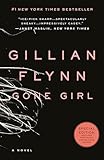
- Top pickGone Girl — Gillian Flynn~$11
- Worth the splurgeThe Guest List — Lucy Foley~$14
The books on this list do the harder thing. Their endings feel inevitable in hindsight instead of insulting — you close the book, sit with it for a second, and think "of course," not "wait, what." I'm not spoiling any of these. What follows is why each ending works structurally, without telling you what actually happens on the last page.
What actually separates an earned ending from a cheap gotcha
The test is older than the psychological thriller genre itself. Golden Age mystery writers called it "fair play" — the rule, more or less codified by Agatha Christie and the Detection Club in the 1920s, that a reader has to have had access to every clue the detective did. You're allowed to miss the clue. You're allowed to misread it. But it has to have been there, in the text, before the reveal shows up to explain it.
Modern psychological thrillers apply the same rule to psychology instead of physical evidence. The best of them plant a detail — a strange word choice, an inconsistency in a timeline, a character's specific way of avoiding a question — early enough that on a second read, you can watch yourself walk right past it. The worst of them introduce a secret in the final twenty pages that nothing before it supported: a hidden twin nobody mentioned, a diagnosis invented on page 280, a confession from a character who had exactly one scene. That's the actual dividing line. Not whether the ending shocks you. Whether it was buildable from what you already had.
The ones that played fair the entire way through
These three do the fair-play thing at a genuinely impressive level — the reread is where you appreciate the construction, not just the shock.


The ones that trade the twist for dread that's been building the whole time
Not every earned ending depends on a reveal. Some of the most satisfying resolutions in the genre aren't surprising at all — they're the payoff of tension the author has been carefully accumulating since chapter one, so the ending feels less like a rug pull and more like a debt finally getting paid.

The one that refuses to give you an answer — on purpose
Tana French's In the Woods is the book people either love passionately or throw across the room, and it earns both reactions with the same decision. The narrator is a detective investigating a child's murder in the same woods where he, as a boy, was the sole survivor of a separate unsolved disappearance decades earlier. French tells you almost from the first page that this second, older case will not be neatly closed by the end of the book. She's not lying to you — she's stating her thesis. The novel is about the limits of what a person can actually know about their own past, and an unresolved case is the argument, not a cop-out. If you go in expecting a bow on top, you'll be furious. If you go in trusting that the withheld answer is the point, it's one of the most quietly devastating endings in the genre.

Colleen Hoover's Verity plays a related trick from a different angle. Most of the novel is a manuscript-within-the-novel — an unfinished memoir written by the incapacitated title character — and the book never confirms how much of it is true, how much is manipulation, or what the protagonist ultimately does with that uncertainty. Readers argue about the final chapter constantly, and that argument is exactly what the structure is built to produce: two genuinely different, well-supported readings of the same last few pages. An ending that survives an argument that heated, years after publication, earned something.

Audiobook or print — does the format change how the twist lands?
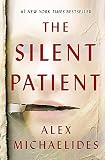
It genuinely does, and not always in the direction you'd expect. Gone Girl's dueling-narrator structure works exceptionally well on audio when the production uses two distinct voice actors, because the contrast between "his" chapters and "her" chapters becomes audible instead of just typographic — you feel the tonal whiplash the moment the narration switches. The Silent Patient's audiobook is similarly well-regarded because a controlled, steady narrator makes the therapist's calm rationality even more unsettling in hindsight.
Sharp Objects is the one case where print has a real edge. So much of what makes that ending land depends on noticing small, specific, easy-to-skim-past physical details — the kind of thing your eye can pass over on a page and come back to, but that a narrator reads at a fixed pace whether you caught it or not. If you're the type who rereads a paragraph when something feels slightly off, print will reward that instinct more than audio will.
What to skip: the twist that came from nowhere
You don't need us to name names to know the pattern — you've read the book, or seen the show, where the killer turns out to be a character introduced two chapters before the end, or the big reveal depends on a secret medical condition or a hidden sibling that was never once mentioned or hinted at. The tell is almost always the same: you finish, and instead of wanting to flip back to the beginning to see what you missed, you feel a little cheated, like the story changed its own rules in the last chapter to get itself out of a corner it wrote itself into.
A quick gut check before you buy a hyped thriller: does the marketing copy describe a specific person and situation, or only a feeling ("shocking," "unputdownable," "twist you won't see coming")? Books that can only be marketed in adjectives usually have less going on underneath. Books that can be described with an actual premise — a specific therapist, a specific island wedding, a specific unsolved case in a specific stretch of woods — tend to have done the work the adjectives are trying to cover for.
FAQs
What's the actual difference between a plot twist and an earned ending?
A plot twist is just a reveal — new information that changes how you understand the story. An earned ending is a plot twist built entirely from information you already had. The test is whether a careful reread lets you find the clues in their original place, or whether the author has to add new facts after the fact to make the reveal make sense. The first is a twist. The second is a retcon wearing a twist's clothes.
Is Gone Girl's ending actually satisfying, or is it just bleak?
Both, and Gillian Flynn intends both. It's not a comforting ending in the traditional sense — nobody gets a tidy moral resolution — but it's structurally airtight: every clue needed to see it coming was on the page from the first chapter, split across two narrators who were each telling the truth about themselves the whole time. Satisfying doesn't have to mean happy. It has to mean it was built honestly.
Why does In the Woods leave its central mystery unsolved?
Because the book's actual subject is the limits of memory and self-knowledge, not the mechanics of a police procedural. Tana French tells you early that the older, more personal case may never be fully resolved, and the unresolved ending is the argument the novel has been making all along. It's a deliberate craft choice, not an unfinished plot thread — though it's completely fair if you find it frustrating anyway.
Is Verity's ending really ambiguous on purpose?
Yes. The novel is built around an unfinished, unreliable manuscript-within-the-novel, and Colleen Hoover never resolves how much of it to trust or what its consequences actually are for the characters. Two genuinely different interpretations of the final chapter are both supported by the text, which is exactly why the ending is still debated in reader communities years after the book came out.
Does knowing a thriller has "an earned ending" going in ruin the experience?
Not really — none of the specific reveals are spoiled here, only the fact that the endings hold up under scrutiny. If anything, knowing an ending was built fairly tends to make people pay closer attention on the first read, which is when these books are actually at their best: you notice more of the clues in real time instead of only on a reread.
Should I read these or listen to the audiobook?
Either works well for most of this list, with two specific notes: Gone Girl benefits from a dual-narrator audio production, since the tonal contrast between the two POVs becomes audible instead of just typographic. Sharp Objects rewards print more, since its ending depends on small physical details that are easy to catch on a page you can flip back to, and easy to miss at a narrator's fixed reading pace.