Affiliate disclosure: Links below are Amazon affiliate links. You pay the same price; we earn a small commission. Full disclosure · How we pick
- Top pickThe Midnight Library — Matt Haig~$13
- Worth the splurgeSony WH-1000XM5 Noise Canceling Headphones~$398
There are two kinds of mystery novels. The first kind you read because you feel like you should — a bestseller someone pressed into your hands, a prize winner with a serious review in a serious publication. You finish it. You move on. The second kind you find yourself reading under the covers at 1 a.m., telling yourself just one more chapter, then waking up groggy and completely unable to feel bad about it.
This list is exclusively the second kind. No prestige picks for their own sake. No "technically a mystery" literary fiction dressed up in a trench coat. These are books with genuine tension, real detective work (or at least the thrilling appearance of it), and prose that doesn't make you feel like you're doing homework. Organized by reading mood, not rank — because the best mystery novel is always the one that matches where you are right now.
The ones that hooked everyone for a reason
Some books are on every "best mystery" list because they actually deserve to be. The trick is separating the ones that earned the hype from the ones that merely generated it. These two have genuinely earned it.
The Midnight Library isn't a mystery in the traditional whodunit sense — it's something stranger and more compelling: a woman named Nora who finds herself in a library between life and death, each book containing a version of the life she could have lived. The mystery is existential. What choice would have made the difference? What life is actually hers? It's the kind of novel that sounds like self-help when you describe it and reads like a page-turner when you're in it. Matt Haig has a way of making you feel seen without making you feel lectured. Read it in one sitting if you can.
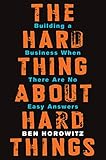
If you want something more traditionally crime-driven, The Hard Thing About Hard Things isn't fiction — but the real mystery of how a startup survives catastrophic failure is more gripping than most thriller plots. Ben Horowitz writes with the frankness of someone who has nothing left to prove, which makes it genuinely unputdownable. If you know anyone in business who hasn't read this, they need it.
The psychological thriller category: what's actually worth your time
Psychological thrillers are the mystery genre's most crowded neighborhood. The formula is well established: unreliable narrator, dark secret in a picturesque setting, twist in the final third. When it works, it's exhilarating. When it doesn't, you feel cheated out of eight hours. Here's how to navigate it.
The subgenre peaked (some would say) with Gillian Flynn's Gone Girl and Paula Hawkins' The Girl on the Train. Both are worth reading if you haven't. What makes them work isn't the twist — it's the creeping unease that builds long before you know what you're uneasy about. The best psychological thrillers share this quality: you don't know what's wrong, but you know something is.
For readers who have exhausted Flynn and Hawkins, the next tier includes Tana French's Dublin Murder Squad series (start with In the Woods), Donna Tartt's The Secret History (which tells you the murder on page one and then makes you desperate to understand it), and anything by Kate Atkinson. These are slower than airport thrillers but the tension runs deeper and stays with you longer.
The key question when choosing a psychological thriller: does the marketing promise a twist, or a character? Books that promise twists often have only the twist. Books that promise a character — a specific, damaged, interesting person you're trapped with for 300 pages — usually deliver something more satisfying, even if the ending is quieter than you expected.
Cozy mysteries: don't sleep on this category
Cozy mysteries get condescended to by people who haven't read them, and they are completely wrong. The cozy mystery — small town, amateur sleuth, low body count, a cat or a bakery or both — is a masterclass in comfort without boredom. The best ones are genuinely clever, funny, and well-plotted. The worst ones are still pleasant to read on a Sunday afternoon.
The defining feature of a cozy mystery is that it maintains the pleasures of genre — puzzle, revelation, resolution — while eliminating the unpleasantness that keeps some readers away from crime fiction. There's no graphic violence, no grim procedural details, no bleakness. Just a smart protagonist, a circumscribed world the author knows inside out, and a mystery that satisfies when it resolves.
For entry points: Alexander McCall Smith's No. 1 Ladies' Detective Agency series is the gentlest and most internationally beloved. Richard Osman's Thursday Murder Club series (four retired residents of a British retirement village who solve cold cases) has the best comic timing in contemporary crime fiction. Jacqueline Winspear's Maisie Dobbs series is set in 1930s England and is better written than most literary fiction. Any of these will convert a skeptic.
One practical note: cozy mystery series are long. McCall Smith has written 23 No. 1 Ladies' Detective Agency novels. Winspear has written 17 Maisie Dobbs. This is a feature, not a bug. Once you find a series you love, you have years of reading ahead of you.
The "just one more chapter" technique — and the right setup for it
Staying up for a book is a physical activity as much as an intellectual one. The right environment makes a genuine difference. A few things that help:
A weighted blanket is the single biggest physical upgrade to late-night reading. The compression is genuinely calming — there's clinical literature on this — and the warmth means you stay comfortable without having to manage actual blankets. The Bearaby Weighted Blanket is the one that's worth the price. It's knit rather than filled, so it breathes (you won't overheat), it looks good on a couch, and the weight is distributed more evenly than cheap alternatives. This is the reading setup upgrade that sounds indulgent and actually works.
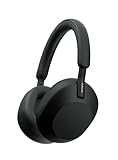
Noise-canceling headphones for ambient sound or music also make a difference. If you read with background noise — rain sounds, lo-fi, white noise — the Sony WH-1000XM5 are genuinely in a different category from everything else. The noise cancellation alone changes the experience of reading in a house where other people exist.
Classic mystery and detective fiction: the originals still deliver
Agatha Christie published 66 detective novels. The best of them — And Then There Were None, Murder on the Orient Express, The Murder of Roger Ackroyd — remain genuinely difficult to solve ahead of the reveal and deeply pleasurable to read. Christie's prose is often dismissed as functional, which is unfair: it's precise, it's fast, and it never wastes a sentence. She understood that the reader's enjoyment comes from believing they might figure it out and being wrong in a satisfying way. Nobody has ever done that better.
Arthur Conan Doyle's Sherlock Holmes stories are shorter, more episodic, and just as addictive. The stories (as opposed to the novels) are the right entry point — start with The Adventures of Sherlock Holmes and read them in any order. The pleasure is Holmes himself: his deductive arrogance, his fundamental warmth underneath it, and Watson's genuine affection for someone who would drive most people insane.
For something more recent but in the classical tradition: Anthony Horowitz (who writes the authorized Sherlock Holmes continuations and the Magpie Murders series) and C.J. Sansom's Shardlake series (Tudor England, a hunchbacked lawyer, genuinely surprising plots) are both excellent and criminally undersold.
What to skip: overhyped mysteries that don't deliver
Not every bestselling mystery novel deserves its reputation. Some genuine disappointments in a genre full of them:
Most "bookclub mysteries" — the ones with a woman in a red dress running through fog on the cover, blurbed by 12 other thriller writers — follow a formula so rigidly that you can predict the structure by chapter three. They're not bad exactly, but they're not gripping. The twist is usually either obvious or arbitrary, and the protagonist is usually defined entirely by her trauma rather than her personality. Skip the blurbs and read the first page: if the narrator describes herself in a mirror within the first three pages, put it down.
The Da Vinci Code remains one of the most-read thrillers ever written and one of the least-satisfying. Dan Brown's prose is genuinely painful. Every chapter ends on a cliffhanger; none of them resolve with the weight they promised. The "reveals" feel like someone explaining a puzzle they've already assembled. It's not fun to be right the whole time.
Many celebrity-adjacent thrillers — the ones by actors, politicians, or celebrity-adjacent figures, often quietly co-written — tend to have interesting premises and flat execution. The access and story ideas are real; the prose and pacing are usually professional but not gripping. There are exceptions, but go in with lowered expectations.
Books with "girl" in the title, post-2014 — not universally, but the proliferation of "The Girl Who..." and "The Girl on the..." titles has produced a lot of pale imitations chasing the Flynn-Hawkins moment. The originals are worth reading. The copies are usually not.
The reliable test: does this book have a specific world, a specific character, and a specific mystery? Or is it an interchangeable setup populated with archetypes? The best mysteries feel like they could only have been written by this author, set in this place, at this moment. Anything that feels generic probably is.
What's the best mystery novel for someone who doesn't usually read mysteries?
Start with Richard Osman's The Thursday Murder Club — four retired residents of a British retirement village who investigate cold cases. It's funny, warm, and impossible to put down. The mystery is genuine, the characters are specific and wonderful, and it doesn't require any prior investment in the genre. If you finish it and want more, you have three sequels waiting.
Are cozy mysteries actually good, or are they just comforting?
Both, and those aren't opposites. The best cozy mysteries — Alexander McCall Smith, Richard Osman, Jacqueline Winspear — are genuinely well-plotted and well-written. They're "cozy" in the sense that they're not grim or graphic, not in the sense that they're simplistic. The puzzles are real, the characters are developed, and the resolutions earn their satisfaction. Don't let the subcategory name fool you.
How do I know if a thriller is worth reading before I buy it?
Read the first page on Amazon's "Look Inside" feature. If the prose is flat or the narrator is already telling you about themselves in a mirror, move on. Also check: does the blurb describe a specific character and situation, or just a feeling ("edge-of-your-seat," "twisty," "propulsive")? Books described entirely in adjectives are usually interchangeable. Books described with specific details are usually more individual.
What's the best mystery series to commit to for the long haul?
Tana French's Dublin Murder Squad for literary-quality crime fiction (6 books, each featuring a different detective from the same squad). Alexander McCall Smith's No. 1 Ladies' Detective Agency for gentle, warm, episodic mysteries set in Botswana (23 books and counting). C.J. Sansom's Shardlake series for historical mystery in Tudor England (8 books, complete). All three are deep enough to keep you busy for years.
Is it worth buying physical books versus e-books for late-night reading?
For late-night reading specifically, e-readers win. A Kindle with adjustable warm light means you can read without a lamp, without disturbing a partner, and without the eye strain of a bright screen. The reading experience for fiction is essentially identical to physical books after five minutes of adjustment. The advantage of physical is real for books you want to keep, lend, or display — but for 1 a.m. mystery reading, the e-reader is the better tool.
What's the single most overrated mystery novel?
Probably The Da Vinci Code. Not because it's the worst — it's not — but because the gap between reputation and actual reading experience is the widest. The prose is genuinely painful, the "twists" are telegraphed, and the chapters-ending-on-cliffhangers technique stops working around the fourth time. Its success was about timing, marketing, and subject matter; the book itself doesn't hold up. Angels and Demons, Brown's earlier Robert Langdon novel, is actually more fun.