Every office Secret Santa has the same failure mode: you draw a name you barely recognize from the group chat, panic, and grab whatever's stacked by the register at the drugstore — a candle that smells like "driftwood," a mug that says something about Mondays, a tin of popcorn nobody asked for. It's not that these gifts are offensive. It's that they're generic in a way that announces you put zero thought into it, which is somehow worse than giving nothing at all.
- Top pickOXO Good Grips POP Container 3.4qt~$16
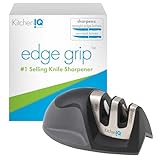
- Best budgetKitchenIQ Edge Grip 2-Stage Knife Sharpener~$8
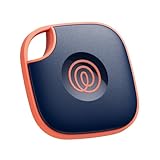
- Worth the splurgeTile Mate Bluetooth Tracker~$25
The fix isn't spending more money — most Secret Santa exchanges cap out at $20 for a reason, and that's plenty if you shop smart. The fix is picking by who the person actually is at work instead of by what's on sale. Everyone's office has the same six or seven archetypes: the one who treats the snack drawer like a survival cache, the one wearing a cardigan in July, the one who's never once without a phone in hand, the one whose lunch smells better than your dinner, the one who's basically outdoor-gear-catalog cosplay. Shop the archetype, not the aisle, and you'll land a gift that actually gets used instead of regifted at next year's white elephant.
The Desk Snacker
You know this person by the sound of their desk drawer — it rustles. Chip bags, protein bars, the good crackers they don't share unless directly asked. The problem with most snack-adjacent gifts is that they're snacks themselves, which means they're gone by January and forgotten by February. Better move: give them somewhere to actually put the chaos. An airtight container turns a drawer full of crushed granola bar wrappers and stale pretzels into something that looks almost intentional, and it's useful long after the holiday party ends.

The One Who's Always Cold
Every office has a thermostat war, and this person is losing it. They've got a space heater under the desk that HR has definitely noticed, a cardigan draped over their chair year-round, and a hot tea mug in rotation from September through May. This is one of the easiest Secret Santa categories to nail, because the gift practically shops itself: something soft, something warm, something they can throw over their shoulders during a meeting without looking like they gave up.
The Tech Nerd Who Loses Everything
This person has the newest phone, the good headphones, a smart watch that tracks things nobody asked it to track — and somehow still cannot locate their keys, badge, or wallet on a regular basis. You don't need to out-gadget them, which is a losing game on a $20 budget anyway. You need to solve the one problem their expensive gear doesn't: they keep losing the boring, non-smart stuff.
The One Whose Lunch Makes Yours Look Sad
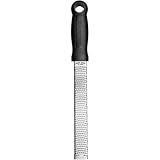
You know exactly who this is — the coworker whose microwave smell makes the whole break room jealous, who brings a proper cutting board's worth of prepped ingredients instead of a sad frozen bowl. This is a genuinely fun archetype to shop for because kitchen people appreciate small, sharp, specific tools far more than another "world's best cook" oven mitt. Skip the novelty. Give them something that actually earns a spot on their counter.
The Dad-Joke Guy in Cargo Shorts
Every office has one — the coworker who's always narrating a fishing trip, a grill upgrade, or a hiking route nobody asked about, and who has strong, specific opinions about the "right" kind of cooler. He is, without exception, extremely easy to shop for, because he already wants exactly one type of gift and it's not subtle: something to wear outside that looks like it was pulled off a hardware store's checkout rack, unironically.
What to Skip
A few categories that feel like safe Secret Santa territory but reliably aren't. Anything requiring a clothing size — shapewear, fitted apparel, anything you'd have to guess a measurement for — is a hard no for an office exchange no matter how good the deal looks online. It reads as either overly personal or an awkward guess gone wrong, and there's no version of unwrapping it in front of coworkers that isn't uncomfortable for someone.
Anything scented. Candles, lotions, strong perfumes — you don't know if the recipient has a sensitivity, a strong opinion about "clean linen," or a desk three feet from someone who does. Alcohol is a minefield unless your office culture has explicitly normalized it and you know the person drinks — plenty of workplaces frown on it entirely, and you genuinely don't always know who's not drinking and why. Gag gifts land fine among close friends and fall flat, or worse, land wrong, among people who mostly know each other from stand-up meetings. And skip anything that's really a gift for you — a book from your favorite genre, a mug from a band they've never heard of — Secret Santa works best when the gift says something about the recipient, not the giver.
The through-line across every pick above: useful beats novel, specific beats generic, and $20 goes a lot further when you're shopping for a person instead of a category. Nobody remembers the candle. Everyone remembers the gift that made them say "wait, how did you know I needed this."
FAQs
What if my Secret Santa budget is $15 instead of $20?
Most picks on this list have room to spare under $20, so a $15 cap still works for the container, the shawl wraps, the zester, the sharpener, and the dad hats. The Tile Mate is the one item that runs close to $25 and might not fit a tighter cap — swap it for the zester-and-sharpener pairing instead, which comes in well under $15 combined.
Is it weird to give a practical gift instead of something fun?
No — practical is what actually gets used, and "gets used" is the entire goal of a Secret Santa exchange. A useful item that solves a real, specific problem (a cold desk, a chaotic snack drawer, a habit of losing keys) reads as more thoughtful than a novelty item, not less, because it shows you paid attention to who the person actually is.
What do I do if I barely know the person I drew?
Default to the lowest-risk, broadest-appeal picks — the shawl wrap or pashmina set and the dad hat multi-pack both work for almost anyone, since "office is cold" and "wears a hat sometimes" are safe bets for most coworkers. Avoid anything scented, sized, or personality-specific until you actually know more about them.
Are food or snack gifts okay for Secret Santa?
They're fine as a small add-on but risky as the entire gift, since you don't always know about allergies, dietary restrictions, or personal preferences. If you want to lean into the "snacker" archetype, gift the container and let them fill it with their own choices rather than pre-loading it with something they might not eat.
Should I include a gift receipt or note where I bought it?
A small gift tag or card with a quick note about why you picked it goes further than a receipt — it shows the thought process, not just the price tag. Save the actual return-policy details for gifts over the exchange's budget cap, where someone might genuinely want to swap for a different size or color.
What if my coworker says they don't want anything for Secret Santa?
Take it seriously — some people opt out for religious, financial, or personal reasons, and pushing a gift on them anyway defeats the point of a low-pressure office tradition. Most workplaces let you redirect your draw to a backup name or a shared treat for the team instead; check with whoever's organizing the exchange rather than guessing.