Some memoirs read like a friend telling you a story over a long dinner. Others read like novels you cannot put down, where the chapters end on cliffhangers and you forget, sometimes for whole pages, that any of it actually happened to a real person. Those are the ones I keep pressing into people's hands. The pages turn themselves. The voice is so specific that it stops feeling like reportage and starts feeling like fiction, except the gut punch lands harder because you know it was real.
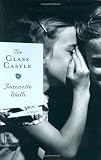
- Top pickThe Glass Castle by Jeannette Walls~$13
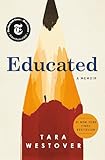
- Worth the splurgeEducated by Tara Westover~$15
Here are eight memoirs I have read more than once, recommended to friends who do not normally read memoirs, and watched them love. None of them feel like homework. All of them feel like staying up too late with a book.
What makes a memoir read like a novel
The difference is craft. A memoir that reads like a novel borrows the techniques of fiction without inventing the facts: scene over summary, dialogue you can hear, sensory detail, structural surprise, a narrator with a clear and consistent voice. The writer trusts you to draw your own conclusions, instead of explaining the moral every other paragraph. The result is a book you read the way you read a good novel, hungry for the next page, then close at the end and have to sit with for a while.
The eight below all do this, in completely different ways. Read them in any order.
The childhood memoirs that feel like novels
Two of the most beloved memoirs of the last twenty-five years are about growing up in households that should not have worked. Both authors write their parents with such fairness, and such restraint, that the books feel less like grievance and more like a careful act of love.
The grief memoirs that became masterpieces
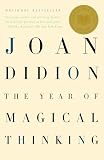
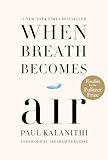
There is a small, brutal genre of memoirs written by people processing the worst year of their lives. The good ones do not wallow. They build a structure around the loss, and the structure is what lets you bear it. These three are the high water mark.
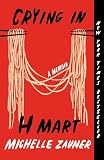
The journey memoirs
Two of the best memoirs of the last fifteen years are, on the surface, about long walks. They are really about what people do when they cannot sit still inside their own grief. Both became cultural events. Both deserved it.

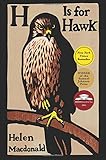
The artist memoir
Patti Smith's Just Kids is in a category by itself. It is a memoir, a love letter, a portrait of New York in the late sixties and early seventies, and a book about the kind of friendship that shapes a whole life.
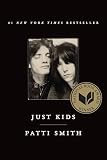
How to read these
Do not feel obligated to read them in any particular order. They are all standalone, all complete in themselves. If you want a starting point: The Glass Castle if you want a propulsive page-turner, Just Kids if you want something elegant and slow, When Breath Becomes Air if you have an afternoon and want to feel the world freshly. If you are between books and not sure what mood you are in, pick the cover that pulls you. Memoirs work that way.
Most of these are available in paperback, audiobook, and ebook. The audiobooks for Just Kids (read by Smith herself) and Crying in H Mart (read by Zauner) are particularly good. The author's voice is the whole point of a memoir, and hearing the voice helps.
A note on memoir as a form
People sometimes treat memoir as a lesser cousin of fiction. It is not. The eight books above are as carefully shaped as any novel, and the constraint of working from real life is its own kind of difficulty. A novelist can invent a more dramatic ending. A memoirist has to find the ending inside what actually happened, and make it feel inevitable. When it works, the result has a weight fiction cannot quite touch.
If you read one of these and want more, the next stop is whatever the author wrote next. Strayed has Tiny Beautiful Things. Didion has Blue Nights. Smith has M Train. Walls has Half Broke Horses. The voices carry over. The trust you built in one book transfers cleanly into the next.
Frequently asked questions
What is the best memoir to start with if I do not usually read memoirs?
The Glass Castle. It reads like a novel from the first page, the chapters are short, and the story pulls you forward. Most people who say they do not like memoirs finish it in a weekend.
Are these all sad?
No. Several deal with loss, but the prose is what you remember, not the sadness. Just Kids is more wistful than sad. Wild is propulsive and often funny. The Glass Castle has plenty of dark humor. A good memoir is not the same thing as a depressing book.
Are the audiobooks worth it?
For most of these, yes. Just Kids and Crying in H Mart are read by the authors and are exceptional. When Breath Becomes Air has a beautifully done dual narration. If you have a long drive or commute, an author-read memoir is one of the great audiobook experiences.
What if I like these and want more like them?
Try Mary Karr's The Liars' Club, Vivian Gornick's Fierce Attachments, Maggie O'Farrell's I Am, I Am, I Am, or Hilary Mantel's Giving Up the Ghost. All read like novels. All are by writers who could have written the year's best fiction and chose to write the truth instead.
How accurate are these memoirs, really?
Memoir is memory, and memory is imperfect. The writers above are unusually candid about that. Most of them say so directly in their author's notes. What you are getting is the author's best, most honest reconstruction of how a thing felt to live through, not a court transcript.
Are any of these appropriate for younger readers?
The Glass Castle is often taught in high school. Wild deals with adult themes including drug use and sex but is widely read by older teens. Just Kids and H Is for Hawk are gentler in subject matter. The others I would save for adult readers.