Loafers had a weird decade. Somewhere between "old man golf shoe" and "the only thing worth wearing," they quietly became the most useful shoe in a lot of closets — the one pair that works with wide-leg trousers, straight jeans, a slip skirt, and the airport, all in the same week. That versatility isn't an accident of trend cycles. It's structural. A loafer sits at the exact intersection of "put-together" and "didn't try," which is the hardest note to hit in dressing and the one everyone's chasing right now.
- Top pickBagsmart Toiletry Bag~$25
- Best budgetTravel Bottle Set (TSA-Compliant)~$15
- Worth the splurgeBirkenstock Arizona Sandals~$110
The catch is that not every loafer earns that reputation. A stiff pair with a boxy toe and a hard sole reads clunky with everything except the exact outfit it was styled with in the catalog photo. This is the honest breakdown of what actually makes a loafer flexible enough to wear on repeat, what to skip, and the gear that makes the whole "wear it with everything" promise actually true — including the reason loafers have quietly become the smartest travel shoe you own.
Why the loafer works harder than almost any other shoe
Sneakers are casual by default and have to be dressed up. Heels are formal by default and have to be dressed down. A loafer starts in the middle — low profile, closed toe, structured enough to read intentional, relaxed enough to not look like you tried. That middle ground is what lets the same pair move from a desk to dinner to a flight without an outfit change. It's also why loafers pair so easily with pieces that are themselves in-between: a slouchy trouser, a midi skirt, a cropped straight-leg jean. Anything too rigid or too flowy fights the shoe. Anything with its own relaxed structure works with it immediately.
The other reason loafers have staying power where trend shoes don't: they're one of the few shoe categories where "classic" and "current" are the same silhouette. A penny loafer from 1955 and a penny loafer from this year's runway are recognizably the same shoe. You're not betting on a trend aging badly in eighteen months.
The fit test that decides whether you'll actually wear them
Most loafers that end up abandoned in the back of a closet weren't badly made — they were badly fit. Loafers are built without laces, buckles, or velcro to adjust for a marginal size mismatch, which means the fit has to be right out of the box in a way that sneakers can fudge. Here's the actual test: stand up in the shoe (not sitting, which hides a loose heel) and walk a full lap. Your heel should lift slightly — a few millimeters is normal and expected as the leather breaks in — but it shouldn't slide enough to expose your sock or slip out with a normal stride. Your toes should have about a thumb's width of room at the front, and the widest part of your foot should sit at the widest part of the shoe, not ahead of or behind it.
Leather loafers also stretch in width as they break in, almost never in length. If a pair is snug across the top of your foot but the toe length is correct, that's a normal break-in issue that resolves in a few wears. If your toes are jammed at the front, that's not a break-in issue — that's the wrong size, full stop, no matter how good the leather feels.
What actually separates a versatile loafer from a stiff one
Three things determine whether a loafer moves easily between outfits, and none of them are the color or the hardware.
- Sole flexibility. Bend the shoe by hand from toe to heel. A genuinely wearable loafer flexes at the ball of the foot where your foot naturally bends. A shoe that's rigid throughout will feel formal and clunky no matter what you pair it with, because it forces your whole gait to change.
- Leather softness. Full-grain or soft nubuck leather takes on a slight slouch after a few wears, which is exactly the "didn't try too hard" quality that makes a loafer read casual. Bonded or heavily coated leather stays stiff and shiny indefinitely, which pushes the shoe toward "formal only."
- Toe shape. A rounded or slightly tapered toe pairs with almost anything. A sharply pointed toe reads dressy and fights with casual pieces; a very square, chunky toe reads trend-specific and dates faster than the rest of the silhouette.
Here's how the main loafer styles stack up if you're deciding which one to actually buy first:
| Style | Reads as | Works best with | Versatility |
|---|---|---|---|
| Penny loafer | Classic, unfussy | Jeans, trousers, midi skirts | Highest — buy this one first |
| Horsebit / bit loafer | Polished, slightly formal | Tailored trousers, blazers | High, skews dressier |
| Driving loafer | Relaxed, sporty | Chinos, shorts, denim | Good, but reads casual-only |
| Tassel loafer | Preppy, traditional | Suiting, cropped trousers | Moderate, more occasion-specific |
| Platform loafer | Current, statement | Skirts, dresses | Lower — trend piece, not a workhorse |
If you're buying one pair to do the most work, the penny loafer in a mid-brown or black leather is the answer. It's the only style on this list with essentially no outfit it fights.
The reason loafers are secretly the smartest travel shoe you own
Nobody markets loafers as travel shoes, but they should. No laces to fumble with at the TSA bin, no zippers to catch on socks, and a low enough profile that they don't eat suitcase space the way a sneaker or boot does. They also transition between climates better than almost anything else — a leather loafer works barefoot-ish in warm weather and layers fine with a wool sock in the cold, which means it can be the only shoe you pack for a trip that spans both. The trade-off is that a good pair deserves to travel protected and organized rather than loose in a duffel, which is where the right packing gear actually earns its keep.
Building the outfit: what actually pairs with a loafer
A loafer is a quiet shoe, which means it works best with a bag that doesn't compete with it. Anything overly structured or logo-heavy tips the outfit toward "trying," which undercuts the entire point of a loafer in the first place. Two bag categories consistently work: something soft and unstructured that echoes the shoe's relaxed leather, or something utilitarian and simple that reads as intentional rather than decorative.
When a loafer isn't the right call — and what to skip entirely
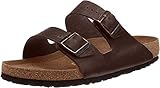
Loafers are not the answer to every shoe question, and pretending otherwise is how people end up with a closet of shoes they don't wear. On days that call for serious walking — long errand runs, a full day of sightseeing, anything over a couple of miles — a structured leather sole with no give will start to hurt regardless of how good the leather looks. That's when a supportive sandal earns its keep instead. The Birkenstock Arizona has become the unofficial backup to a loafer wardrobe for exactly this reason: the molded cork footbed does the arch support work a flat leather sole can't, and in warm weather it reads just as intentional.
A few other things worth skipping outright: loafers under about $50 almost always use bonded leather or leather-look synthetic that cracks at the vamp within a season — the crease where your foot bends is under constant stress and cheap material simply fails there first. Skip anything with a fully rigid rubber sole marketed as "all-day comfort" without ever mentioning flexibility; comfort claims on a stiff sole are marketing, not engineering. And skip buying a half size up "to break them in" — leather stretches in width, not length, so a size that's too long will always be too long, just with extra heel slip added on top.
Care that actually extends the "goes with everything" life span
A loafer earns its versatility over months of wear as the leather softens and takes the shape of your foot — which means the shoe you're wearing in month six is genuinely better than the one you bought. Protect that investment with a few basics: a leather conditioner every six to eight weeks to keep the material from drying and cracking at the vamp crease, cedar shoe trees after every wear to pull moisture out and hold the shape, and rotation — never wearing the same pair two days in a row lets the leather and the footbed fully dry between wears, which is the single biggest factor in how long a pair lasts. A quick finish check before you head out — a wipe of the leather, a swipe of concealer if you need one — is the same five minutes of effort that makes the whole outfit read as considered instead of thrown together.